When a CHRA makes sense
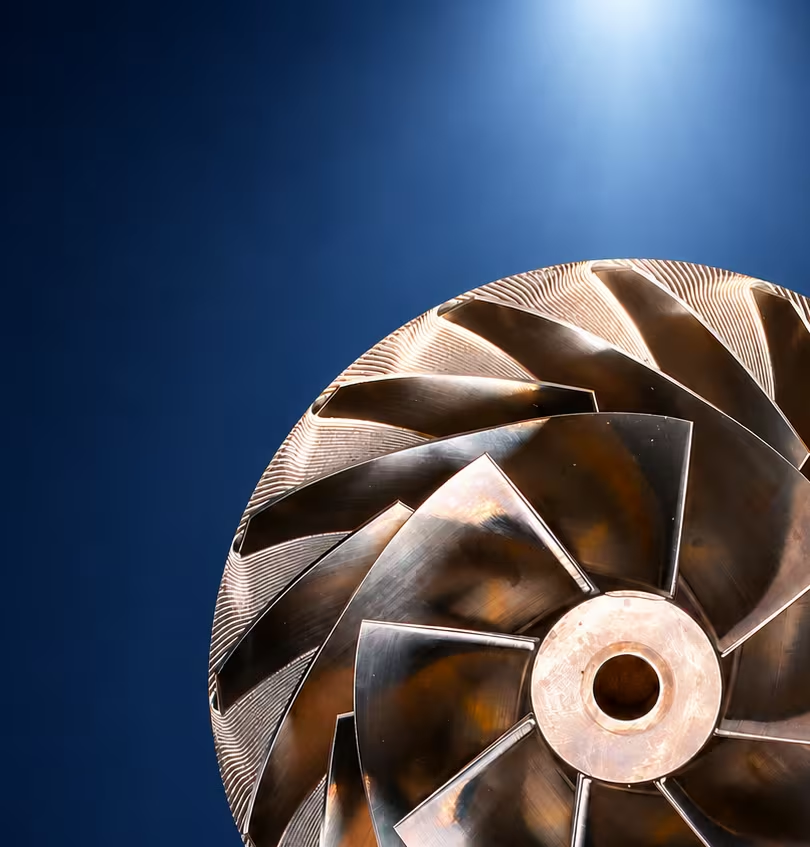
A CHRA replaces the center rotating assembly while reusing the compressor and turbine housings. It is often the right path when both housings are clean, undamaged and dimensionally suitable for reuse.
For repair shops, CHRAs can reduce cost and lead time, but only when wheel clearances, housing seats, oil ports and cooling provisions match the original unit.
When a complete turbo is safer
A complete turbocharger is usually safer when the turbine housing is cracked, the compressor cover is damaged, the actuator is unreliable or multiple sections would need replacement.
Complete units can also reduce assembly work for distributors handling repeated replacement demand.
Quote checklist
Condition of compressor and turbine housings.
Actuator type, bracket position and sensor provisions.
Turbo part number, CHRA reference and photos of mating surfaces.
Whether the buyer wants lower component cost or faster complete-unit replacement.
Decision logic for rebuild shops
A CHRA is attractive when the failed turbo still has reusable housings. The buyer keeps the compressor cover, turbine housing, actuator and brackets, then replaces the rotating center section. This can reduce parts cost and shipping weight, but it transfers more responsibility to the rebuilder. The housings must be clean, undistorted and free from wheel-contact damage. The actuator must still match the required calibration and move correctly.
A complete turbocharger is the better commercial choice when several interfaces are uncertain. If the turbine housing is cracked, wastegate seat is worn, VNT nozzle area is contaminated, compressor cover is damaged or actuator feedback is unreliable, a CHRA can become a false economy. The initial component price may be lower, but labor, troubleshooting and warranty exposure can erase the saving.
Cost, time and warranty trade-offs
For a single urgent repair, installation time can be more important than component cost. A complete turbo usually reduces assembly decisions, cleaning time and calibration risk. For a remanufacturer processing repeat units, CHRAs can be efficient when incoming cores are consistent and inspection standards are controlled. The correct answer depends on labor cost, return policy, housing availability and how much uncertainty the buyer can absorb.
A useful internal rule is to separate direct price from landed repair cost. Direct price is the invoice value of the part. Landed repair cost includes technician time, cleaning, actuator setup, failed reuse of housings, repeat balancing, returns and downtime. Buyers who only compare CHRA price against complete turbo price often miss the warranty risk hidden in the reused hardware.
Field examples that change the decision
If the compressor wheel rubbed the cover but the turbine side is clean, inspect the cover bore and backing plate before choosing CHRA. If the turbine wheel contacted the housing, check for heat distortion and erosion around the nozzle or wastegate seat. If the failure started from oil starvation, the CHRA may solve the rotating assembly damage but not the external oil supply problem.
For electronically actuated turbos, the actuator can be a major decision point. A complete unit may include the matched actuator, while a CHRA path may require transfer, calibration or separate actuator sourcing. If the shop cannot validate actuator movement and feedback, the lower-cost path carries more risk.
Selection checklist
Choose CHRA when both housings are reusable and actuator condition is known.
Choose complete turbo when housings, actuator or calibration are uncertain.
Check wheel-contact marks before reusing compressor or turbine housings.
Compare total repair cost, not only the part invoice price.
For repeat rebuild programs, document which housing conditions are acceptable for CHRA reuse.
What to document after the decision
Once the buyer chooses CHRA or complete turbo, document the reason. If CHRA is selected, record that the housings were inspected and reusable, the actuator plan is known and the bearing housing interfaces match. If complete turbo is selected, record which risk drove the decision: cracked housing, actuator uncertainty, sensor mismatch, labor time or warranty exposure.
This decision history helps purchasing teams compare future cases. Over time, the shop can see which turbo families are economical for CHRA reuse and which are better handled as complete units.
For repeat programs, track return reasons separately for CHRA and complete-unit orders. If a family repeatedly returns for actuator, VNT or housing issues after CHRA installation, the purchasing rule should move toward complete turbo supply for that application.
That rule should be reviewed after real returns, not only after the first quote. Keep the review tied to the turbo number.
Also record whether installation labor, calibration time and freight cost were included in the comparison.
Common Questions
Is a CHRA cheaper than a complete turbo?
Usually yes, but only if the reused housings and actuator are suitable. Otherwise a complete turbo can be the cleaner commercial choice.
Can any CHRA fit the same turbo model?
No. Wheel geometry, bearing layout and housing seats can differ inside the same broad turbo family.