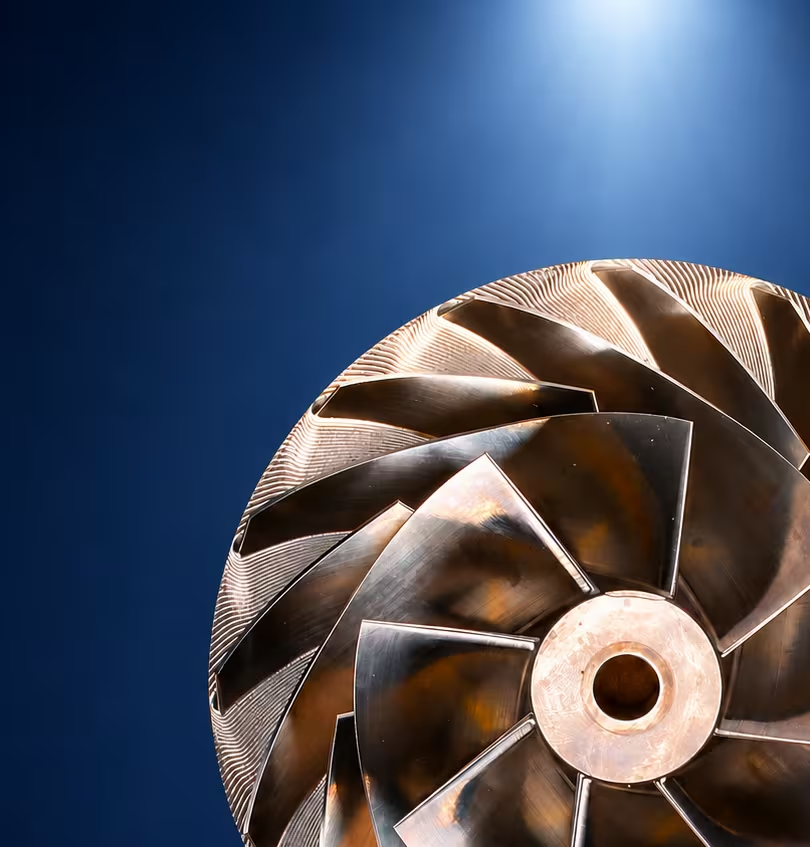
Material choice follows the application
Most replacement compressor wheels are selected to match the original geometry and material. Upgraded materials can be useful in selected applications, but they should not be chosen without confirming wheel dimensions and cover compatibility.
For rebuilders, consistency and balance quality matter as much as the material label.
Machining and fitment checks
A 5-axis CNC milled wheel can provide accurate blade geometry and repeatability. The buyer still needs to confirm inducer, exducer, bore, back height, blade count and rotation direction.
If the compressor cover or CHRA changes at the same time, confirm the group together before balancing.
Useful request details
Old wheel dimensions and clear front/back photos.
Turbo model and compressor cover reference.
Material requirement, quantity and balancing workflow.
Whether titanium alloy or 5-axis milled features are required.
Material choice starts after geometry is confirmed
Compressor wheel material should not be selected before fitment is confirmed. The wheel must match inducer and exducer diameter, blade count, back-face profile, bore, rotation direction, nut thread and compressor cover clearance. A premium material cannot compensate for a wrong trim or an unsuitable cover match. Geometry, balance and assembly interface come first.
Aluminum remains common because it is light, machinable and cost-effective for many turbocharger programs. Billet aluminum can offer stronger manufacturing control and design flexibility than some cast routes. Titanium alloy compressor wheel options are used when heat, fatigue margin, corrosion exposure or specialty durability requirements justify the premium. Stainless steel is heavier and normally reserved for narrower duty cases where its strength or corrosion behavior is needed.
How material affects buying decisions
Low inertia helps response, especially where the compressor wheel is part of a high-speed rotating group. Aluminum has an advantage here because of its low density. Titanium is denser than aluminum, so it should not be marketed as a simple lightweight upgrade over aluminum. Its value is the combination of strength, heat resistance and fatigue margin in demanding applications.
For procurement teams, the practical comparison is not 'best material' but 'best material for this operating envelope.' Compressor outlet temperature, overspeed margin, duty cycle, corrosion environment, balancing requirement and cost target all shape the decision. A wheel used in a specialty performance or high-duty industrial program may justify a material upgrade that would be unnecessary in a standard replacement program.
Inspection and quality evidence
Ask for more than the material name. The supplier should be able to discuss alloy grade, manufacturing route, heat treatment where applicable, dimensional inspection and balance workflow. For machined wheels, surface finish and machining marks should be controlled because stress risers can matter at high rotational speed. For cast wheels, porosity and consistency become key concerns.
Balance quality is a separate requirement from material choice. A wheel made from the right alloy can still create vibration if the rotating group is not balanced correctly. Buyers should connect the wheel purchase to the broader CHRA or rotor balancing workflow, especially when replacing parts in quantity.
Material selection checklist
Verify wheel dimensions, blade style, bore and rotation before discussing material upgrade.
Use aluminum when low inertia, cost and mainstream replacement fit are primary.
Consider titanium alloy compressor wheel options when heat, fatigue or corrosion margin matters.
Ask for alloy grade, manufacturing route, inspection evidence and balance requirement.
Avoid buying by material name alone without confirming the compressor cover and shaft interface.
Acceptance checks before wheel release
Before approving compressor wheels in quantity, compare one sample against the removed wheel and the compressor cover. Check inducer, exducer, back face, bore, nut area, blade count, rotation and cover clearance. Then confirm how the wheel will be balanced in the final rotor or CHRA workflow.
For premium material choices, keep the material requirement in the purchase record. This avoids future repeat orders being filled with a visually similar wheel made by a different route or material grade.
If the wheel is part of a conversion or upgrade, ask whether the compressor cover has also changed. Material selection cannot be separated from cover clearance, surge margin, target boost range and the balancing method used after assembly.
For catalog replacement work, photograph both sides of the removed wheel and keep the measured dimensions with the quote. Include the bore, exducer, inducer and back-face notes so future repeat orders do not depend on visual memory alone.
If the customer requests a stronger material, confirm the failure mode first. Overspeed, foreign object damage and compressor surge each require different corrective action.
Common Questions
Is billet always better than cast aluminum?
Not automatically. The wheel must match the application, cover and balance requirement.
When should titanium alloy be considered?
Only for applications where the material requirement is justified and the dimensions are confirmed.