Why material choice matters
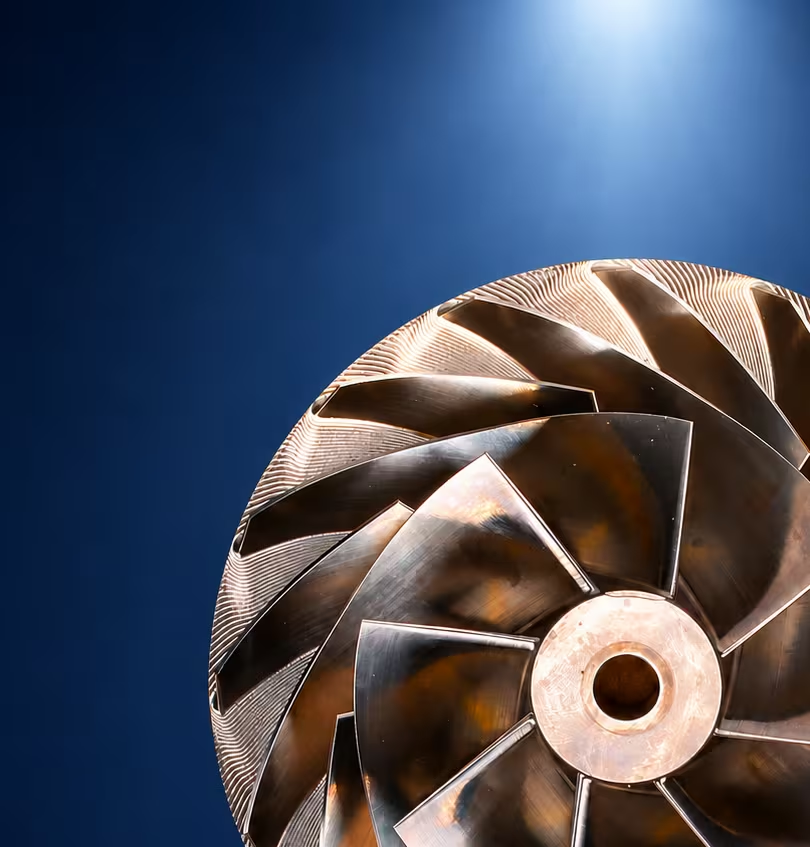
The compressor wheel, or impeller, is the rotating component that pumps air into the engine. Its material affects rotor mass, inertia, fatigue life, thermal margin, manufacturability and durability under repeated cyclic loading.
The important nuance is that titanium is not the lightest common compressor-wheel material. Ti-6Al-4V is denser than 7075-T6 aluminum, but far lighter than 17-4PH stainless steel. Its value is the balance of strength, fatigue performance, heat margin and corrosion resistance.
Where titanium alloy compressor wheels add value
Titanium becomes attractive when compressor outlet temperature, fatigue-life requirements or corrosion exposure begin to exceed the practical margin of aluminum compressor wheels.
For compact or high-duty turbochargers, a titanium alloy compressor wheel can preserve durability and fatigue life without taking the full mass penalty of stainless steel. That makes it a premium engineering choice rather than a universal replacement for aluminum.
Why aluminum still wins many programs
Aluminum remains the baseline for many OEM and aftermarket compressor wheels because its density is much lower, its manufacturing routes are mature, and its low inertia supports fast boost response.
Forged-milled aluminum is especially strong for mainstream programs where cost, availability, machinability and low rotor inertia are the main priorities. Titanium earns its place when the duty cycle justifies higher material and process cost.
Manufacturing and procurement priorities
Titanium alloy compressor wheels may be investment cast, forged or milled from solid stock depending on volume, blade geometry and validation requirements. Each route changes cost, defect control and dimensional repeatability.
Procurement should check alloy certification, heat treatment, manufacturing route, balancing workflow, dimensional records and inspection evidence. The alloy name alone is not enough for a high-speed rotating part.
What to send before quote
Target turbo model, pressure ratio and operating envelope.
Existing compressor wheel dimensions, rotation direction and clear front/back photos.
Material requirement, expected temperature range and fatigue-life requirement if available.
Required quantity, production volume, sample plan and acceptable manufacturing route.
Practical sourcing rule
Use titanium when the performance envelope needs extra thermal, fatigue or corrosion margin. Use aluminum when lowest inertia, cost and scalable manufacturing are more important. The right decision is application-specific, not material-hype driven.
Where titanium alloy compressor wheels make sense
Titanium alloy compressor wheels are not a universal replacement for aluminum wheels. They make sense when the compressor side needs additional fatigue, heat or corrosion margin and the buyer accepts the higher cost and manufacturing requirements. In specialty turbo programs, the value can come from durability under demanding temperature and duty conditions rather than simple weight reduction.
Because titanium is denser than aluminum, buyers should be careful with claims that imply it is always lighter. The better question is whether the wheel design, strength requirement and operating envelope justify the material. If the application only needs a standard low-inertia replacement, aluminum may remain the more practical choice.
Procurement risks with premium materials
Premium material names attract marketing shortcuts. A request for 'titanium' should still include alloy grade, manufacturing route, dimensions, balancing expectations and application context. A titanium alloy compressor wheel with the wrong geometry is still the wrong part. A correctly shaped wheel without controlled inspection can still create quality risk.
Buyers should also consider lead time. Titanium alloy machining and inspection can be more demanding than mainstream aluminum wheel production. For B2B programs, sample approval should be separated from volume release so the buyer can confirm fit, finish and balancing workflow before committing inventory.
Comparison with aluminum and stainless options
Aluminum is typically preferred for mainstream compressor wheels because it is light, scalable and cost-effective. Stainless steel can offer strength and corrosion resistance but brings high mass that may not suit high-speed rotor response. Titanium sits between those choices: more expensive and denser than aluminum, but with stronger high-duty potential where its properties are needed.
The decision should be tied to a duty case. Compressor outlet temperature, fatigue target, speed range, environmental exposure and warranty expectation should guide the material choice. Without those inputs, the material conversation becomes guesswork.
Titanium compressor wheel checklist
Confirm the exact compressor wheel dimensions and rotation direction before material selection.
Ask for alloy grade, machining route, heat treatment if applicable and inspection evidence.
Review balance workflow for the complete rotating group, not only the wheel.
Use sample approval before volume release for special material programs.
Choose titanium for justified durability margin, not for material prestige alone.
Appendix: Compressor Wheel Material Comparison
Representative open-data grades are shown for comparison. Confirm the actual production grade and supplier specification before ordering.
| Material family | Representative grade | Typical density | Best-fit use case | Buyer note |
|---|---|---|---|---|
| Titanium alloy | Ti-6Al-4V Grade 5 | About 4.42 g/cm3 | High-duty compressor wheels needing fatigue, heat and corrosion margin. | Premium material; verify route, heat treatment and inspection evidence. |
| Aluminum alloy | 7075-T6 | About 2.80 g/cm3 | Low-inertia compressor wheels where response, cost and machinability matter. | Baseline choice for many programs; check temperature and fatigue margin. |
| Stainless steel | 17-4PH H900 | About 7.80 g/cm3 | Strength and corrosion-driven rotating components where inertia is less critical. | High mass can increase rotor inertia; use only when the duty case justifies it. |
Common Questions
Is a titanium compressor wheel lighter than aluminum?
No. Titanium is denser than aluminum, but it is much lighter than stainless steel and can offer better heat and fatigue margin than aluminum in demanding applications.
When should titanium be considered for a compressor wheel?
Consider titanium when compressor outlet temperature, fatigue-life requirements, corrosion exposure or premium durability needs exceed the practical margin of aluminum.
What is the main procurement risk?
The main risk is buying by material name alone. Buyers should verify alloy, manufacturing route, heat treatment, balance quality, dimensions and inspection evidence.