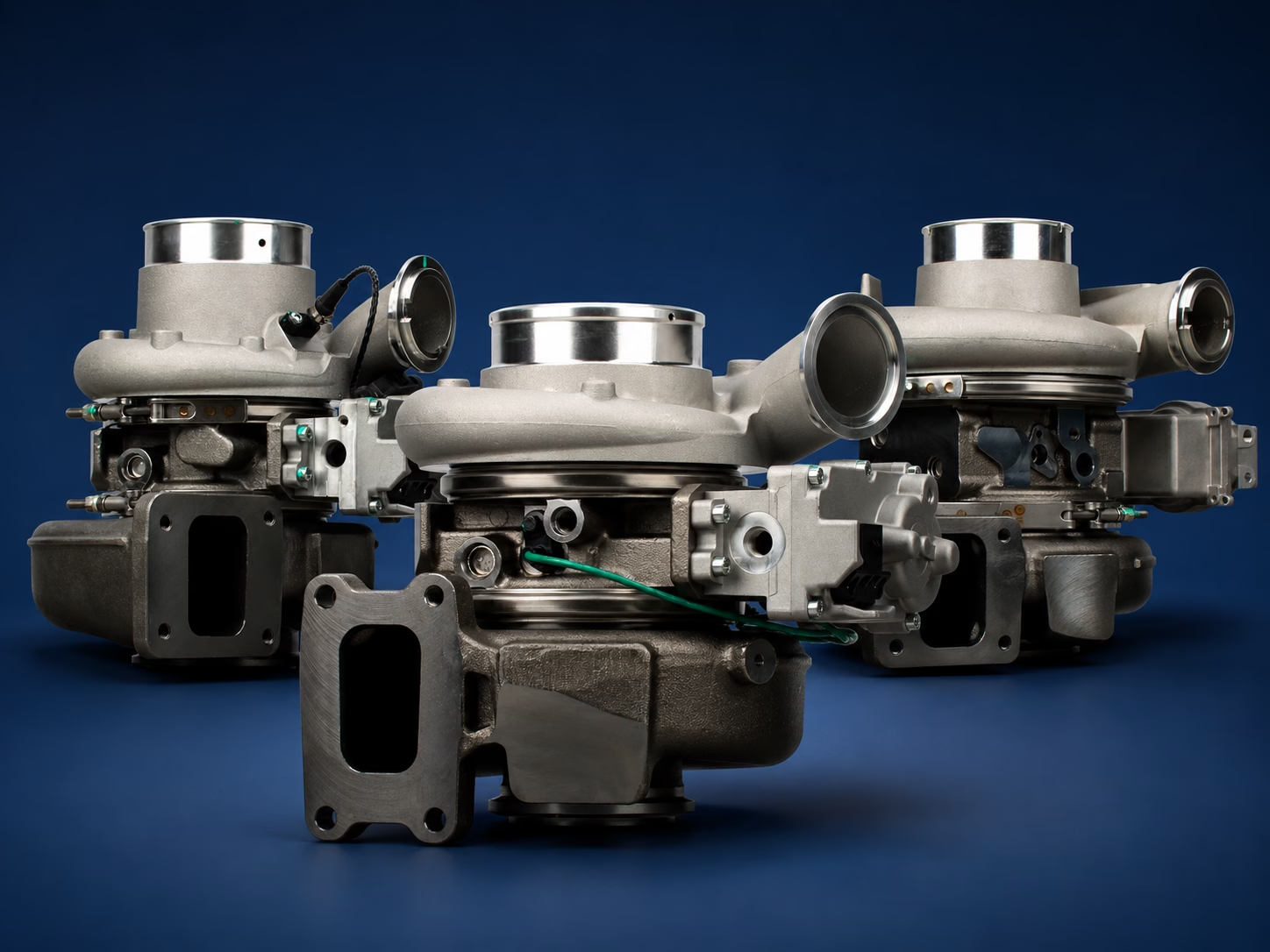
Why turbine housing material choice matters
The turbine housing, or volute, collects exhaust gas and directs it toward the turbine wheel. It lives on the hot side of the turbocharger, where exhaust temperature, wall-thickness changes, flange constraint and repeated heat cycles create severe thermo-mechanical fatigue risk.
A good housing material must balance heat resistance, oxidation control, casting quality, machinability and cost. For many mainstream automotive and commercial turbocharger housings, Si-Mo ductile iron is selected because it offers a strong cost-to-durability window without moving immediately to higher-nickel materials.
What Si-Mo ductile iron contributes
Si-Mo ductile irons combine elevated silicon with molybdenum. Silicon helps stabilize the ferritic matrix and supports a protective silicon-oxide layer, while molybdenum improves high-temperature strength, dimensional stability and creep resistance compared with ordinary ductile iron.
Grades such as EN-GJS-SiMo40-6 and EN-GJS-SiMo45-10 are therefore useful for exhaust manifolds, turbine housings and other hot cast components where oxidation resistance and thermal-cycle durability matter, but where foundry economics still need to remain practical.
Lifecycle and failure modes
The life of a turbine housing is controlled by more than the alloy name. Casting chemistry, nodularity, wall-thickness control, ferrite/carbide balance, machining stress and the final engine calibration all affect crack resistance in service.
Common risk drivers include steep thermal gradients, constrained expansion at flanges and bosses, oxidation scale growth, creep distortion, hot shutdown, excessive exhaust gas temperature and tuning that pushes the housing outside its intended thermal window.
SiMo versus Ni-resist
SiMo40-6 is often the value choice for mainstream duty. SiMo45-10 can provide a stronger hot-side margin but may trade some ductility and process forgiveness. Ni-resist offers a higher high-temperature ceiling, but its nickel content, density and cost make it a selective escalation path rather than the default answer.
For procurement teams, the practical question is not which material sounds most premium. It is whether the exhaust temperature, thermal-cycle severity, warranty target and price window justify moving from SiMo40-6 to SiMo45-10, Ni-resist or a higher-end hot-side material.
What to send before quote
Turbo model, turbine housing photos and any casting numbers.
Engine application, fuel type, duty cycle and expected exhaust temperature range.
Required material grade, drawing or sample housing if available.
Quantity, machining requirements, flange details and inspection expectations.
Practical sourcing rule
Use Si-Mo ductile iron when the application needs a castable, cost-effective turbine housing material with good oxidation and thermal-fatigue resistance inside a defined automotive temperature window. Escalate to Ni-resist or other hot-side alloys only when the operating temperature and durability requirement clearly justify the cost.
Thermal fatigue is the real sourcing problem
A turbine housing does more than hold the hot side together. It channels exhaust flow, supports flange loads and survives repeated heat-up and cool-down cycles. The material must tolerate thermal gradients between thick and thin sections, constrained expansion around flanges and oxidation on the gas path. The purchase decision should therefore consider duty cycle, not only alloy name.
Si-Mo ductile iron is used because it offers a practical balance. Silicon supports oxidation resistance and a ferritic matrix, while molybdenum improves high-temperature strength and dimensional stability. This makes the material useful for many turbocharger housings where cost and castability remain important.
How to compare SiMo grades
SiMo40-6 and SiMo45-10 should not be treated as interchangeable labels. The higher-alloy route can improve hot-side margin, but it may also affect ductility, foundry control and cost. The right grade depends on exhaust temperature, wall thickness, casting design, flange constraint and durability target. A buyer should ask which specification controls the order and whether the supplier can meet it consistently.
Ni-resist can be appropriate for hotter or more demanding service, but it is not automatically the right upgrade. Higher nickel content increases cost and changes the sourcing economics. Use it when the application clearly needs the thermal margin, not as a default answer to every housing failure.
Casting quality and machining controls
The housing can fail even when the alloy family is correct if casting quality is poor. Nodularity, carbide balance, porosity, wall-thickness control and residual stress all influence crack behavior. Machining can also introduce stress around bolt holes, flanges and wastegate features. For repeat orders, buyers should care about foundry consistency as much as chemistry.
Photos help, but they do not replace specification control. Ask for casting numbers, sample housing, drawing requirements, machining details and any inspection expectations. If the housing is for a known high-temperature application, define the expected duty before quoting.
Turbine housing sourcing checklist
Confirm turbo model, casting number, flange style and wastegate or VNT layout.
Define expected exhaust temperature, duty cycle and warranty target.
Specify SiMo grade or approved equivalent rather than a vague material family.
Check wall thickness, machining requirements and inspection expectations.
Escalate to Ni-resist only when operating conditions justify the cost.
Appendix: Turbine Housing Material Comparison
Representative material families are shown for sourcing discussion. Confirm the applicable drawing, purchase specification and supplier test evidence before ordering.
| Material | Representative grade | Typical role | Main advantage | Buyer note |
|---|---|---|---|---|
| Si-Mo ductile iron | EN-GJS-SiMo40-6 | Mainstream turbine housings and exhaust castings. | Good cost-to-durability balance with oxidation and thermal-fatigue resistance. | Verify chemistry, wall thickness, nodularity and heat-cycle requirement. |
| Higher-alloy SiMo | EN-GJS-SiMo45-10 | Higher-duty housings needing more hot-side margin. | Improved high-temperature strength and oxidation resistance versus lower SiMo grades. | Check ductility, casting process window and application temperature. |
| Ni-resist ductile iron | EN-GJSA-XNiSiCr35-5-2 | Hotter exhaust and turbocharger hardware. | Higher hot-strength and thermal margin. | Higher nickel content and cost; use when duty clearly justifies escalation. |
Common Questions
What is Si-Mo ductile iron used for in turbochargers?
It is commonly used for turbine housings and volutes where oxidation resistance, thermal-cycle durability and castability need to be balanced against cost.
When should a housing move from SiMo to Ni-resist?
Consider Ni-resist when the exhaust temperature, thermal-shock severity or creep requirement exceeds the practical margin of SiMo grades.
Is the alloy grade alone enough for sourcing?
No. Buyers should also verify casting quality, chemistry control, wall thickness, machining requirements, inspection records and the real duty cycle.