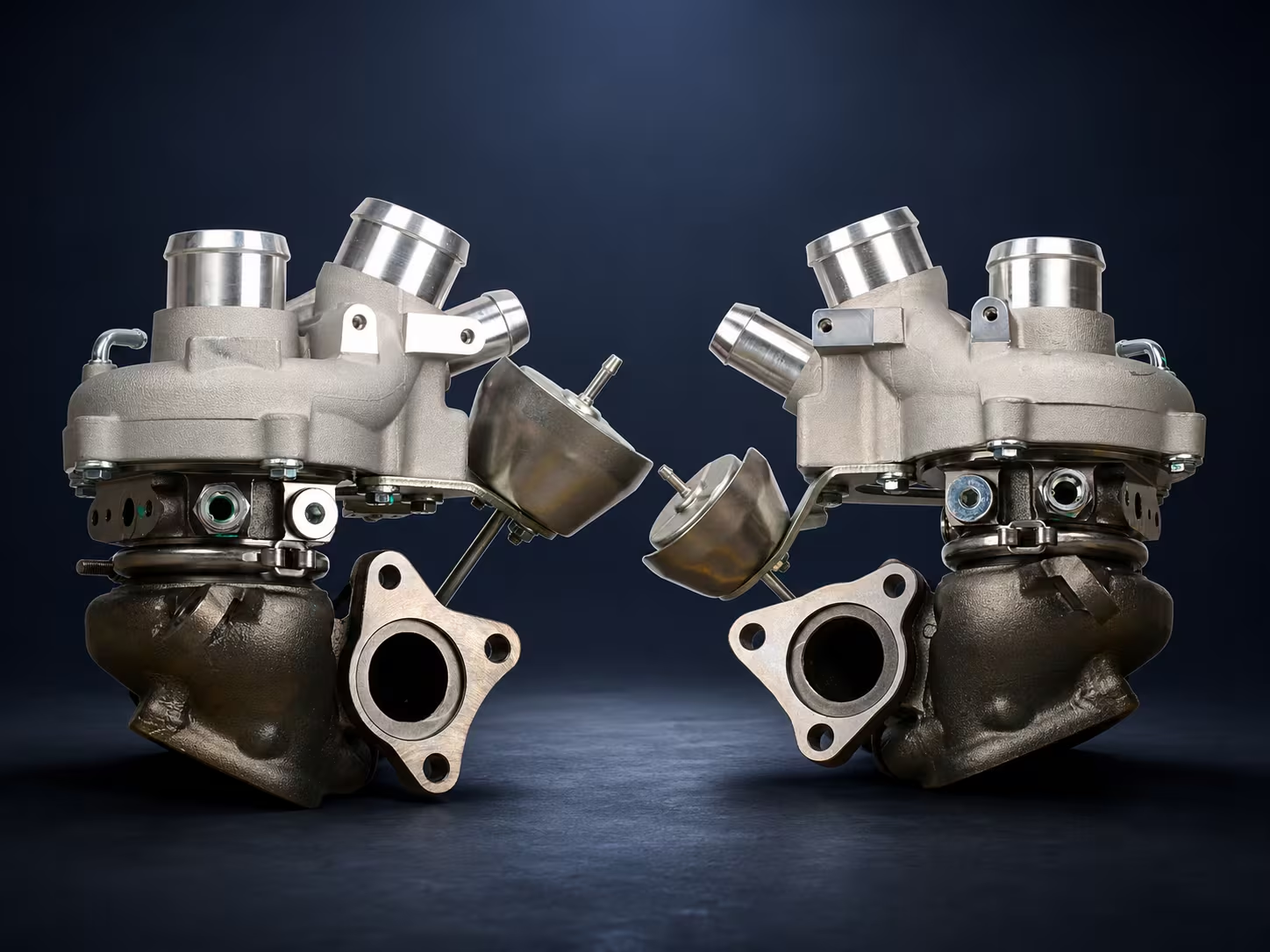
Why the shaft journal needs a hardened surface
At the interface between the Turbine Wheels shaft journal and a floating journal bearing, the oil film is extremely thin and the geometry is controlled in microns. Any scoring, wear, out-of-round condition or local deformation can reduce oil-film control and quickly lead to vibration, leakage, wheel rub or secondary shaft damage.
The journal therefore needs two properties that are difficult to balance with bulk treatment alone: a hard, wear-resistant running surface and a tougher core that can tolerate bending, torsion and thermal cycling.
What induction hardening does
Induction hardening uses a coil to heat only the selected surface zone of a steel shaft. The heated zone is immediately quenched, forming a hard martensitic case over a tougher core. In shop language this is often called high-frequency quenching.
For Turbine Wheels, the key benefit is selectivity. The journal land can be hardened without thermally cycling the entire shaft-and-wheel assembly or unnecessarily disturbing adjacent shoulders, threads, seal features and balance-critical geometry.
Wear, fatigue and rotor stability
A hardened journal helps resist abrasive scoring from contaminated oil, boundary-contact damage during poor lubrication events and clearance growth that can reduce hydrodynamic bearing control. When the induction process is tuned correctly, compressive residual stress near the surface can also improve fatigue-crack resistance.
The caution is that poor process control can create an unfavorable transition zone below the case. Serious specifications should define hardness range, effective case depth, heat-affected-zone limits, temper condition, geometry and inspection method, not just a surface-hardness target.
Why it matters in remanufacturing
A rebuilt turbocharger shaft can measure visually clean but still be risky if polishing, grinding or weld repair has removed or disturbed the hardened case. Once the case is compromised, the shaft may lose wear and fatigue margin even if it still appears round on a quick check.
Remanufacturers should treat the journal as both a dimensional feature and a metallurgical feature. Diameter, cylindricity, runout, surface finish, case condition and final CHRA balance all matter before release.
What to send before quote
Turbo model, Turbine Wheels photos and journal close-ups.
Shaft dimensions, bearing type and any visible scoring or heat discoloration.
Whether the request is for Turbine Wheels, shaft-and-wheel assembly, CHRA or repair kit supply.
Quantity, balance requirement and inspection expectations.
Practical sourcing rule
Use induction-hardened Turbine Wheels shaft journals when the application needs local wear resistance, fatigue margin and precision bearing control without full-section distortion. Do not judge a reusable shaft by appearance alone; verify the journal surface, geometry and balance workflow.
Why the bearing interface is the critical zone
The floating bearing interface is a small area carrying a large share of the turbocharger's reliability risk. The shaft journal runs on a thin oil film at high speed. If the journal surface wears, scores or loses roundness, the bearing system can lose oil-film control. That can lead to noise, leakage, rotor instability and wheel contact even when the rest of the assembly appears acceptable.
Induction hardening is useful because it treats the local journal surface while preserving a tougher core. The result is a wear-resistant case where the bearing runs, without making the full shaft unnecessarily brittle or distorting features that matter for assembly and balance.
What process control should define
A serious specification should define more than surface hardness. Effective case depth, transition zone, temper condition, heat-affected-zone limits, runout, diameter, cylindricity and surface finish all matter. If the hardened case is too shallow, later polishing can remove useful wear margin. If the process is too aggressive, distortion or an unfavorable transition zone can create fatigue risk.
The process also needs to protect nearby shoulders, threads, seal areas and wheel geometry. These features influence sealing, nut retention and final rotor balance. A good hardening route solves the journal wear problem without creating new assembly problems.
Remanufacturing inspection logic
A shaft can look clean on the bench but still be unsafe if the hardened case has been ground away. Rebuilders should inspect more than appearance. Diameter, cylindricity, runout and surface finish should be checked against the accepted rebuild standard. If the surface has deep scoring, unknown polishing history or heat discoloration, reuse becomes risky.
Final CHRA balancing remains necessary. Hardening improves the surface condition of the journal, but it does not replace rotor balance, oil-system cleanliness or correct bearing selection. Treat induction hardening as one part of the reliability chain.
Journal verification checklist
Confirm shaft journal diameter, cylindricity, surface finish and runout.
Check for scoring, heat marks, excessive polishing or unknown grinding history.
Verify effective case requirement where a drawing or rebuild standard is available.
Confirm bearing fit and oil-film control before release.
Balance the final CHRA or rotating assembly after component selection.
Appendix: Journal Surface Treatment Comparison
These treatments are compared for turbocharger shaft journal sourcing. The final specification should follow the OE drawing or validated rebuild standard.
| Treatment | How it works | Main advantage | Buyer note |
|---|---|---|---|
| Induction hardening | Local coil heating and immediate quench form a martensitic case. | Selective hardening with wear resistance and relatively low distortion. | Best fit when only the journal land needs a hard case. |
| Carburizing | Carbon diffusion plus quench creates a hard case. | Deep case and strong wear resistance. | Longer furnace route; more whole-part thermal exposure. |
| Nitriding | Nitrogen diffusion hardens the surface without a quench. | Low distortion and good anti-scuffing behavior. | Case is often shallower and alloy response matters. |
| Through hardening | Full-section heat treatment hardens the shaft body. | High bulk strength. | Less selective; can sacrifice hard-case/tough-core design logic. |
| Shot peening | Mechanical impacts introduce surface compression. | Useful fatigue supplement. | Not a substitute for a martensitic wear case. |
Appendix: Inspection Points for Shaft Journals
Use model-specific limits where available. These checks help avoid releasing a short-life rebuilt shaft.
| Check | Why it matters | Sourcing note |
|---|---|---|
| Journal diameter and cylindricity | Controls oil-film thickness and bearing stability. | Micron-level geometry matters on high-speed rotors. |
| Surface finish and scoring | Abrasive marks can grow clearance and damage bearings. | Reject deep scoring or unknown polishing history. |
| Case condition | The hardened layer provides wear and fatigue margin. | Do not remove excessive case during cleanup grinding. |
| Runout and balance | Shaft motion can drive vibration and wheel rub. | Final CHRA balancing remains required. |
Common Questions
Is high-frequency quenching the same as induction hardening?
In this context, yes. The more precise English term is induction hardening: localized electromagnetic heating followed by rapid quenching.
Can a polished turbo shaft still be unsafe?
Yes. If polishing or grinding removes too much hardened case, the journal may lose wear and fatigue margin even if it looks clean.
What should buyers verify?
Verify shaft dimensions, journal surface condition, effective case requirement where available, bearing fit, runout and final CHRA balance.