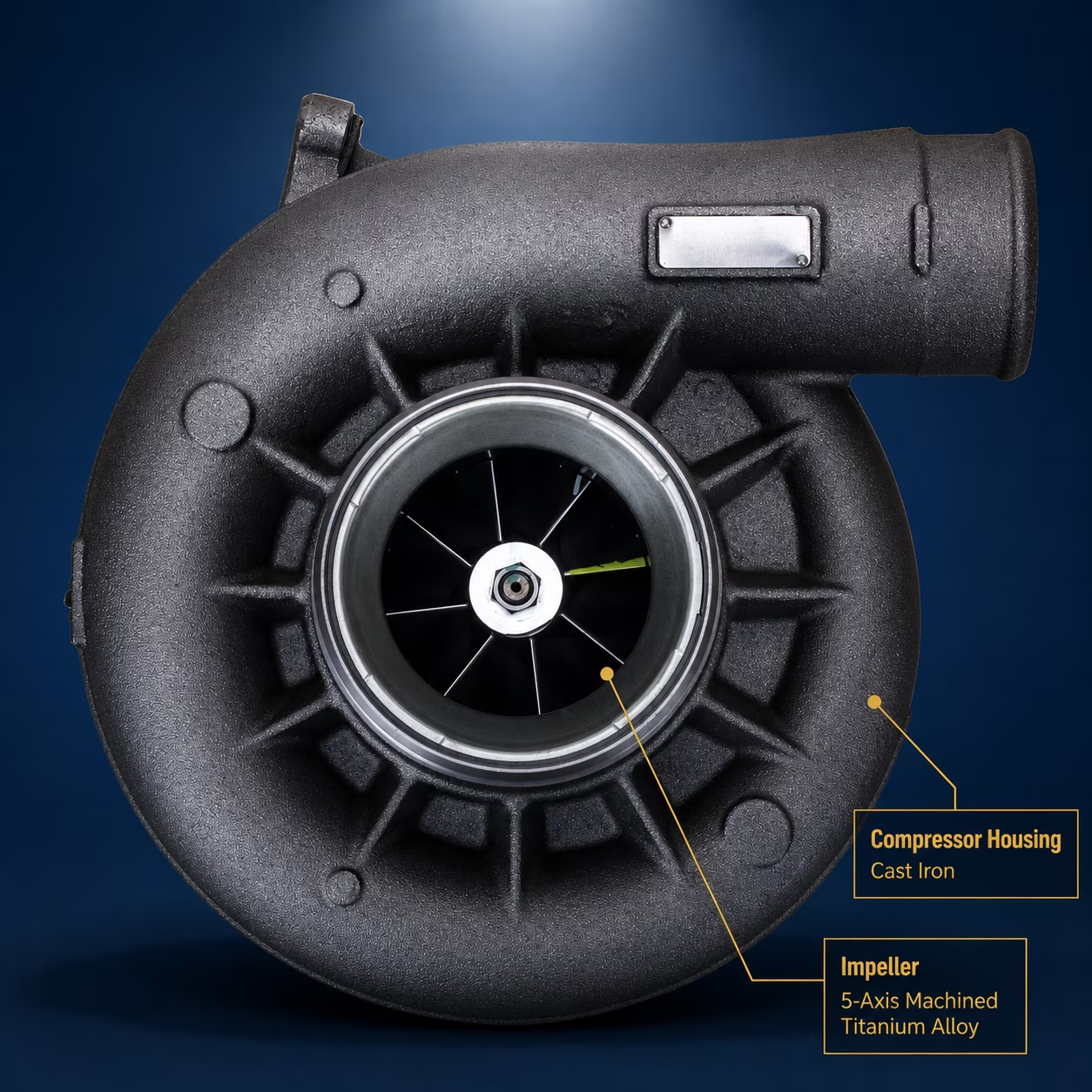
HX83 turbo duty is not a light-duty wheel problem
The HX83 sits in large-frame heavy-duty turbocharger territory, where compressor-wheel material is tied to engine size, airflow demand, high shaft speed, repeated load cycles and the commercial cost of a forced outage.
In this duty class, the compressor wheel is more than a replacement item. It is a high-speed rotating component that must preserve aerodynamic shape, bore integrity, blade-root strength and balance quality while surviving cyclic stress.
Why aluminum reaches a practical limit
Aluminum remains the baseline material for many compressor wheels because it is light, machinable and economical. That low density helps rotor response and keeps inertia down.
The limitation is duty. When compressor outlet temperature, fatigue-life requirement or overspeed margin moves beyond the practical aluminum envelope, the wheel needs more strength and temperature headroom than a standard aluminum route can comfortably provide.
Why titanium fits the HX83 compressor end
A Ti-6Al-4V-class titanium alloy is heavier than aluminum, but it brings a much stronger fatigue and temperature picture while staying far lighter than stainless steel or nickel-alloy alternatives. That middle position is why titanium makes sense for a large high-speed compressor rotor.
For HX83 sourcing, the material premium should be read as a reliability control. Titanium can reduce the risk of fatigue cracking, overspeed-related damage, specialist rework and warranty disputes when the wheel is processed, finished and balanced correctly.
Why steel and nickel alloys are poor compressor-wheel defaults
17-4PH stainless steel and Inconel 718 can offer impressive strength or temperature capability, but they also carry a large density penalty. On the compressor side, that mass is paid every revolution through higher centrifugal stress and rotor inertia.
The extra hot-side capability of nickel alloys is normally more useful near turbine temperatures than in the compressor wheel. For HX83 compressor service, titanium is the more practical compromise between structural margin and rotating mass.
Approved balancing is part of the material decision
A titanium HX83 compressor wheel should not be treated as a loose commodity upgrade. Wheel geometry, bore condition, hub profile, surface finish and final rotating-group balance all influence whether the material advantage becomes real field reliability.
Any HX83 rebuild or replacement path should therefore verify the balancing workflow, supplier qualification and dimensional evidence. The phrase 'titanium compressor wheel' is useful only when it is backed by controlled manufacturing and rotor-system approval.
What to send before quote
HX83 turbo part number, OE reference or clear old turbo tag photos.
Compressor wheel photos from the front, back, bore and blade-root areas if the unit is disassembled.
Engine model, equipment application, duty cycle and any known overspeed, surge or heat history.
Material requirement, balancing expectation, target quantity and whether the request is for a wheel, CHRA, core or complete turbocharger.
Practical sourcing rule
For HX83 duty, treat titanium alloy as the intended compressor-wheel material basis, not a decorative upgrade. Use aluminum only where the application and validation evidence clearly keep the duty inside aluminum limits, and avoid heavier steel or nickel substitutions unless a complete rotor redesign justifies the mass.
Fatigue, overspeed and temperature limits
The core HX83 question is not whether titanium sounds premium. It is whether the compressor wheel can survive a large-diameter, high-speed, cyclic duty cycle without losing fatigue margin. Compressor wheels see centrifugal stress, aerodynamic loading, vibration, transient surge events and thermal cycling. A material with better fatigue and temperature capability gives the rotor more room before small surface defects, machining marks or abnormal operation become failure starters.
Aluminum can be excellent when the operating envelope is controlled. The HX83 argument begins when that envelope becomes hotter, more cyclic or more safety-critical. Titanium is selected because it gives a stronger durability window without forcing the full mass penalty of steel or nickel alloys.
Rotor dynamics and mass tradeoffs
Every compressor-wheel material decision changes the rotating group. A heavier wheel increases inertia and centrifugal loading; a weaker wheel reduces fatigue and overspeed margin. The practical material has to sit between those risks.
Titanium is the useful middle ground for HX83-class compressor service. It is not as light as aluminum, but it is dramatically lighter than stainless steel or Inconel-class nickel alloys. That matters because a large high-speed compressor rotor pays for excess density every revolution.
Manufacturing controls that protect the titanium advantage
The material only helps if the wheel is produced and finished correctly. Bore condition, blade-root geometry, back-face transitions, surface finish, heat treatment, contamination control and inspection records all matter. Poor machining marks or uncontrolled finishing can turn a strong material into an avoidable fatigue risk.
For sourcing, the request should ask for more than a material label. Buyers should ask how the wheel is made, how critical surfaces are inspected, how the final rotating group is balanced and whether the supplier can support repeatable evidence for volume orders.
Recommended HX83 compressor-wheel specification points
Specify a titanium-alloy compressor wheel, using Ti-6Al-4V-class performance as the public benchmark unless the OEM program defines another qualified titanium grade.
Require material traceability, controlled heat treatment or process route evidence, and inspection of bore, hub, blade-root and back-face features.
Do not substitute wheel material without checking geometry, compressor-cover clearance, rotor mass and final balance process.
Treat coatings cautiously; any coating should be thin, dimensionally controlled and followed by final balance validation.
Use an approved or validated balancing route for the HX83 rotating assembly rather than judging the loose wheel alone.
Procurement rule for repeat HX83 orders
For repeat HX83 sourcing, keep the approved reference with the quote record: OE number, turbo tag, compressor-wheel evidence, supplier route, material note and balance requirement. This prevents future orders from being reduced to a vague 'HX83 titanium wheel' request.
If a substitute is proposed, require a written reason and evidence package before volume release. The buyer should understand whether the change affects wheel mass, compressor cover clearance, balance workflow, warranty risk or the approved rebuild route.
For industrial users, the lowest wheel price is rarely the lowest repair cost. A correctly specified titanium route can cost more at purchase and still reduce downtime exposure, rework and disputed failures.
Appendix: HX83 Compressor Wheel Material Comparison
Representative material families are shown for sourcing discussion. Confirm the applicable OEM drawing, supplier specification and balancing evidence before ordering.
| Material | Representative grade | Density picture | HX83 relevance | Buyer note |
|---|---|---|---|---|
| Aluminum alloy | 2618A or comparable high-strength aluminum | Lowest mass in this comparison | Useful where temperature and fatigue demand stay inside aluminum limits. | Attractive cost and inertia, but limited margin for HX83-class cyclic hot duty. |
| Titanium alloy | Ti-6Al-4V-class benchmark | Heavier than aluminum, far lighter than steel or nickel | Best balance of fatigue strength, heat margin and rotor mass for HX83 compressor service. | Verify alloy evidence, finish, contamination control and approved balancing. |
| 17-4PH stainless steel | Precipitation-hardening stainless | High density compared with titanium | Mechanically strong but dynamically heavy for a large compressor wheel. | Use only if a validated rotor design supports the mass penalty. |
| Nickel alloy | Inconel 718-class benchmark | Highest mass in this comparison | Excellent hot strength, but normally excessive for compressor-side temperature needs. | Better suited to hotter turbine-side problems than HX83 compressor-wheel replacement. |
Common Questions
Why does the HX83 need a titanium compressor wheel?
The HX83 operates in a large, high-duty turbocharger class where fatigue margin, heat resistance, rotor safety and approved balancing matter more than the lowest possible wheel cost.
Is titanium lighter than aluminum?
No. Titanium is denser than aluminum. Its value in HX83 duty is higher strength, fatigue resistance and temperature margin while remaining much lighter than steel or nickel alloys.
Can a non-titanium wheel be substituted?
Only with proper engineering validation. A substitute changes rotor mass, balance response, stress behavior and possibly the approved rebuild route.
What should buyers verify before ordering?
Verify the HX83 reference, wheel geometry, material evidence, manufacturing route, surface finish, inspection records and final balancing workflow.