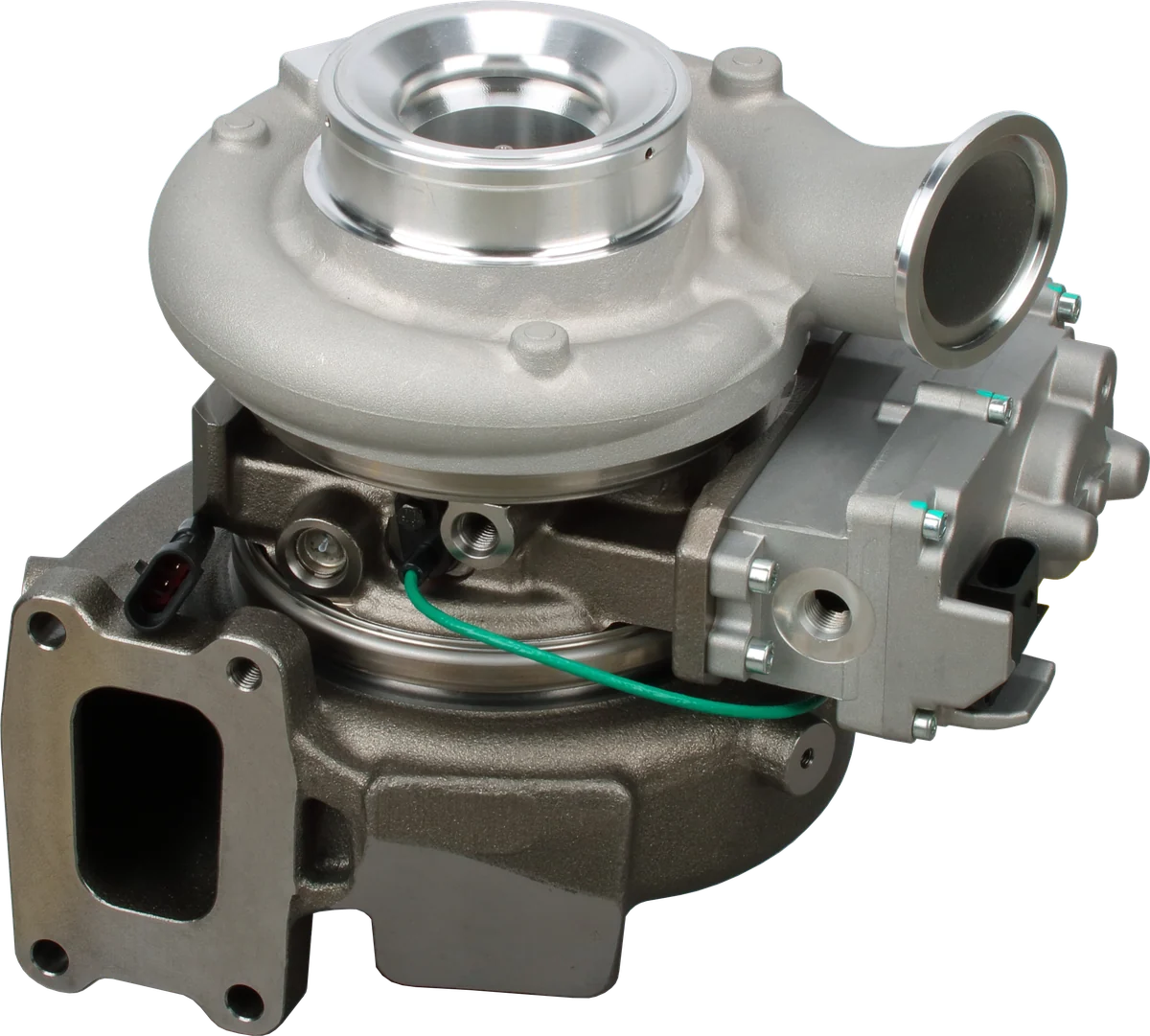
For owners comparing replacement parts, the terminology can be confusing. An e-turbo, an electric supercharger, and an aftermarket “hybrid turbo” may describe three different products. Understanding which system you have matters before diagnosing poor boost or ordering a replacement.
Why Electrical Assistance Helps With Turbo Lag
A conventional turbocharger uses exhaust energy to spin a turbine connected to an intake compressor. When you request more power, the engine must produce enough exhaust energy to accelerate the rotating assembly and build the required airflow and pressure.
That response takes time. At low engine speed or after light-load cruising, the turbine may have little energy available when you press the accelerator. Rotor inertia, turbo sizing, boost controls, and the volume of the intake system all influence the delay.
An electrically assisted turbo adds motor torque to accelerate the shaft while exhaust power is still building. A separate electric compressor can address the same delay by supplying boost through another path.
Neither arrangement makes every delay disappear. Engine controls, transmission response, traction limits, and available electrical power still affect acceleration. Electrical assistance also cannot correct a boost leak or restricted exhaust. Our guide to what causes turbo lag explains the conventional factors.
Four Systems That Should Not Be Confused
The useful distinction is where the electrical machine sits and what it drives.
| System | Basic arrangement | Main purpose | Key service difference |
|---|---|---|---|
| Conventional turbocharger | Exhaust turbine drives a compressor through a shared shaft | Produce boost using exhaust energy | Mechanical condition, lubrication, and boost controls dominate diagnosis |
| Electrically assisted turbo, or e-turbo | An electric motor assists the turbine-compressor shaft | Improve response; some designs also recover energy | Adds motor, power electronics, and electrical control requirements |
| Separate electric compressor | A motor drives a compressor without its own exhaust turbine | Provide additional airflow when needed | Has its own electrical supply, controls, and air-path hardware |
| Turbo-compound system | An additional exhaust power turbine drives a mechanical load or generator | Recover useful energy from exhaust | Requires diagnosis of the recovery equipment and its integration |
An electrically operated wastegate or variable-geometry actuator does not make a conventional turbocharger an e-turbo. The actuator adjusts boost control hardware; it does not supply power to the compressor shaft.
How Does an Electric Turbocharger Work?
In a shaft-assisted design, the electric motor acts on the same rotating assembly as the turbine and compressor. Control electronics command assistance according to engine demand and operating limits.
As exhaust energy becomes sufficient, electrical assistance can decrease. The turbine continues doing the familiar job of powering the compressor. The motor supplements exhaust drive rather than removing the need for it.
Some systems use an electrical machine capable of both motoring and generating. Under suitable conditions, turbine power can drive that machine to produce electricity. Recovery depends on exhaust conditions, battery charge acceptance, and the control strategy.
This is not free energy. Extracting power changes the turbine's operating load, and the system must manage the effect on boost and exhaust pressure. Electrical conversion also introduces losses.
Electric Supercharger vs. Turbo
A separate electric compressor—often called an electric supercharger—has no exhaust turbine of its own. Its motor directly drives a compressor in the intake system.
It may work alongside a conventional turbo, supporting airflow until the exhaust-driven unit can meet demand. Depending on the layout, bypass valves route air around the electric compressor when it is not needed.
For the buyer, the distinction is practical: a failed electric compressor may be a separate component from the exhaust turbo. Replacing the conventional turbo will not fix a fault in that compressor's power supply or bypass control.
Turbo-Compound and Energy Recovery
Turbo-compounding focuses on extracting additional useful work from exhaust gas. A separate power turbine can transfer power mechanically toward the drivetrain or drive a generator.
That differs from using a motor to accelerate the boost-producing turbo shaft. Some electrically assisted turbos combine assistance and generation in one assembly, but the functions remain distinct: one consumes electricity to improve response; the other converts available exhaust power into useful output.
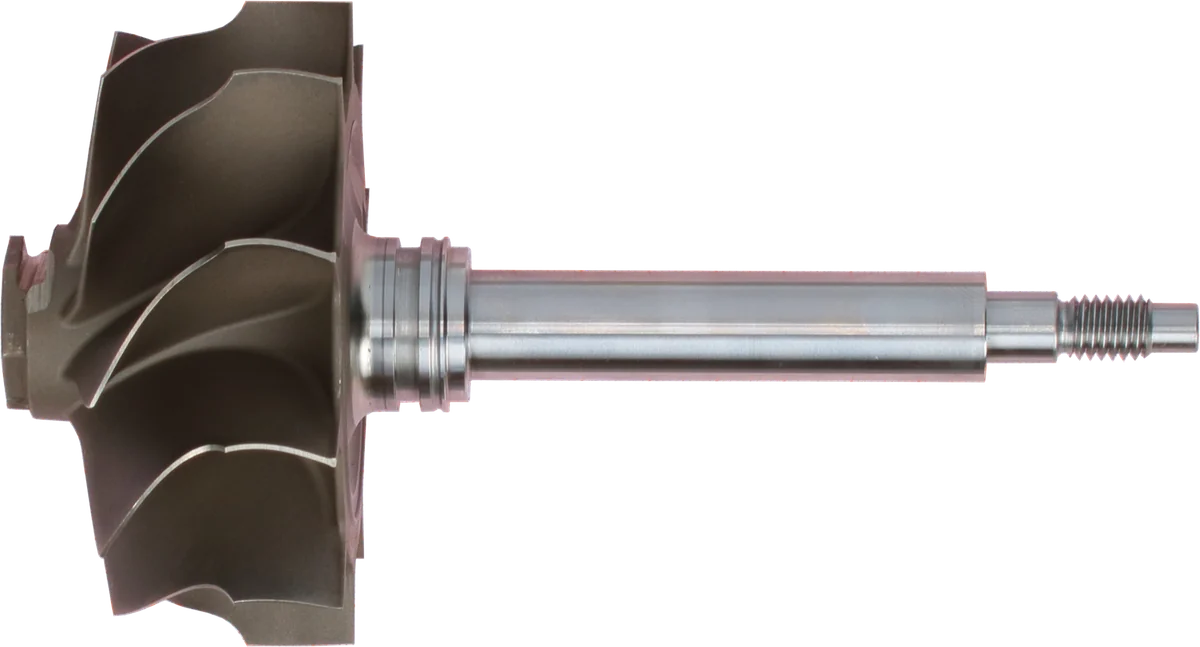
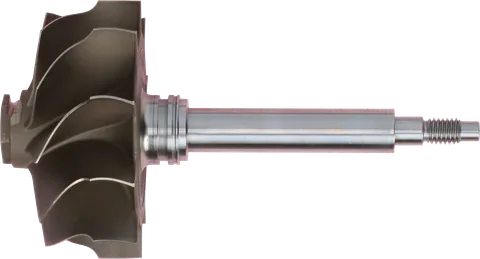
Turbine wheel: exhaust energy drives the shaft.
Shaft surface: inspect wear and scoring before reuse.
Shaft end: connects to the compressor-side rotating parts.
Product photograph from 2026. Numbers identify the features explained below.
Electric Turbocharger vs Hybrid Turbo
“Hybrid turbo” is an ambiguous description, so ask what hardware the seller means.
In discussions of electrification, the term may describe a turbo system combining exhaust power with electrical assistance or energy recovery. It is not precise enough to identify the architecture by itself.
In aftermarket performance catalogs, a hybrid turbo commonly means an upgraded turbo built around an original-style housing. It may use different compressor or turbine wheels, machining changes, or revised internal parts. It does not necessarily contain any electrical assistance.
An upgraded wheel also does not guarantee faster response. Its size, mass, aerodynamic design, and match to the turbine and engine affect the result. Fueling, boost control, and calibration must suit the combination.
Likewise, a turbocharged hybrid vehicle can use an ordinary exhaust-driven turbo. Electric propulsion and electric turbo assistance are separate features.
Why 48V Systems Matter
Electric boost assistance demands meaningful power. Compared with a 12V supply, a higher-voltage system can deliver the same electrical power with less current. This helps make the wiring, connections, and power electronics more practical.
A 48V electrical architecture can support electric boosting equipment, but it does not automatically mean the vehicle has an e-turbo. It may power other equipment instead.
Nor must every e-turbo use 48V. The required supply depends on the vehicle and system design.
Electrical boost ultimately draws energy from somewhere: a battery, a generator, or recovered energy. Battery charge, temperature, and power limits can restrict available assistance. Reduced response can therefore originate outside the turbocharger.
A nominal 48V circuit is distinct from a hybrid's high-voltage traction circuit, but it can still deliver damaging fault currents. Follow the specified isolation procedure, and never assume disconnecting the 12V battery disables every power source.
Benefits and Trade-Offs
The main benefit is improved response when exhaust energy is insufficient. Electrical assistance can also give designers more flexibility in selecting a turbo for higher-load operation without accepting the same low-speed response compromise.
Depending on the complete engine system, that flexibility may support efficiency or emissions goals. It does not guarantee lower fuel consumption in every vehicle or driving condition.
The trade-offs include:
- Cost: The motor, inverter, wiring, sensors, and cooling provisions add hardware and potential replacement expense.
- Heat management: Exhaust heat, compressor heat, and electrical losses must stay within component limits.
- Electrical dependence: Battery, supply, communication, or control faults can reduce assistance even when the turbo rotates normally.
- Packaging: Additional electrical and cooling connections affect access and replacement procedures.
- Operating limits: Motor assistance must respect shaft speed, compressor operating range, and temperature limits.
Electrical assistance cannot safely compensate for an undersized turbo by driving it beyond its limits. The controller must coordinate airflow, exhaust control, and motor torque.
High-Speed Bearings Still Matter
Adding a motor does not remove the need for precise balancing, stable bearings, and correct lubrication. Where a motor is integrated into the rotor, the complete assembly's mass distribution and vibration behavior must be engineered together.
Bearing arrangements vary. Do not assume every e-turbo uses ball bearings or that a conventional journal-bearing repair procedure applies.
Residual imbalance produces rotating forces tied to shaft speed. In oil-film bearing systems, lubricant motion can also excite vibration below shaft speed. These mechanisms differ, and a whistle alone cannot identify which one is present.
Electrical machines and switching electronics add further possible sound sources. Diagnosis should connect noise with operating conditions, fault data, and physical inspection. See why a turbo may whine for other causes.
Diagnosing and servicing an electric turbocharger
Start with the exact system identity and the manufacturer's service information. An underboost code can reflect an air leak, exhaust problem, conventional boost-control fault, or missing electrical assistance.
Useful inspection and diagnostic points include:
- Record fault codes and freeze-frame data before clearing anything.
- Compare requested and actual boost, plus assistance commands and feedback where available.
- Check the relevant battery, supply voltage, grounds, fuses, and communication faults using approved procedures.
- Inspect accessible connectors and harnesses for heat damage, corrosion, or chafing.
- Check intake hoses, charge-air plumbing, bypass valves, and exhaust connections.
- Verify specified oil and coolant supplies and investigate restrictions or leaks.
- Check applicable software information and replacement setup requirements.
Avoid applying battery power directly to motor connections or using generic resistance tests on integrated electronics. The correct test method depends on the hardware.
Replacement may require programming, parameter setup, adaptations, or calibration. Those requirements vary by application; a physically matching assembly may still be incompatible electronically.
Owners should not open, probe, repair, or attempt DIY isolation of high-voltage components. That work belongs with a technician trained and equipped for the vehicle. Follow manufacturer procedures for 48V equipment as well.
The broader process in diagnosing a failed turbocharger before replacement remains useful: establish the cause before replacing the assembly.
Choosing Replacement Parts
Order by verified application and part number, not by the words “electric” or “hybrid.” Confirm the turbo's electrical configuration, connectors, cooling arrangement, and any required control compatibility. The same checks apply when replacing a turbocharger in a hybrid.
A conventional CHRA or repair kit should not be assumed suitable for an electrically assisted assembly. Motor integration, balancing requirements, and manufacturer service limits may change what can be replaced separately. Our CHRA versus complete turbocharger guide explains the basic distinction.
Before purchasing, collect the vehicle details, readable identification numbers, fault codes, and symptom history. Use the turbo fitment checklist to verify the match.
Common Questions
Does an electric turbocharger still use exhaust gas?
Yes. An electrically assisted turbo retains an exhaust-driven turbine and adds a motor to help turn the shaft. A separate electric compressor has no exhaust turbine of its own and is a different device.
Is an electric supercharger the same as an e-turbo?
No. An electric supercharger uses a motor to drive a separate compressor. An e-turbo places electrical assistance on the shaft shared by the exhaust turbine and compressor. Both can improve response, but their hardware and controls differ.
Does every hybrid vehicle have a hybrid turbo?
No. A hybrid vehicle combines engine power with electric propulsion, but its engine may be naturally aspirated or use a conventional turbo. Vehicle hybridization does not establish which boosting system is installed.
Can an electric turbocharger recharge the battery?
Some designs can operate their shaft-mounted electrical machine as a generator. Others provide assistance only. Separate exhaust-driven generators can also recover energy. Charging capability depends on the complete system, not simply the e-turbo label.
Can you retrofit an electric turbocharger?
It is generally not a direct replacement. The conversion needs compatible electrical power, controls, cooling, packaging, and engine calibration. Matching the mounting flange or compressor size does not make an e-turbo compatible with the vehicle.
Can a DIY owner repair an electric turbocharger?
Owners can perform accessible visual checks allowed by the service manual. Internal electrical repairs, rotor work, and programming require appropriate equipment and expertise. Do not perform DIY work on high-voltage components; use a technician trained for that vehicle's electrical system.
Why is my electric turbocharger not working?
An air leak, exhaust restriction, boost-control fault, or missing electrical assistance can cause poor boost. Record fault codes before clearing them, and inspect accessible hoses, connectors, and wiring. Have the battery, electrical supply, and controls checked using manufacturer procedures to establish the cause before replacing the turbocharger.
Need help identifying a replacement? Contact LeadTurbo with your turbo part number, vehicle details, and symptoms so we can help check the appropriate options.