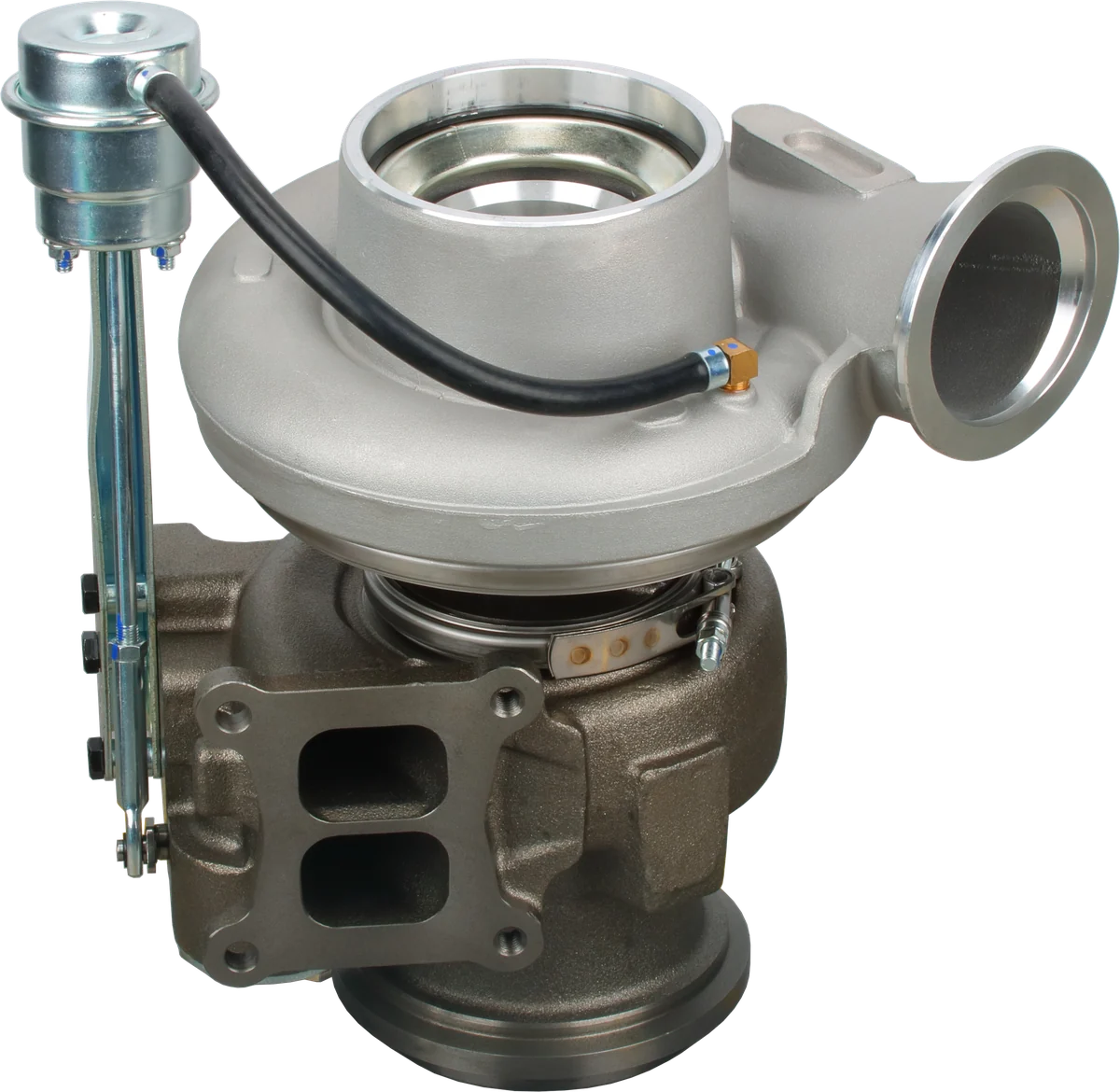
Start with the engine's job
An internal gate is usually the practical choice for a replacement turbocharger on an otherwise standard engine. It packages the bypass valve with the turbine housing and preserves the arrangement the engine was calibrated to use. An external gate becomes useful when a custom installation needs more bypass flow or independent valve servicing.
Factory diesel trucks commonly rely on internal wastegates or variable-geometry turbochargers (VGT), which alter the turbine's effective flow area.
Integrated hardware saves space, reduces hot exhaust joints, and keeps production and installation costs manageable. Properly matched internal gates provide adequate control within their intended operating range. Some older trucks and industrial engines use fixed-geometry turbochargers without a wastegate.
Before choosing replacement parts:
- Identify the turbo part number and engine configuration.
- Confirm actuator type, mounting orientation, and signal routing.
- Record changes to fueling, the manifold, or turbo sizing.
How does a turbocharger wastegate work?
A wastegate limits boost by diverting part of the exhaust stream past the turbine wheel. Less exhaust energy reaches the wheel, helping limit shaft speed and compressor output. The gate can therefore help a responsive turbine arrangement control boost as engine load and exhaust flow increase.
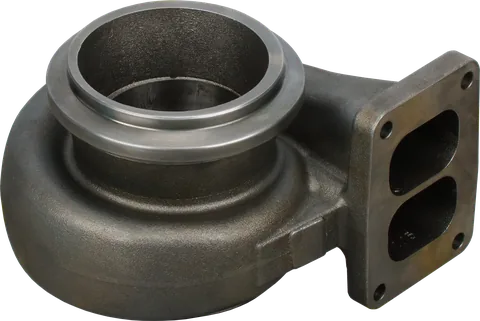
An internal or integral wastegate uses a bypass passage cast into the turbine housing. A pivoting flapper closes the passage; an actuator moves a rod and lever to uncover it. Bypassed exhaust joins the flow leaving the turbine.
An external gate uses a separate valve body attached to the exhaust manifold or another suitable feed point before the turbine. Its discharge generally reconnects to the exhaust downstream of the turbine. That layout offers flexibility in valve size and placement, but requires additional plumbing and heat protection.
The actuator canister on an internal design already sits outside the turbo. Its location does not make the valve an external wastegate; follow the exhaust passage to identify the design.
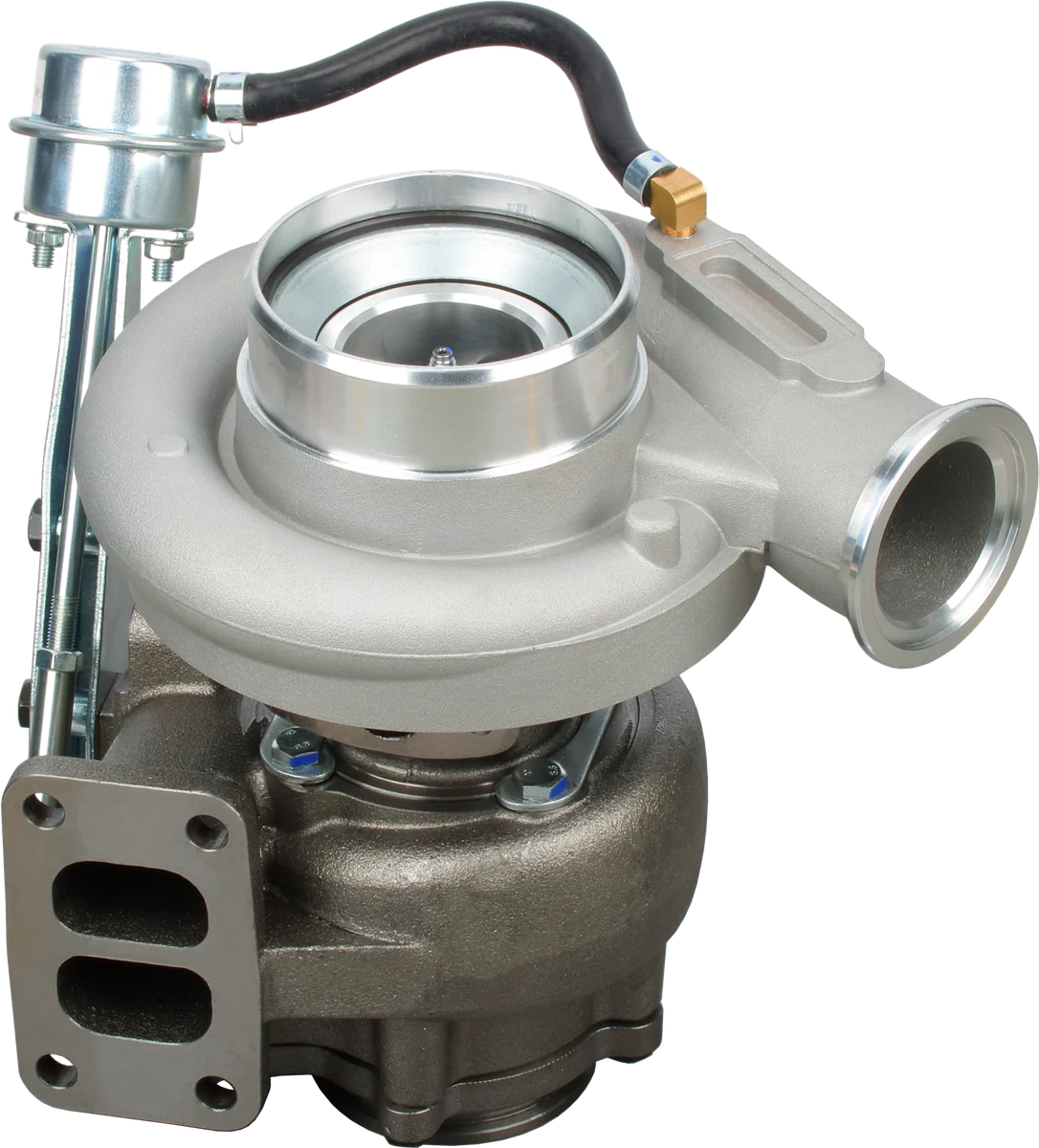
Compressor housing: guides the compressed air.
Turbine housing: guides exhaust gas to the turbine.
Actuator: check its type, linkage and calibration.
Product photograph from 2026. Numbers identify the features explained below.
How the actuator and spring work
On a common pressure-to-open system, a hose delivers boost pressure to the wastegate actuator. Pressure acting on a diaphragm pushes against a spring, moving the linkage or external valve. As signal pressure falls, spring force returns the valve toward its seat.
Diesel turbocharger wastegate spring pressure is an opening reference under specified conditions, not a guaranteed maximum boost reading. Initial movement and full opening happen at different pressures. Exhaust pressure acting on the valve, linkage geometry, and any control solenoid also influence operation.
A controller can alter the pressure reaching the actuator, so manifold boost and actuator pressure may differ. Some systems use vacuum or electronic actuation instead; their checks require the appropriate service procedure.
Comparing internal vs external wastegate designs
When comparing internal vs external turbocharger wastegates, there is no universal horsepower threshold for switching designs. Required bypass flow, valve travel, and installation space determine whether a gate can do the job.
| Factor | Internal / integral | External |
|---|---|---|
| Cost | Usually lower total cost on an original application | Valve, fittings, fabrication, and control hardware add expense |
| Packaging | Compact, with short exhaust routing | Needs clearance for the valve, branch, outlet, and heat shielding |
| Flow capacity | Limited by the housing passage, flapper lift, and outlet | Can offer greater capacity when the entire bypass path is sized correctly |
| Boost creep risk | Higher if required bypass flow exceeds available capacity | Lower with adequate sizing and placement; still possible with restrictive plumbing |
| Sealing | Fewer exhaust joints; flapper, shaft, and seat wear can affect closure | Dedicated valve seat, plus flange and pipe joints to inspect |
| Service | Actuator may be replaceable; housing or pivot repairs can be involved | Valve may be removable and rebuildable, depending on design and access |
An external valve's advertised diameter does not tell the whole story. A poorly positioned manifold branch or restricted return pipe can limit bypass flow even when the valve itself is large.
Separate boost creep from a failed gate
Boost creep is a sustained rise above the intended boost level as exhaust flow increases even though the gate is fully open. A brief overshoot during a load change is a different symptom. An actuator that never opens fully can imitate a flow-capacity problem.
Confirmed boost creep is a useful reason to revisit the internal vs external wastegate choice. First verify the pressure signal, valve movement, and available travel. An external conversion will not repair incorrect control plumbing.
Lower boost targets can require a larger share of exhaust to bypass the turbine. That is why choosing a gate solely from an engine's peak power rating can be misleading.
Use the following checks to narrow the fault before ordering a turbocharger:
| Fault | Likely behavior | What to inspect |
|---|---|---|
| Sticking flapper | Erratic boost; high or low depending on stuck position | Binding at the lever, pivot, or valve |
| Worn bushing | Leakage, inconsistent seating, or lever rattle | Excess movement at the flapper shaft and poor alignment |
| Cracked seat | Possible bypass leakage and slow boost rise | Seat damage and sealing condition with the housing accessible |
| Torn diaphragm | Weak or absent opening on a pressure-operated actuator | Pressure retention and rod response using the specified test |
| Wrong preload | Early opening, delayed opening, or reduced available stroke | Rod setting and travel against the correct calibration data |
| Leaking signal hose | Delayed opening and possible overboost on pressure-to-open systems | Heat damage, cracks, loose connections, and incorrect routing |
Symptoms overlap: low boost alone does not prove the gate is leaking. Check the charge-air system and control faults before condemning the turbo.
How to run a turbocharger wastegate actuator pressure test
Start with a cold engine, secure the vehicle, and keep it off during the mechanical checks. Obtain the actuator's pressure and travel specifications; there is no reliable universal opening pressure for diesel turbos.
Use a hand-operated pressure pump with a suitable gauge. Never connect unrestricted shop air. If the unit uses vacuum or electrical control, stop and use the matching procedure.
- Inspect the circuit. Check hose routing, fittings, brackets, and the rod retaining clip. Replace damaged signal hoses before evaluating control behavior.
- Isolate the actuator. Disconnect its signal hose and connect the pump directly to the correct port, following the manufacturer's instructions for any additional ports.
- Raise pressure gradually. Record the pressure at first rod movement and the pressure needed to reach the specified travel. Stay within the actuator's test limit.
- Watch the movement. The rod should move smoothly and return consistently as pressure is released. Stop if it binds; forcing it can damage the diaphragm or linkage.
- Check retention. If a pressure-hold test is specified, use its prescribed pressure and duration. Confirm that pump connections are sound before attributing leakage to the diaphragm.
- Separate valve and actuator faults when permitted. With pressure released, disconnect the linkage only if the service procedure allows it. Check lever movement without changing the rod length or losing clips.
| Observation | Next check |
|---|---|
| Pressure falls during an approved hold test | Leak-test pump fittings, then the actuator |
| Rod moves but flapper binds separately | Inspect the valve, pivot, and linkage alignment |
| Travel is short at the specified pressure | Check interference, preload, and actuator compatibility |
| Cold checks pass but boost rises under load | Verify hot operation, the control signal, and bypass flow |
A cold bench test cannot prove that the valve seals at operating temperature or that the bypass passage has enough capacity under load. After reconnecting everything, verify boost control under a controlled operating test using the engine's specified procedure.
Record engine speed, load, requested boost if available, and measured boost. Compare readings on the same pressure basis: a scan tool may report absolute pressure, while a boost gauge typically reports pressure above atmospheric.
Keep replacement preload at its specified setting
Preload is the initial actuator spring loading established with the valve seated and the linkage installed. It helps keep the flapper closed before the opening signal arrives. Changing rod length can alter initial opening pressure, seating force, and remaining travel.
On many pressure-operated internal gates, shortening the rod increases closing force. Excessive adjustment can reduce available opening travel, producing a boost-control problem even with a healthy diaphragm. Lengthening the rod can allow early opening or prevent proper seating.
Leave a new, correctly matched turbocharger's factory setting alone unless the supplier's installation procedure requires adjustment. If replacing only the actuator, obtain the specified setup method, opening pressure, and travel requirements for that turbo.
The same rod length does not guarantee the same calibration when brackets, actuator geometry, or spring characteristics differ. Do not bend the rod, change bracket position, or rotate housings casually to make a mismatched unit fit.
An external gate's replaceable spring also needs a specified control strategy and safe assembly procedure. Stronger springs are not a cure for an undersized bypass path. Any approved calibration change needs verification across the engine's intended operating range.
Higher boost alone does not show that an adjustment is safe. Any change must keep the turbocharger within its operating limits under sustained load. A delivery truck pulling a long grade places demands on the control system that a brief engine rev in the shop cannot reproduce.
Common Questions
Which wins the internal vs external wastegate comparison for a stock diesel?
A correctly matched internal gate is usually the best choice for a stock wastegated engine. It preserves fitment and calibration while avoiding custom exhaust plumbing. Choose an external setup when the application has a demonstrated bypass-flow requirement that the original layout cannot meet.
Does an external wastegate automatically add power?
No. Its main job is controlling the exhaust bypass. It can address insufficient bypass capacity, but any power benefit depends on the turbo match, boost target, fueling, and the rest of the installation.
Is wastegate spring pressure the maximum boost?
No. Spring rating describes an actuator or gate under stated conditions. Actual boost also depends on exhaust forces, control plumbing, and available bypass flow. Use the specified opening-pressure and travel tests to judge an actuator.
Can a leaking signal hose cause overboost?
Yes, on a pressure-to-open actuator, losing the pressure signal can delay opening or keep the gate shut. Other control arrangements may respond differently, so identify the system before interpreting the symptom.
Can I adjust the rod on a replacement turbo?
Keep the factory calibration unless the correct installation procedure calls for adjustment. If actuator replacement requires setup, follow the specified preload, opening pressure, and travel checks. A guessed rod setting can cause either underboost or overboost.
Can a turbocharger wastegate cause overboost?
Yes. Incorrect preload or a leaking signal hose can delay opening on pressure-to-open systems.
Which wastegate should a replacement turbocharger use?
A matched internal gate usually suits stock wastegated engines; external gates can address insufficient bypass capacity.
For help matching a replacement turbocharger or actuator, contact LeadTurbo with the turbo part number, engine details, and a description of the fault.