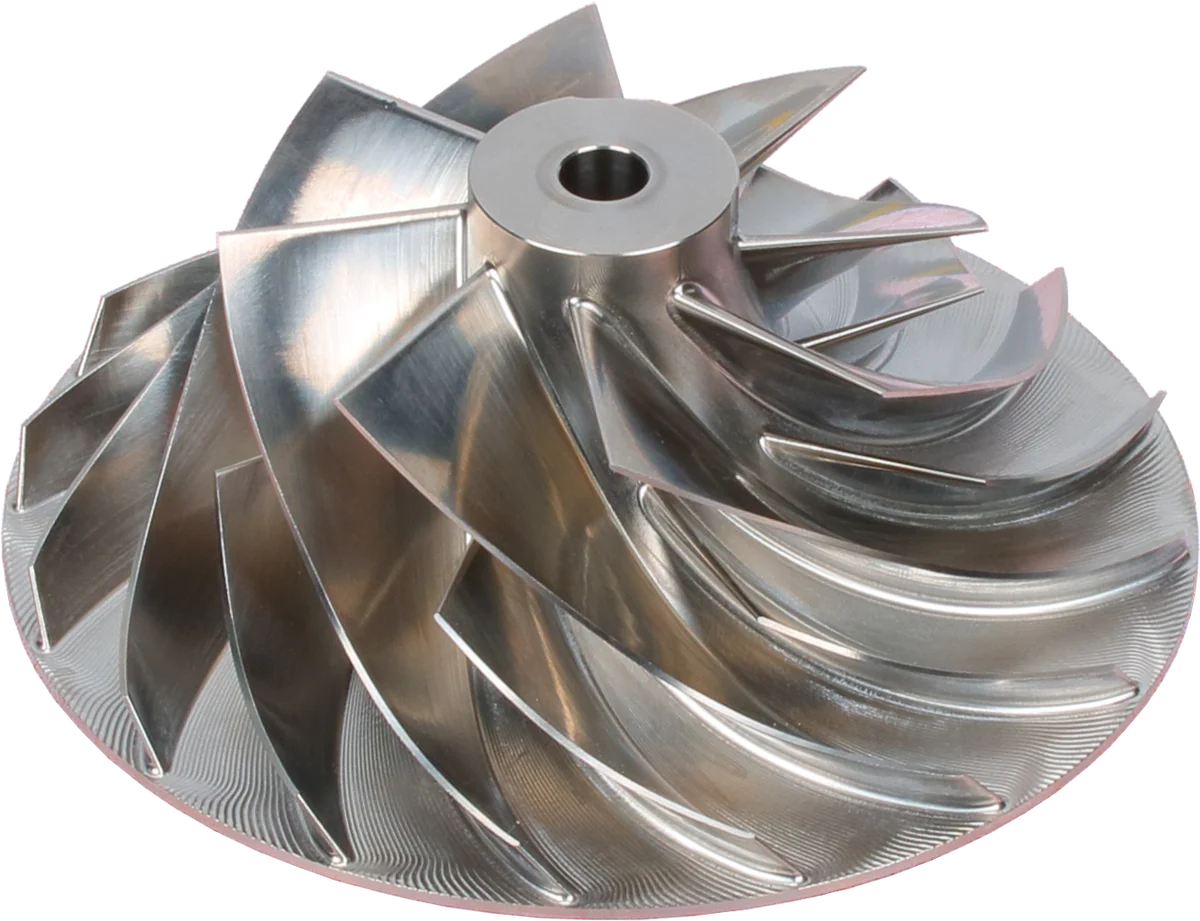
Turbo foreign object damage happens when material enters the compressor or turbine and strikes a rotating wheel. The immediate problem is damaged blades; the larger problem is whatever allowed that material to reach them.
A replacement turbocharger will not fix an open intake connection, debris trapped in charge piping, or an engine shedding metal into the exhaust. Before ordering parts, establish which side was hit, where the material originated, and where the fragments traveled afterward.
Turbocharger Compressor vs Turbine Damage
The compressor handles intake air. The turbine handles exhaust gas. This distinction gives you the starting point for tracing diesel turbocharger foreign object damage, although damage can spread beyond the original impact.
Compressor-side sources
A damaged compressor wheel usually directs attention toward the air path between the air cleaner and turbo inlet. Possible sources include:
- Air filter failure or poor sealing: A torn, incorrectly fitted, or poorly seated filter can allow dirt and larger debris past it.
- Loose hardware: A washer, screw, or other small part dropped during service can remain in the intake until startup.
- Intake debris: Sand, small stones, shop debris, or material left inside replacement piping can reach the wheel.
- Failed hoses and connections: A deteriorating inlet hose can shed material. A loose clamp or separated joint downstream of the filter can admit unfiltered air and debris.
An external clamp does not automatically become an ingested object when it loosens. Often, its role is creating an opening through which debris enters. Check the physical route instead of assuming every nearby missing fastener passed through the turbo.
The charge pipes and intercooler sit downstream of the compressor during normal airflow. They are important places to look for fragments shed by a damaged wheel, even when they were not the original source.
Turbine-side sources
Chipped turbine blades require an investigation upstream through the exhaust manifold and, where indicated, into the engine.
Potential sources include broken valve material, piston fragments, a failed injector tip, and gasket fragments exposed to the exhaust stream. Broken manifold studs or other hardware are candidates only if a fragment can physically enter the exhaust passage. A broken external stud alone does not establish the cause.
Also inspect the manifold and any turbine inlet hardware fitted to that turbo. Material may originate close to the wheel rather than inside a cylinder.
There can be a longer chain of damage: compressor fragments may travel toward the engine, cause cylinder damage, and generate debris that subsequently reaches the turbine. Finding damage on both wheels does not establish which failed first.
How to Inspect Turbocharger Blades
To determine what causes turbocharger blade damage, inspect with the engine off and cool, following the vehicle's service procedure. Use good lighting and photograph the wheel before cleaning or disturbing deposits. Do not run the engine to improve your view.
| Observation | What it may suggest | What to check next |
|---|---|---|
| Distinct leading-edge nicks or missing chunks | Impact by a hard object | Upstream components, loose hardware, and recoverable fragments |
| Bent tips or folded blade edges | An impact, handling damage, or housing contact | Local impact marks, housing rub marks, and shaft condition |
| Fine pitting and broadly rounded edges | Repeated exposure to fine particles and erosion | Filter sealing and intake leaks admitting dust |
| Similar rubbing across multiple blade tips | Wheel-to-housing contact | Bearings, shaft movement, housing condition, and the original cause of contact |
| Irregular chips on turbine blades | Exhaust-side debris impact | Manifold passages, inlet hardware, and possible engine damage |
| Cracks or substantial blade separation | A serious rotating-part failure with several possible causes | Specialist inspection for impact, fatigue, contact, or overspeed evidence |
Erosion generally looks more distributed than a single hard-object strike. Impact damage tends to leave discrete dents, tears, or missing sections. These patterns can overlap, especially after the turbo continues operating.
A wheel touching its housing can also create metal debris and further blade damage. Do not label every damaged tip as FOD: bearing failure may have started the sequence.
The compressor inlet usually provides a better view of incoming blade edges than the turbine outlet does. An outlet-side turbine inspection may miss damage near the turbine inlet. Housing removal or further inspection may be necessary.
For a broader diagnostic sequence, see how to diagnose a failed turbocharger before replacement.
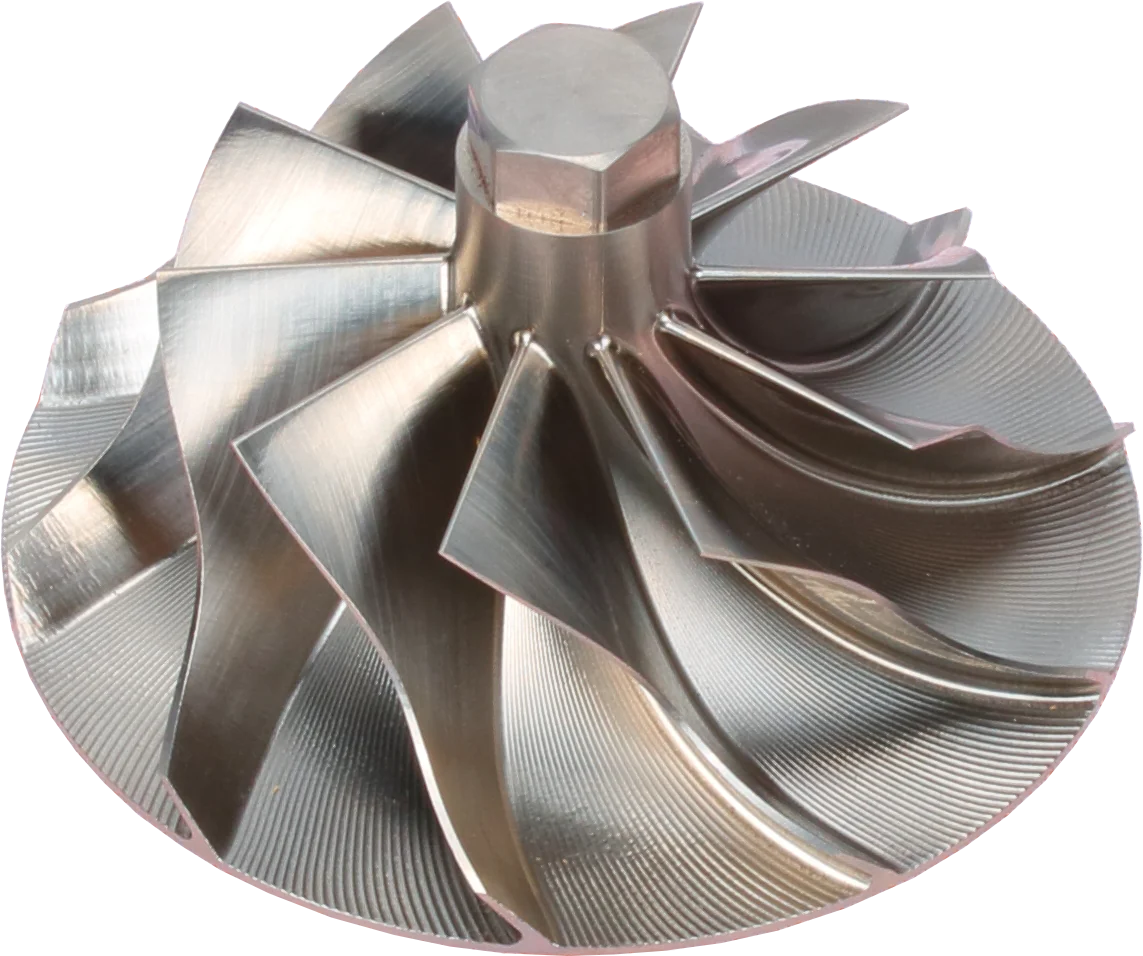
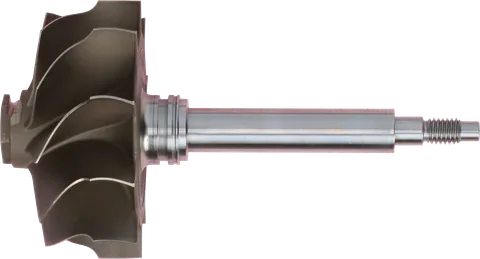
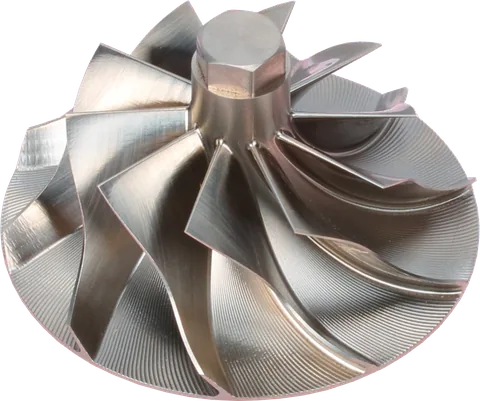
Blades: inspect for chips, bends and contact marks.
Hub: part of the balanced rotating assembly.
Outer blade tips: check for housing rub.
Product photograph from 2026. Numbers identify the features explained below.
Is a Chipped Turbocharger Blade Dangerous?
At turbocharger operating speed, a small change in mass distribution can create a significant rotating load. Missing material changes balance; bending a blade changes both its mass position and the way it handles airflow.
For the same amount of unbalance, the exciting force increases with the square of rotational speed. Doubling speed produces four times that force. The resulting vibration also depends on the shaft, bearings, oil film, and operating conditions, so visible chip size cannot tell you how severe the vibration will become.
The consequences can include:
- Increased bearing loads and accelerated wear.
- Larger shaft motion and wheel-to-housing contact.
- Reduced compressor or turbine efficiency.
- Blade cracking and additional material loss.
- A new whistle, whine, or other change in operating sound.
Unbalance can produce vibration that repeats with each shaft revolution. However, a whistle alone does not prove FOD. Air leaks, aerodynamic effects, and bearing-related motion can also produce noise. Oil-film instabilities are a separate mechanism and need not track shaft speed in the same way.
A turbo that still makes boost is not necessarily safe to reuse.
Why You Should Not File or Straighten Blades
Filing a nick removes more material and changes the blade profile. Straightening a bent tip can introduce cracks or worsen damage that is difficult to see. Neither process establishes that the blade will survive its operating loads.
Making the blades look similar does not restore rotor balance. Removing material from an opposite blade to “even things out” is especially unreliable.
Professional balance correction uses controlled procedures and designated correction areas on serviceable components. It does not make a cracked, bent, or impact-damaged blade serviceable. A replacement wheel also needs the appropriate assembly and balancing process; see turbocharger balancing explained.
Do not spin the wheel with compressed air as a test.
Inspection Checklist for Turbo Foreign Object Damage
Keep the engine off until the damage and debris path have been assessed. Preserve recovered pieces and document their locations; their material and shape may help identify the source.
1. Inspect the complete intake tract
Work from the air entry point to the compressor:
- Remove and inspect the filter for tears, distortion, incorrect fit, and damaged sealing surfaces.
- Look for dust tracks on the clean side of the airbox.
- Check every downstream hose, joint, clamp, resonator, and connected branch.
- Inspect hose interiors for loose lining, deterioration, and missing material.
- Account for hardware and anything introduced during recent service.
- Compare recovered fragments with damaged upstream components.
A new filter alone does not solve a cracked airbox or an intake joint that leaks after the filter.
2. Check the charge pipes and intercooler
When compressor material is missing, determine where it went. Inspect the compressor outlet, charge hoses, intercooler connections, and downstream intake path.
- Collect visible fragments without pushing them farther into the system.
- Inspect low points and areas where oil may hold debris.
- Follow the vehicle manufacturer's cleaning or replacement procedure.
- Assess whether the engine may have ingested fragments.
- Replace components whose internal passages cannot be reliably cleared and checked.
Shaking an intercooler until nothing falls out does not establish that it is clean. Internal passages can retain material. Do not assume a replacement turbo will safely blow remaining debris through the engine.
3. Investigate the engine and exhaust path for turbine FOD
Inspect the exhaust manifold and turbine inlet for impact marks, missing material, and loose components. Check whether suspect hardware actually communicates with the exhaust stream.
Where cylinder debris is possible:
- Review misfire, compression-loss, and abnormal combustion symptoms.
- Inspect accessible cylinders and piston crowns with a borescope.
- Assess valves and related components for damage.
- Inspect suspect injector tips using the appropriate service procedure.
- Use compression, leak-down, or further disassembly as indicated by the findings.
An injector fault code alone does not establish that an injector tip broke. Likewise, one clear borescope image cannot rule out every valve or cylinder problem. Match the inspection depth to the evidence.
4. Inspect the remaining turbo and its support systems
Check housings for scoring, embedded debris, cracks, and damaged sealing surfaces. Assess the shaft and bearings against the applicable service limits.
Also inspect oil supply and drain condition. Lubrication trouble may have caused wheel contact, or impact-related vibration may have damaged previously serviceable bearings. Multiple faults can coexist.
Use the replacement turbo installation checklist to cover the supporting systems before reassembly.
Replace the Wheel, CHRA, or Complete Turbo?
Choose the repair for turbo foreign object damage after establishing the extent of damage and correcting its source.
Wheel replacement can be appropriate in a qualified turbo rebuilding operation when the remaining components pass inspection. The replacement must match the original aerodynamic and mechanical specification. Many turbine wheels are supplied as a wheel-and-shaft assembly. Reassembly requires the specified checks and balancing; a loose replacement wheel is not automatically a ready-to-install repair.
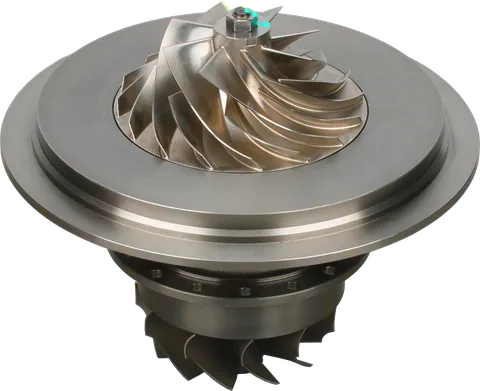
CHRA replacement replaces the central rotating assembly, including the shaft, wheels, and bearing system. It may suit a turbo whose original housings and other reusable components remain serviceable. The replacement must match the application, and any variable-geometry mechanism or actuator requires its own inspection and setup.
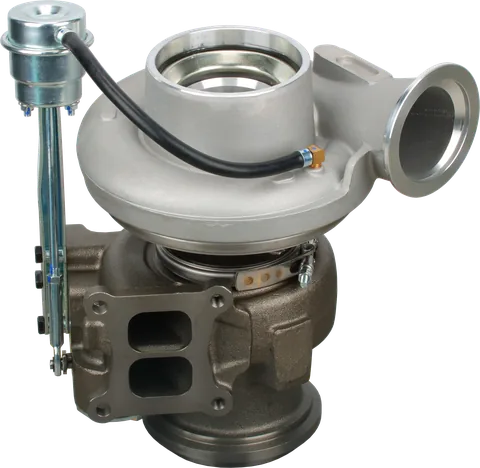
Complete turbo replacement is often appropriate when housings are damaged, debris has affected multiple components, or a reliable rebuild cannot be established. Confirm whether the replacement includes the actuator and whether calibration is required.
A bearing and seal kit cannot restore damaged blades. Our CHRA vs. complete turbocharger guide explains the replacement choices in more detail.
None of these options eliminates the need to remove retained debris and repair the original fault.
Common Questions
Can I drive with a chipped turbo blade?
Do not keep driving once blade damage is confirmed. A small chip can affect balance, and a damaged blade may shed more material. Shut the engine down and arrange inspection or towing instead of testing whether the turbo still makes boost.
Does a damaged compressor wheel always mean the air filter failed?
No. Debris can enter through an intake leak downstream of the filter, come from deteriorating intake components, or be left behind during service. Bearing failure and wheel contact can also damage blades without an incoming foreign object.
Do chipped turbine blades prove the engine needs rebuilding?
No. Turbine-side debris can come from the exhaust manifold or hardware exposed to the exhaust passage. However, valve, piston, and injector damage must be investigated when the evidence points toward a cylinder. The debris source and engine condition determine the repair.
Can I file a nick smooth or straighten a bent blade?
No. Filing changes blade mass and geometry, while straightening can introduce cracks or worsen existing damage. Neither restores verified strength or rotor balance. Replace damaged rotating parts through an appropriate turbo repair process.
Will a turbo repair kit fix foreign object damage?
A bearing and seal kit does not repair damaged wheels, a bent shaft, or scored housings. It may be part of a professional rebuild, but only after the damaged parts are replaced and the assembly receives the required inspection and balancing.
Does the intercooler need replacement after compressor damage?
It depends on contamination and the vehicle manufacturer's procedure. Inspect the intercooler and charge pipes for fragments and oil. If internal passages cannot be reliably cleaned and verified free of debris, replace the affected component before restarting.
Does turbocharger blade damage require replacement?
Damaged rotating parts need replacement. Choose a wheel, CHRA, or complete turbo based on component condition. Remove retained debris and repair the original fault before reassembly.
Need help choosing replacement parts after diagnosing turbo foreign object damage? Contact LeadTurbo with your turbo part number, vehicle details, symptoms, and photos of the damage.