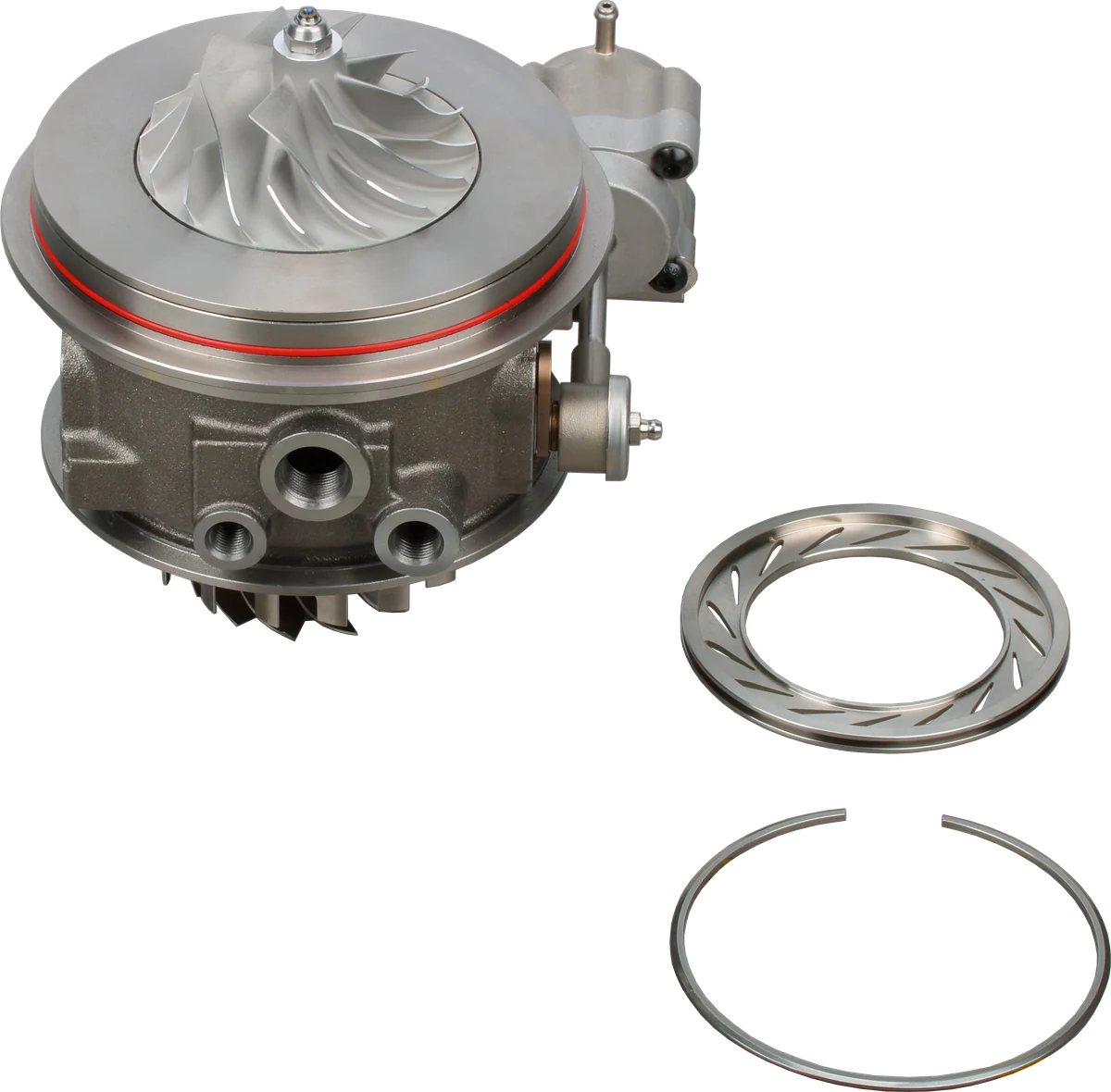
For turbocharger rattle at idle, the useful first question is what makes the noise change: temperature, engine speed, exhaust movement, or actuator position. These clues help separate an inexpensive hardware repair from a boost-control fault or internal turbocharger damage.
Sound travels through exhaust pipes, brackets, and engine castings. Something that sounds like it comes from the turbocharger may originate farther down the exhaust.
What Usually Causes Turbo Rattle?
Start with accessible external components. A loose metallic rattle is more suggestive of hardware or linkage movement than bearing failure alone.
| Possible source | Typical clues | Useful first check |
|---|---|---|
| Wastegate flapper, shaft bushing, or linkage | Metallic chatter at cold start, idle, or certain operating conditions | Inspect external joints and distinguish normal travel from looseness |
| Heat shield or exhaust clamp | Tinny buzz in a narrow engine-speed range | Check cold fasteners, cracked mounting holes, and contact marks |
| Exhaust hanger or bracket | Rattle over bumps or as the powertrain moves | Check supports and clearance around the downpipe and exhaust |
| Actuator rod or joint | Clicking or chatter near the boost-control mechanism | Inspect retaining hardware and verify actuator operation |
| VGT linkage or vane mechanism | Noise accompanied by sticking, inconsistent response, or boost faults | Check external linkage and commanded versus actual position, where available |
| Internal rotor damage | Scraping, grinding, or rough whine, possibly with smoke or lost boost | Inspect wheels, housings, lubrication, and shaft movement using service specifications |
These are clues, not diagnoses. Normal-sounding boost does not rule out wear, and an underboost code does not prove that the rotating assembly has failed.
Gasoline Turbocharger Wastegate Rattle: Why Startup and Idle Matter
A wastegate controls exhaust flow around the turbine. On designs with an internal flapper, a shaft passes through the turbine housing and connects to an actuator through a lever and linkage.
Wear can develop at the flapper, shaft bushing, lever joint, or actuator-rod connection. Exhaust pulses can make loose parts chatter. Temperature changes alter clearances, while actuator position changes how firmly parts are held.
This makes wastegate hardware a common suspect for turbo rattle on startup or chatter at idle on gasoline turbo engines. A noise that quiets after warmup fits that possibility, but a loose heat shield can behave similarly.
Separate the potential failures:
- Loose external connection: A worn joint, damaged clip, or loose bracket may be separately repairable.
- Actuator fault: A failed diaphragm, motor, gear mechanism, or position sensor can affect control, depending on actuator design.
- Wear inside the turbine housing: A loose flapper shaft or worn bushing will not necessarily be corrected by fitting an actuator.
Some movement is necessary for operation. Feeling movement at the lever is not enough to condemn it; determine whether the movement is intended rotation or unwanted looseness.
Do not shorten the rod, add a spring, or increase preload merely to silence the noise. These changes can affect wastegate opening and boost control. Our guide to wastegate versus VGT boost control explains the different mechanisms.
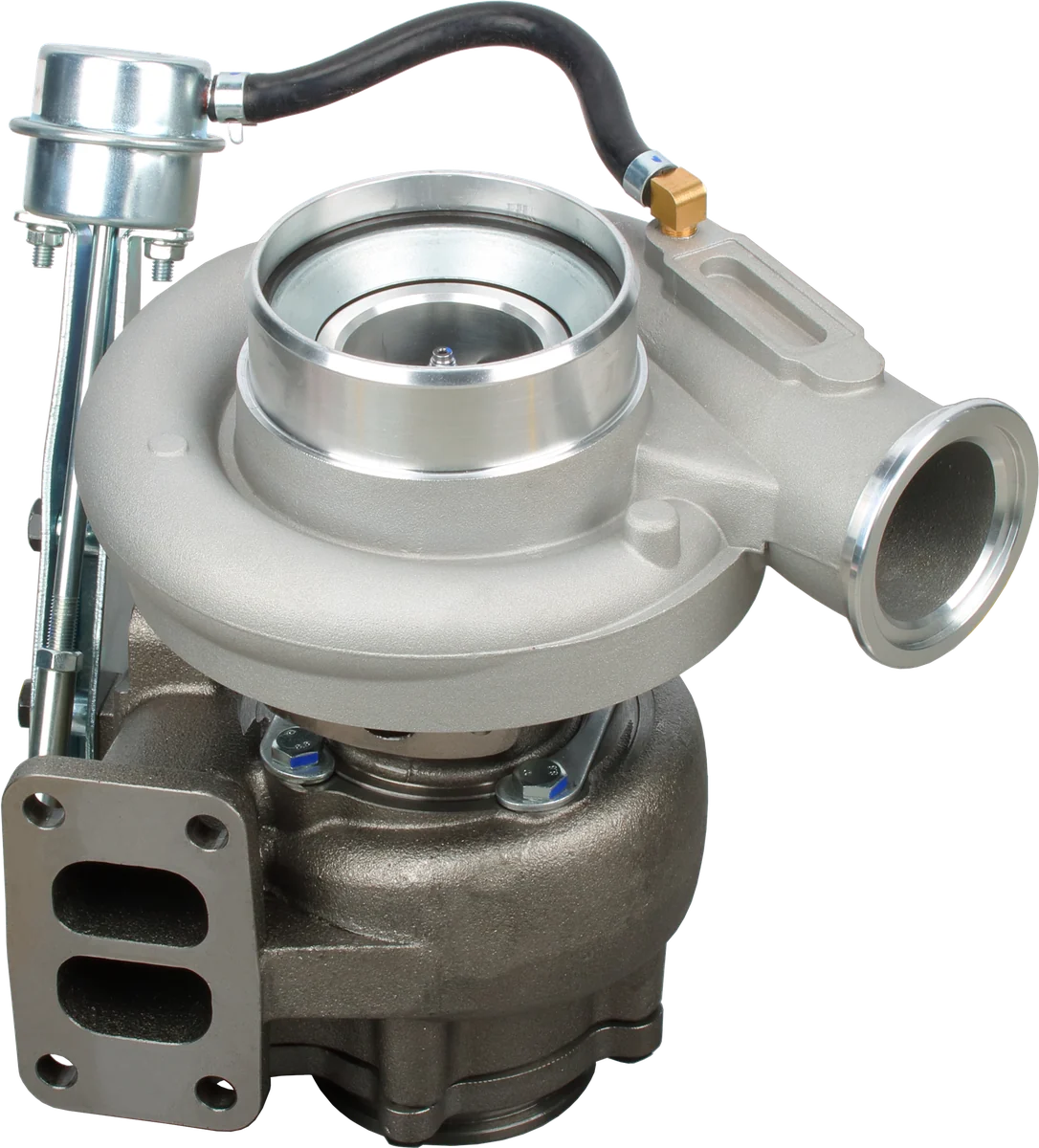
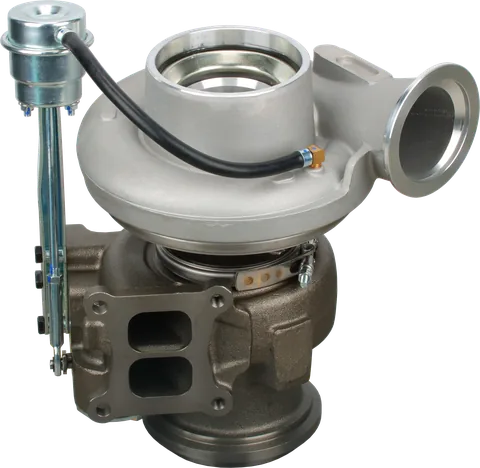
Compressor housing: guides the compressed air.
Turbine housing: guides exhaust gas to the turbine.
Actuator: check its type, linkage and calibration.
Product photograph from 2026. Numbers identify the features explained below.
Heat Shields, Clamps, and Exhaust Hangers
A turbocharger heat shield rattle often has a thin, tinny character. A loose bolt, cracked mounting hole, or shield touching adjacent metal can let engine vibration shake it.
An exhaust clamp, downpipe support, or hanger can produce a heavier sound. Missing support can let the exhaust contact a crossmember, bracket, or body panel. Inspect beyond the turbo itself.
With the engine off and the exhaust completely cold:
- Check shield bolts, brackets, and mounting holes.
- Look for shiny rub marks where neighboring parts touch.
- Inspect clamps for looseness, damage, and signs of exhaust leakage.
- Gently move accessible exhaust sections to check supports and clearance.
- Inspect rubber hangers and metal brackets for separation or cracks.
A bolt may be tight while the surrounding shield is cracked. Tightening it further will not repair the mounting hole.
Restore the correct hardware, support, and clearance. Keep heat shields installed because nearby wiring, hoses, and other components depend on their protection.
VGT Linkage and Actuator-Rod Noise
A variable-geometry turbocharger changes exhaust flow through movable vanes rather than relying solely on a wastegate. External linkage, actuator connections, or an internal vane mechanism can develop wear or restricted movement.
A rattle near the actuator does not establish that the actuator has failed. It may be moving a worn connection, struggling against a sticking mechanism, or transmitting noise from another component.
Check the system in this order:
- Inspect brackets, rod ends, clips, and visible linkage.
- Check relevant wiring, connectors, vacuum hoses, or pressure hoses.
- Read diagnostic codes and position data where supported.
- Use the specified actuator test to compare commanded movement with actual response.
Do not force an electronic actuator through its travel by hand. Manual movement and disconnection procedures vary, and some units can operate with the engine stopped.
If the actuator moves but the mechanism sticks, replacing the actuator alone may leave the fault unresolved.
Wastegate Rattle vs Turbocharger Bearing Noise: Signs of Internal Damage
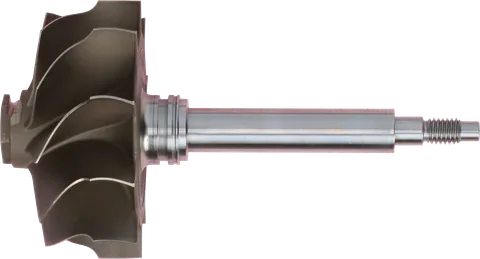
A bearing problem does not usually announce itself as the simple chatter of a loose shield or wastegate linkage. Internal damage becomes more concerning when the noise includes scraping, grinding, or a new rough whine, particularly with other symptoms.
Bearing wear or lubrication failure can allow excessive rotor movement. If a compressor or turbine wheel touches its housing, that contact can create metallic noise and further damage.
Look for supporting evidence:
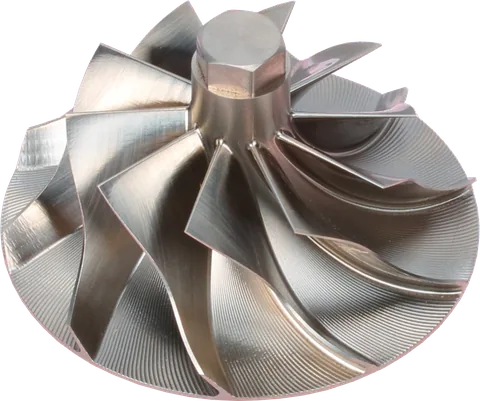
- Wheel-to-housing rub marks or damaged blade tips.
- Shaft movement outside the turbo manufacturer's limits.
- New smoke, abnormal oil consumption, or oil-supply problems.
- Sudden boost loss or a marked change in operating sound.
Some journal-bearing turbos have perceptible radial movement when stopped because operating oil pressure is absent. A finger check cannot establish running clearance, and generic internet clearance limits are unreliable across designs. See turbo shaft play: how much is normal?.
Stop the engine if there is scraping, grinding, significant smoke, an oil-pressure warning, or sudden power loss. Repeated acceleration to “hear it better” can turn an inspectable problem into greater damage.
Why a Rotor Problem Can Sound Rough Instead of Smooth
A rotating assembly can vibrate in more than one way. Imbalance creates a repeating force tied to shaft rotation. In an oil-film bearing, the shaft can also move around within its support at a different rate.
The oil film does not behave like a spring with the same stiffness everywhere. Its supporting forces change with shaft position, movement, and operating conditions. Engineers call this behavior nonlinear.
When these motions interact, the vibration can rise and fall in strength or vary in timing. A sound that might otherwise seem like a steady tone can become wavering, pulsing, or rough. In a frequency analysis, modulation can appear as extra components beside a main tone, called sidebands.
Contact between rotating and stationary parts can make the vibration more complicated still. However, a rough sound does not prove oil whirl, and sidebands are not a diagnosis owners can reliably make by ear or with a phone recording.
The practical lesson is to pay attention when the character of the sound changes. Follow it with mechanical inspection and operating checks. For more background, read turbo oil whirl and oil whip explained.
How to Diagnose Turbocharger Rattle
1. Record the conditions
Note whether the rattle occurs cold, warm, at idle, during gentle acceleration, after lifting off the throttle, or over bumps. Record warning lights and recent exhaust or turbo work.
Engine speed and turbo shaft speed are different. A noise following engine RPM does not automatically identify the rotor.
2. Inspect cold external hardware
Check shields, clamps, supports, and visible linkage before removing intake plumbing. Look for missing retainers, cracked brackets, and contact marks.
With the engine off and cold, gently check accessible linkage only as the service procedure permits. Avoid bending rods or forcing stops. Keep fingers clear of mechanisms that may self-actuate.
3. Localize the sound safely
A mechanic's stethoscope can help compare accessible stationary housings or brackets. Use a contact probe only where it can remain clear of belts, fans, moving linkage, and hot exhaust surfaces. Never place it on rotating components.
Where access is poor, a technician can install remote listening sensors with the engine off. Sound travels through metal, so the loudest location is a starting point rather than proof.
4. Verify actuator response
Use the appropriate scan-tool routine or specified pressure or vacuum test. Check for smooth travel and whether the mechanism reaches its intended positions.
Do not apply arbitrary pressure, vacuum, or direct battery power. Test requirements depend on the actuator.
5. Inspect the rotor when evidence points inward
If external checks do not explain the noise, or damage symptoms are present, follow the failed turbocharger diagnosis guide. Protect opened intake plumbing from debris and never run the engine with inspection tools or fingers near an exposed wheel.
Which Repair Makes Sense?
Match the repair to the confirmed wear.
Shields, clamps, and supports: Replace damaged hardware, repair cracked mounting points appropriately, and restore exhaust clearance. Use the specified tightening procedure.
External linkage or actuator: Replace separately serviceable worn components. An actuator replacement may require adjustment, calibration, or adaptation. Confirm that the wastegate or vane mechanism moves correctly before installing it.
Wastegate housing wear or internal VGT damage: Specialist repair or a complete turbo may be necessary when the worn mechanism is not separately serviceable. A new actuator cannot restore a worn shaft bushing.
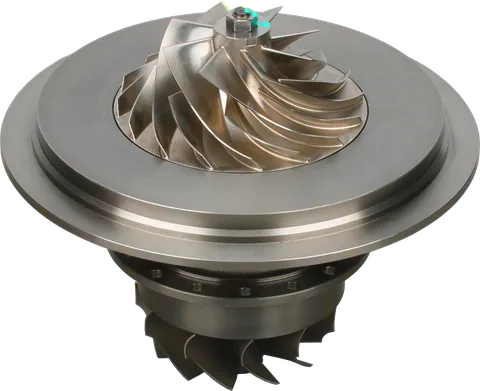
Rotating assembly damage: A CHRA may be appropriate if the housings and control mechanisms remain serviceable. Wheel contact, damaged housings, or combined faults may favor a complete unit. Compare CHRA versus complete turbocharger replacement.
A repair kit cannot correct every worn surface, damaged shaft, or balancing problem. Fix the original lubrication, contamination, or control fault before returning the turbo to service.
Common Questions
Why does my turbo rattle on startup and then stop?
Temperature changes can alter clearances in wastegate hardware and exhaust shields, while startup operating conditions can excite loose parts. A noise that fades as the engine warms does not identify the source. Inspect cold hardware and compare cold and warm operation.
Does wastegate rattle mean I need a new turbo?
Not always. A worn external joint or faulty actuator may be separately serviceable. Wear in the flapper shaft, bushing, or seat may require specialist housing repair or a complete turbo, depending on the design and available approved repairs.
Can I tighten the actuator rod to stop the noise?
Do not change rod length or preload simply to silence a rattle. That adjustment can change wastegate operation and boost control. Use the specified setup procedure and confirm whether the wear is in the linkage, actuator, or wastegate itself.
Can turbo bearings make a rattling sound?
Internal damage can produce rough or metallic noise, particularly when a wheel contacts its housing. However, a loose metallic rattle alone is weak evidence of bearing failure. Check for contact marks, damaged blades, abnormal shaft movement, oil problems, and performance changes.
Is it safe to drive with a turbo rattle?
That depends on the cause. Stop driving if the noise includes scraping or grinding, significant smoke, an oil-pressure warning, or sudden power loss. A confirmed loose shield may need only a hardware repair, but an unidentified rattle should be inspected before heavy-load driving.
Will replacing the CHRA fix wastegate rattle?
Usually not when the wear is in the wastegate flapper, its housing bushing, or external linkage. A CHRA replaces the rotating center assembly. It does not renew those separate parts, so identify the worn component before ordering.
Does a rattling turbocharger need replacing?
Not always. A confirmed loose shield may need only hardware repair, and some worn linkage or actuators are separately serviceable. Housing wear or combined faults may require a complete turbo.
Need help identifying replacement parts? Contact LeadTurbo with your turbo part number, vehicle details, and symptoms, including when the rattle occurs.