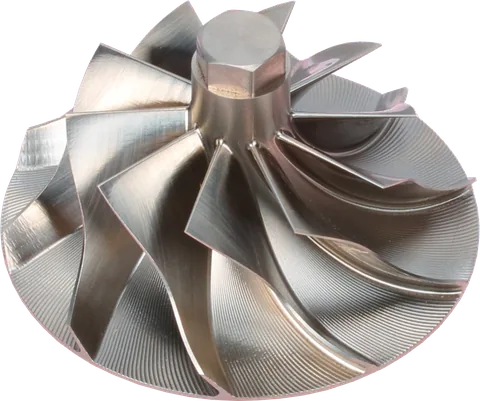
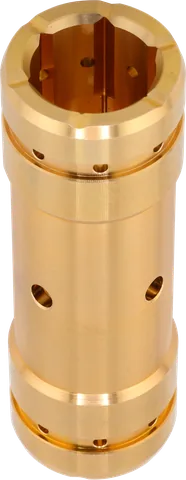
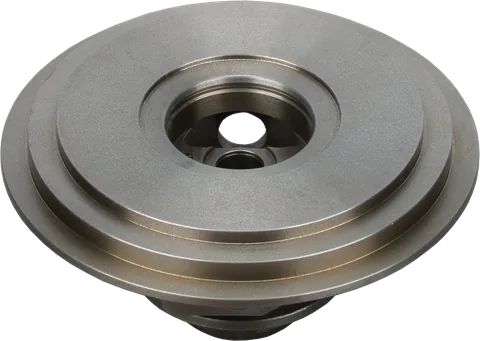
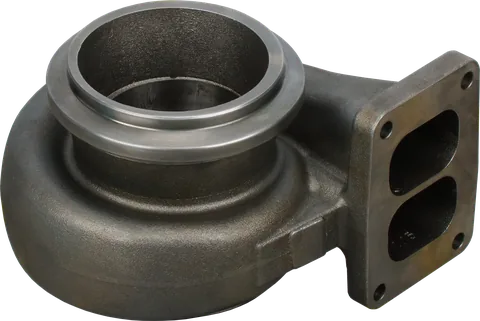
When a replacement arrives with unfamiliar side ports, do not assume they are optional. Cooling connections are part of the turbo's operating requirements, just like its oil feed and drain. Before installation, identify the center housing's specification and confirm that the engine has the correct plumbing to support it.
Water cooled turbo vs oil-cooled turbocharger: how cooling works
The phrase oil cooled turbocharger usually describes a unit without a coolant jacket in its bearing housing. Engine oil does two jobs: it lubricates the bearing surfaces and transports heat out of the center section. After passing through the bearings, hot oil drains back into the engine.
A coolant-jacketed housing still needs that oil circuit. A separate internal passage carries coolant around the hot center section without intentionally mixing coolant and oil. The added circuit helps control housing temperatures, particularly where the turbine's heat load leaves less temperature margin.
| Feature | Oil-only center housing | Coolant-jacketed center housing |
|---|---|---|
| Bearing lubrication | Engine oil | Engine oil |
| Heat removal in operation | Mainly circulating oil, plus heat loss to surroundings | Oil and circulating coolant |
| After shutdown | Relies on heat dissipation and specified shutdown practice | Coolant adds heat capacity; circulation may continue if the system supports it |
| External connections | Oil supply and return | Oil supply, return, and designated coolant connections |
| Replacement requirement | Match the specified oil-only design | Restore the specified oil and coolant circuits |
Turbocharger coolant ports in the center housing do not mean the turbine housing itself is water-jacketed. Those are separate features. For a replacement, compare the cooling specification of the center section directly; photographs of nearby water hoses are not enough.
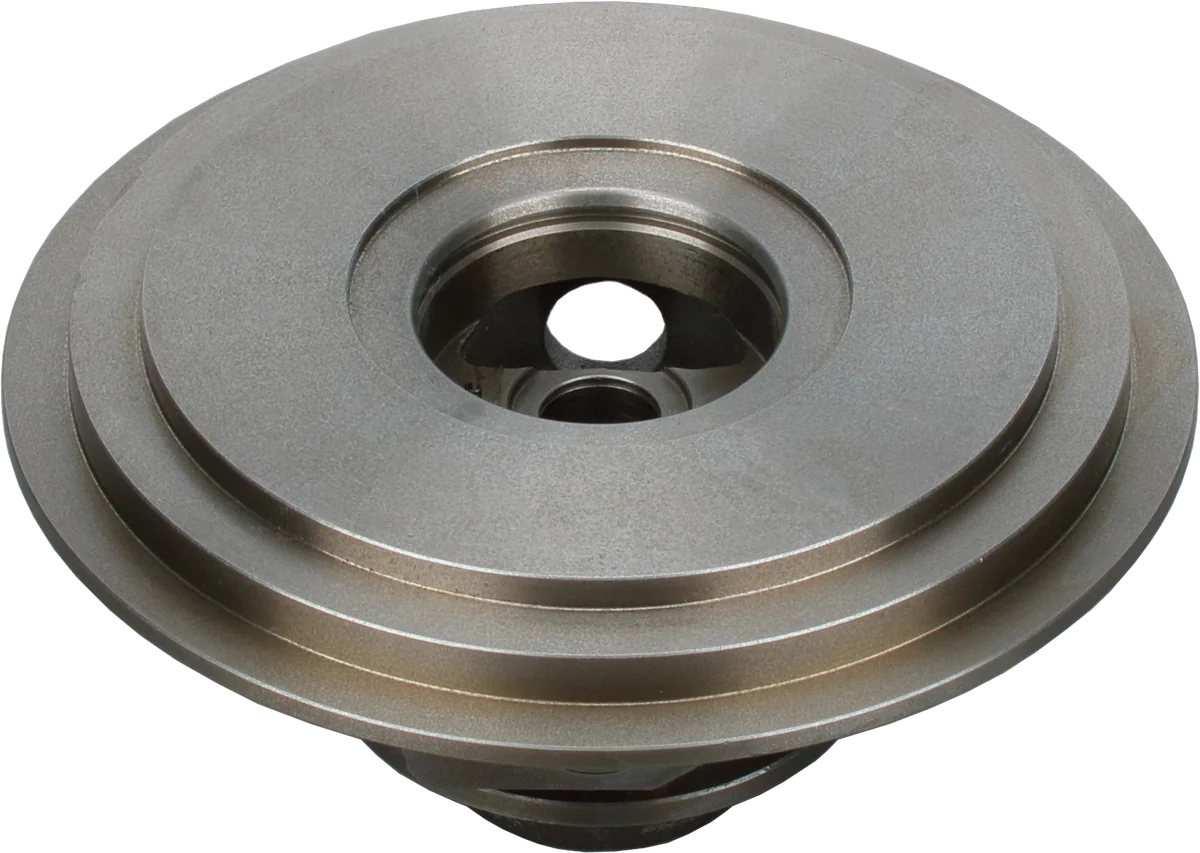
Central bore: houses the shaft and bearing system.
Mating surface: check cleanliness and damage.
Product photograph from 2026. Numbers identify the features explained below.
Why does a water cooled turbo need a water jacket?
The turbine keeps absorbing energy from exhaust during loaded operation. Higher exhaust temperatures can increase heat transfer into the shaft and adjacent housing. Lubricating oil removes much of that heat while it is flowing, but its flow normally stops when the engine shuts down.
The turbine assembly does not cool instantly. Stored heat continues moving toward the center housing after shutdown, and local temperatures can rise even though combustion has stopped. This is turbo heat soak. Oil left against hot surfaces can degrade and form hard deposits that interfere with later oil flow.
A water jacket gives that heat another path into the cooling system. Whether coolant keeps moving after shutdown depends on hose routing and the engine's cooling design, not simply on the housing having ports.
Water cooling therefore provides useful thermal margin, especially after heavy operation. It does not make oil delivery, drainage, or the engine manufacturer's shutdown procedure optional.
Bearing position and heat shields explain the layout
In most compact diesel turbochargers, the shaft's bearing supports sit between the compressor and turbine wheels. Each wheel extends beyond its nearest support, so each wheel is technically overhung. That differs from a fully overhung arrangement, where both wheels sit back to back on the same side of the bearings.
In the common layout, the turbine-end bearing sits closest to the heat, which is why oil flow, heat shielding and any coolant jacket concentrate on that end.
Inside a conventional center housing, radial bearings control sideways shaft movement, while a thrust arrangement controls axial movement. Oil reaches these working surfaces, absorbs frictional heat and heat arriving from the turbine, then leaves through the drain.
A heat shield between the turbine wheel and bearing housing, often working with an insulating air gap, reduces heat reaching the center section. It cannot stop every heat path, including conduction along the shaft. Retain the specified shield and its correct seating during assembly; coolant does not replace it.
How to identify turbocharger connections
Before fitting lines, do not identify a port only by its thread size or position. Similar-looking castings can have different passages, fittings, or alternate connection points. Use the part-specific installation drawing to establish which openings belong to which circuit.
| Connection | What it carries | Installation check |
|---|---|---|
| Oil feed | Pressurized lubricating oil | Use the specified fitting and any required metering arrangement. |
| Oil drain | Hot oil leaving the bearings | Keep the intended full-bore return path open. |
| Coolant inlet and outlet | Coolant through the water jacket | Connect the designated ports to the specified coolant circuit. |
Check the diesel turbocharger coolant requirements: water cooling normally uses the engine's specified coolant mixture, not an unrestricted supply of plain water. Correct coolant also matters for corrosion and freeze protection in cold climates. Never connect an oil passage to a coolant hose.
Give hot oil an unrestricted gravity drain
On a conventional gravity-return installation, the oil supply is pressurized but the drain is not a pressure-fed discharge line. Oil must leave freely. The return also handles aerated oil, which needs room to flow; a small fitting hidden inside a large hose can still create a restriction.
Use the specified drain bore through the flange, gasket, fittings, and pipe. There is no universal hose size that suits every turbo. Keep the bearing housing's drain outlet pointed downward within the manufacturer's allowed installation angle, and maintain a continuous fall to the engine return.
On equipment that works on grades or changes attitude, check the approved installation arrangement for that duty. A hose that appears to slope downward in the shop may not drain properly throughout the machine's operating range.
| Drain problem | Why it matters | Correction |
|---|---|---|
| Reduced internal bore | Restricts oil leaving the housing | Match the specified passage size throughout. |
| Uphill section or sagging loop | Traps oil and delays return | Restore a supported, continuously descending route. |
| Incorrect center-housing rotation | Leaves the drain poorly positioned | Set the housing to its approved drain angle. |
| Blocked gasket opening | Partly closes the return at assembly | Use the correct gasket and confirm alignment. |
A backed-up drain can retain hot oil and promote leakage into the gas passages. Coolant cannot correct that problem. Check the engine return point and crankcase ventilation as specified; excessive crankcase pressure can oppose drainage. If the installation uses an engineered scavenge system, retain its requirements instead of improvising a gravity return.
Connect the coolant circuit and remove trapped air
If the housing has coolant ports, connect the required turbo coolant lines before operating the engine. Never plug the designated inlet and outlet to turn a coolant-jacketed replacement into an oil-only turbo. A unit that bolts onto the manifold may still be the wrong replacement if its required cooling circuit cannot be provided.
- Remove shipping closures from the required connections and inspect passages for debris.
- Install the specified fittings, seals, and hose materials; avoid adapters that choke the coolant passage.
- Follow the specified inlet, outlet, and hose routing. Where natural circulation is required, preserve the intended rising path from the hot outlet.
- Keep lines clear of exhaust contact, sharp bends, and moving parts, and support them against vibration.
- Fill with the specified coolant and bleed trapped air using the engine manufacturer's procedure.
- Check for leaks and verify circulation by the specified commissioning method, then recheck coolant level once the system is cool.
An air pocket can leave part of the jacket poorly cooled even when the reservoir looks full. Do not assume that filling the expansion tank proves the turbo's jacket has filled. Likewise, a coolant connection that looks complete may provide little flow if a hose is kinked or a fitting is obstructed.
What happens if coolant is left off?
The turbo may initially build boost and sound normal because its bearings are still receiving oil. That does not establish that its temperatures are acceptable. Removing a required coolant circuit reduces the heat removal the assembly depends on, particularly during heavy operation and shutdown.
Possible consequences include oil deposits, restricted lubrication passages, accelerated bearing wear, and eventual rotor damage. The timing depends on the design and duty cycle; an immediate failure is not inevitable. A short unloaded run is therefore poor evidence that omitted coolant lines are harmless.
How to choose a water cooled turbocharger
When choosing a water cooled turbo, confirm the complete assembly or CHRA specification before ordering. Similar wheel sizes and matching mounting flanges do not establish that an oil-only and coolant-jacketed center housing are interchangeable.
If the replacement requires water connections that the engine does not have, resolve that mismatch before installation. Obtain the correctly specified assembly or a documented conversion arrangement, including the coolant supply, return, and routing. Do not improvise a connection to a convenient hose without knowing the circuit's flow requirements.
Ask whether the replacement includes coolant fittings or requires transferring serviceable originals. Account for new sealing washers or other specified seals when estimating the job; a bare CHRA may not include connection hardware.
Common Questions
Does a water cooled turbo still need an oil supply?
Yes. Coolant controls housing temperature, while oil lubricates the bearings and carries heat away. A working coolant circuit cannot prevent bearing damage if the oil supply fails.
Can I plug the coolant ports on a replacement turbo?
No. Connect the designated coolant inlet and outlet according to the installation instructions. Plugging those connections removes cooling the assembly was designed to use, even if the engine starts and the turbo builds boost.
Are oil-cooled turbochargers unsuitable for hard work?
No. An oil-only design can be appropriate for demanding diesel service when matched to the engine and duty cycle. Correct oil flow, drainage, heat shielding, and shutdown practices remain essential.
Does water cooling mean the turbo has ball bearings?
No. Bearing type and cooling arrangement are separate specifications. Journal-bearing and ball-bearing assemblies can use coolant jackets; identify the replacement by its approved application and part number.
How long should the engine idle before shutdown?
Follow the engine manufacturer's operating instructions for the load and application. Water cooling does not create one universal cooldown time or eliminate every shutdown precaution.
Can I reuse the original turbo coolant lines?
Reuse them only if the installation instructions permit it and they are clear, undamaged, correctly routed, and compatible with the replacement fittings. Replace restricted or deteriorated lines and renew the required sealing hardware.
Why is turbocharger coolant flow restricted?
A kinked hose or obstructed fitting can limit coolant flow even when the connections look complete. Follow the specified hose routing and verify circulation by the specified commissioning method.
Contact us with your turbo part number, engine details, and current coolant connections for help selecting a matching replacement.