A replacement Cummins M11 turbo must match the installed assembly, not simply the engine badge. LeadTurbo’s catalog associates M11 applications with multiple turbocharger models, while its N14 and 855 listings contain additional configurations.
These heavy-duty inline-six diesel engines work in trucks and equipment; the catalog also includes bus, industrial and marine applications within the broader group. The M11/ISM and N14/855 engines are distinct engine lines, not one interchangeable turbo application.
Turbocharger condition matters because compressed intake air supports combustion under load. Lost airflow can reduce pulling power and increase smoke. Bearing damage, wheel contact or oil leakage can create more serious problems. Successful replacement therefore starts with identification and diagnosis.
How to identify a Cummins M11 turbo
Look for a metal identification plate or marked identification area on the turbocharger, commonly on the compressor housing. Location varies, and installed piping may obstruct the view. Clean gently and photograph every readable line, including suffixes and spaces.
A turbo model such as HX55 or HT60 identifies a design family. The complete assembly number identifies a more specific configuration. An engine manufacturer’s OE part number may provide another reference, but it is not necessarily the same number.
Treat LeadTurbo catalog part numbers as references to cross-check; do not assume every number is an OE number. A casting number on an individual housing is also not sufficient to identify the complete turbo.
Before ordering, compare:
- Turbine housing: A/R, where specified, describes housing passage area relative to radius. Housing geometry affects exhaust flow and response; similar-looking housings can behave differently.
- Boost control: Confirm whether the assembly is free-floating, wastegated or variable geometry. A free-floating configuration has no wastegate; a wastegate bypasses exhaust around the turbine, while variable geometry changes the turbine’s effective flow passage.
- Rotating components: Compressor and turbine dimensions and trim must match the intended assembly. A shared model designation does not prove identical wheels.
- Connections and mounting: Check manifold and exhaust flanges, compressor connections, housing orientation, oil feed and drain, and coolant connections where fitted.
- Actuation: Verify the actuator, linkage and electrical or pressure connections where applicable.
Use the engine identification and installation photos as supporting information. If the turbo tag is missing, establish the assembly identity before ordering by appearance alone.
Representative LeadTurbo catalog examples
The following are examples to verify against the turbo data plate and OE part number, not an interchange chart. Applications reproduce catalog descriptions and do not establish universal fitment.
| Part number | Turbo model | Product type | Application |
|---|---|---|---|
| 2834275 | HX50 | Complete turbocharger | Cummins M11 |
| 3590044 | HX55 | Complete turbocharger | Cummins ISM M11 |
| 2843413 | HX55W | Complete turbocharger | Cummins ISM11 Trucks |
| 3522803 | H2C | CHRA/cartridge | Cummins M11 |
| 4024969 | H2C | Turbine housing | Cummins M11 Engines |
| 2838790 | HE400VG | Complete turbocharger | Cummins ISM 10.8L |
| 4046226 | HE400VG | CHRA/cartridge | CUMMINS ISM Bus |
| 3537074 | HT60 | Complete turbocharger | Cummins N14 |
| 3590615 | HT60 | Complete turbocharger | Cummins N14 Industrial Engines |
| 144402 0000 | HT3B | Complete turbocharger | Cummins NTA855 |
| 3801918 | HT4C | Complete turbocharger | Cummins NTA855 |
| 4027045 | HX50W | Repair kit | Weichai WP10 Cummins L10 |
Other catalog entries include H2D complete turbos for M11 and HX60 complete turbos for M11 marine applications. An ISM application search can return HX55, HX55W or HE400VG entries. Likewise, an NTA855 turbo search can return HT3B and HT4C listings.
These differences explain why “fits M11” is only a starting point. The repair-kit example above does not establish that the kit fits the M11 or N14 assemblies elsewhere in the table.
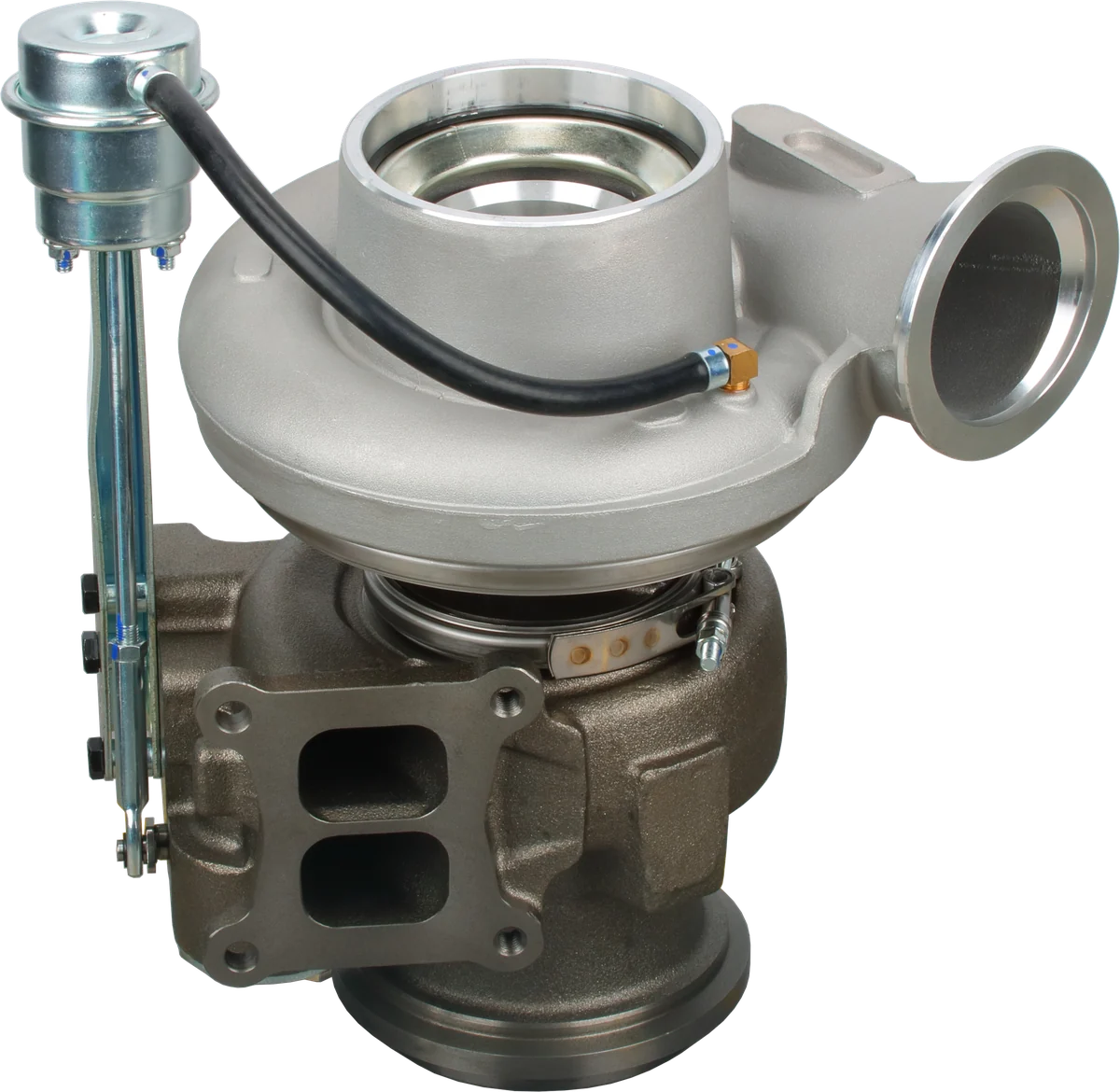
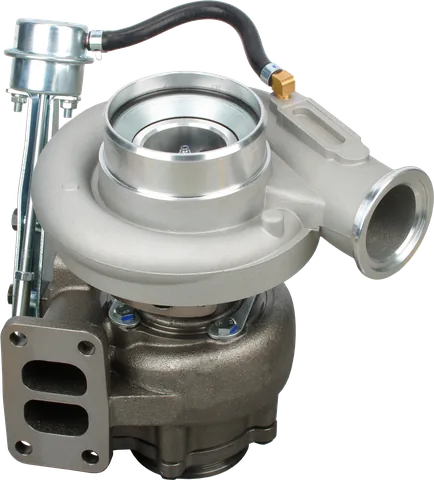
Compressor housing: guides the compressed air.
Turbine housing: guides exhaust gas to the turbine.
Actuator: check its type, linkage and calibration.
Product photograph from 2026. Numbers identify the features explained below.
Diagnose symptoms and their causes
Boost loss and black smoke
Low boost does not automatically mean worn turbo bearings. A split charge-air hose, leaking intercooler, restricted air filter or exhaust leak ahead of the turbine can reduce air delivery. Fuel-system problems can also produce smoke or poor power.
Inspect clamps, boots and manifold joints, then pressure-test the charge-air system using the appropriate service procedure. On controlled turbos, check whether the wastegate or variable-geometry mechanism reaches its commanded position. Black smoke indicates incomplete combustion and can reflect insufficient air relative to fuel.
Oil leaks and blue smoke
Turbo oil control depends on drainage and pressure conditions as well as component condition. A restricted drain or excessive crankcase pressure can impede oil leaving the bearing housing. Bearing wear can also disrupt oil control.
For Cummins M11 turbocharger oil leaks, check the crankcase breather, oil level, feed and drain routing, and the source of oil in the intake. A light oil film is not the same finding as substantial pooling or rapidly rising consumption. Heavy oil accumulation requires investigation before restarting because an engine can ingest that oil.
Why is my M11 turbocharger whistling, whining or scraping?
Some airflow-related whistle is normal. A new noise may come from a charge-air leak, exhaust leak, damaged wheel or rotor imbalance. Sound alone cannot identify bearing condition.
Inspect for loose ducting, soot tracks, foreign-object damage and wheel rub. Blade damage changes rotor balance and can accelerate bearing wear. Stop operating if there is scraping, binding or visible wheel contact.
Shaft play
Journal bearings support the rotating assembly on an oil film during operation. With the engine stopped and oil pressure absent, some radial movement may be present.
Measure radial and axial clearance against specifications for the identified turbo. Excessive movement, rough rotation and housing contact matter more than an unsupported judgment that the shaft “feels loose.” Never spin the assembly with compressed air for a casual test.
Cracked turbine housing
Repeated thermal cycling, excessive heat and mechanical loading can contribute to cracks. Unsupported exhaust piping or misalignment can add stress.
Assess crack location and extent against applicable service criteria. Cracks that leak exhaust, compromise mounting or interfere with the wheel or control mechanism need corrective action. Investigate exhaust restriction and abnormal combustion conditions rather than treating the housing as the entire problem.
Actuator and lubrication faults
Where fitted, failed pressure lines, sticking linkage, wiring faults or a binding variable-geometry mechanism can cause incorrect boost control. Diagnose the command, supply and mechanical movement before condemning the actuator.
Separately, dirty oil can abrade bearings, while inadequate oil supply can collapse the protective oil film. Check oil condition, filtration, feed restrictions and engine oil pressure using the correct procedure. Replacing a damaged turbo without correcting its lubrication problem invites another failure.
Cummins M11 CHRA vs complete turbocharger: replacement options
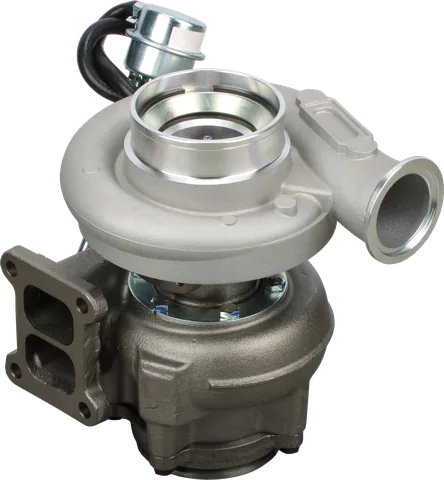
Complete turbocharger: Usually the practical choice when damage affects several assemblies, housings are unsuitable for reuse, or reliable rebuilding facilities are unavailable. Confirm what the supplied assembly includes, particularly any actuator, and verify its exact configuration.
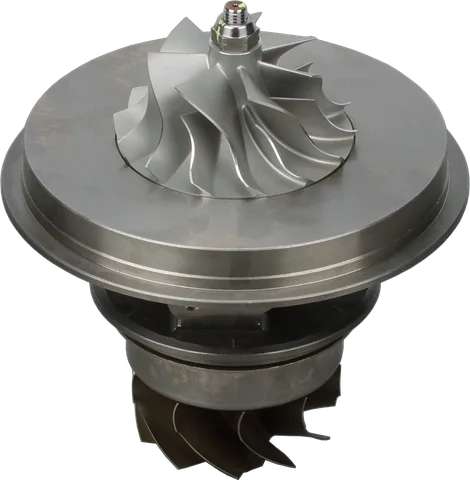
CHRA/cartridge: Replaces the central rotating assembly while retaining compatible outer housings. It makes sense when those housings, mounting surfaces and control components pass inspection. Confirm cartridge compatibility and the supplier’s balancing and assembly requirements; a matching family name alone is insufficient.
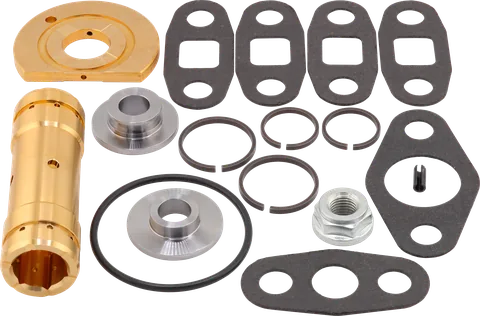
Repair kit: Appropriate for a qualified rebuilder when inspection and measurement show the reusable components remain serviceable. A kit cannot restore a worn shaft, damaged wheel or out-of-tolerance bearing housing. Verify kit contents and fitment separately.
Individual components: The catalog summary includes turbine and compressor housings, compressor wheels, turbine wheel/shafts, bearing housings, thrust bearings/collars, piston/seal rings, gaskets and actuators. These support targeted repairs when the remaining assembly is sound.
Wheel or shaft replacement requires appropriate dimensional inspection and balancing. Simply marking component positions does not establish acceptable balance after parts change. Housing replacement also requires correct geometry, clearances and orientation. Consider the inspection, machining, balancing and setup required when comparing component repair with a complete replacement.
LeadTurbo parts are aftermarket replacements; catalog references do not imply OEM affiliation.
Installation practices for hard-working diesels
Begin by correcting the failure cause. Retain the old turbo long enough to document damage and compare the replacement’s identification, flanges, connections and orientation.
- Clean the air path. Inspect the air cleaner, inlet piping, charge-air cooler and downstream plumbing. Remove oil and debris from a failed turbo. Replace components that cannot be reliably cleaned and verified; hidden fragments can damage the engine.
- Inspect the exhaust side. Check the manifold, mounting faces, fasteners and exhaust supports. Resolve leaks and restrictions. Align piping without forcing it into position or loading the turbo housing.
- Check oil feed and drain. Look for contamination, internal restrictions, heat damage and collapsed lines. Ensure the drain follows the specified routing without kinks or obstruction. Verify crankcase ventilation and investigate excessive crankcase pressure.
- Use correct gaskets and hardware. Fit new specified gaskets, keep oil passages clear, and follow applicable torque procedures. Avoid excess sealant that could enter the lubrication circuit.
- Prime before starting. Introduce clean oil through the specified inlet and follow the turbo and engine instructions for establishing lubrication before firing. Any cranking with fueling disabled must follow the approved engine procedure.
- Set up controls. Verify wastegate settings where applicable without arbitrary rod adjustment. An electronic actuator may require calibration or a learning procedure using suitable diagnostic equipment.
- Verify operation. Check oil pressure promptly, inspect for oil, coolant and exhaust leaks, and listen for abnormal noise. After initial checks, verify boost response and control operation under an appropriate load.
Use the engine’s recommended oil and filters, and follow its warm-up and shutdown guidance. A new turbo still depends on clean lubrication, adequate airflow and sound engine condition.
Common Questions
Which Cummins M11 turbo fits my engine?
The catalog includes several M11 turbo models, including HX50 and HX55, plus other configurations. Match the complete turbo data-plate number and OE part number to the replacement, then verify housings, connections and controls. The engine name alone is insufficient.
Can I replace an HX55 with an HX55W turbocharger?
When comparing HX55 vs HX55W turbocharger fitment, do not assume interchangeability. Verify the exact assembly numbers, turbine housing, wheel specifications, wastegate arrangement, flanges and connections. A similar model name does not establish that the replacement will fit or operate correctly.
Is every Cummins N14 turbo an HT60?
No. An HT60 listing also does not establish compatibility with every N14 installation. To determine which turbocharger fits a Cummins N14, confirm the original identification numbers before ordering.
Does oil in the intake mean the turbo has failed?
Not necessarily. Oil can enter through crankcase ventilation, and poor drainage or excessive crankcase pressure can contribute to turbo oil leakage. Check oil quantity, consumption, the breather, feed and drain, and turbo condition before deciding what needs replacement.
Is some turbo shaft play normal?
Some radial movement can exist in an unpressurized journal-bearing turbo. Judge radial and axial clearance against the correct service specifications, not by feel alone. Wheel contact, binding or damaged blades requires investigation before further operation.
When should I choose a CHRA instead of a complete turbo?
A matching CHRA can be appropriate when the rotating assembly needs replacement but the reusable housings and control mechanism pass inspection. Choose a complete assembly when damage extends further or correct rebuilding and setup cannot be assured.
Send the Cummins M11 turbo data-plate number, OE part number, engine details and photos to LeadTurbo to confirm fitment before ordering.