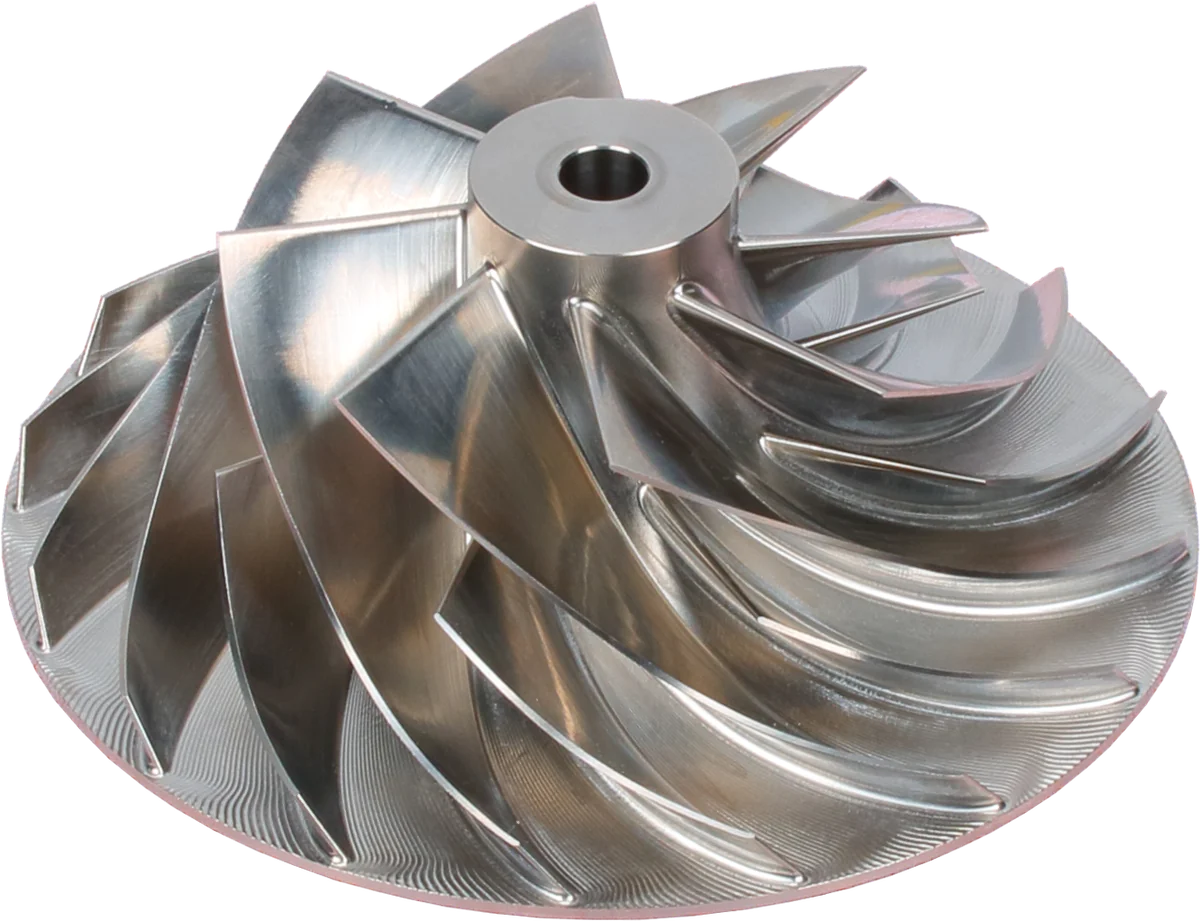
When does a diesel blow off valve help?
A working diesel usually does not need one. On a conventional diesel, the accelerator primarily requests more or less fuel. Easing off reduces fueling and the exhaust energy available to drive the turbine, while the intake remains open enough for the cylinders to keep drawing air.
To understand how turbocharger blow off valves work, consider a different arrangement. In a throttled gasoline engine, a quick pedal release can close the throttle while the turbocharger is still delivering compressed air. The restriction sharply reduces engine airflow, and pressure can build upstream of the throttle. A suitable blow-off valve (BOV) opens another route for that charge air, helping the compressor avoid unstable operation.
Do blow off valves increase turbocharger boost? That valve manages a temporary mismatch between pressure and airflow; it does not create boost or increase compressor capacity. It also differs from exhaust-side boost controls such as a wastegate or variable-geometry turbocharger (VGT) mechanism.
Nor does it act as a general overboost safeguard. If boost exceeds specification under load, the first investigation concerns boost control, sensor accuracy, and the engine setup. A valve triggered by lifting the accelerator does not correct that underlying fault.
With an ordinary diesel intake, pedal release does not create the same sudden blockage. Boost generally falls as turbine power decreases. A product advertised for a pickup may fit its charge pipe and make the expected sound without addressing an actual protection requirement.
The same reasoning applies to many buses, loaders, tractors, marine engines, and generator sets: start with how that engine manages intake airflow, rather than borrowing an accessory rule from gasoline vehicles.
A throttle plate does not settle the diesel question
Modern diesel engines complicate the old statement that diesels have no throttle. An intake butterfly may support exhaust gas recirculation (EGR), diesel particulate filter (DPF) regeneration, or shutdown. Its presence alone does not establish a need for an aftermarket valve.
| Device or strategy | Why airflow may change | What to verify |
|---|---|---|
| Intake throttle used for EGR | Can lower intake pressure to encourage EGR flow | Whether commanded restriction matches the operating mode |
| Intake throttle used during regeneration | Helps manage airflow and exhaust temperature on some systems | The engine's specified regeneration strategy |
| Shutdown or anti-shudder flap | Restricts air as the engine stops | Correct movement and the specified running position |
| Exhaust brake or VGT braking | Restricts exhaust flow to provide retarding torque | Brake commands and turbo control, without assuming intake closure |
An exhaust brake acts in the exhaust path; it is not an intake throttle snapping shut. Brake transitions can still change turbocharger operating conditions. On engines with both intake and exhaust controls, diagnosis must consider their combined commands instead of treating the brake itself as proof that a vent valve is needed.
Manufacturers account for these functions in the engine's air-management strategy. Depending on the design, they coordinate intake-throttle position, EGR flow, fueling, and turbo actuators. Some applications also have factory bypass or other dedicated air valves. Their purpose and operation are specific to that engine; a multistage turbo bypass is not automatically a pedal-release blow-off valve.
Use service information for the exact engine and calibration. If a factory valve is fitted, maintain its intended plumbing and control. Do not replace a failed actuator or an incorrect throttle command with an aftermarket pressure-release device.
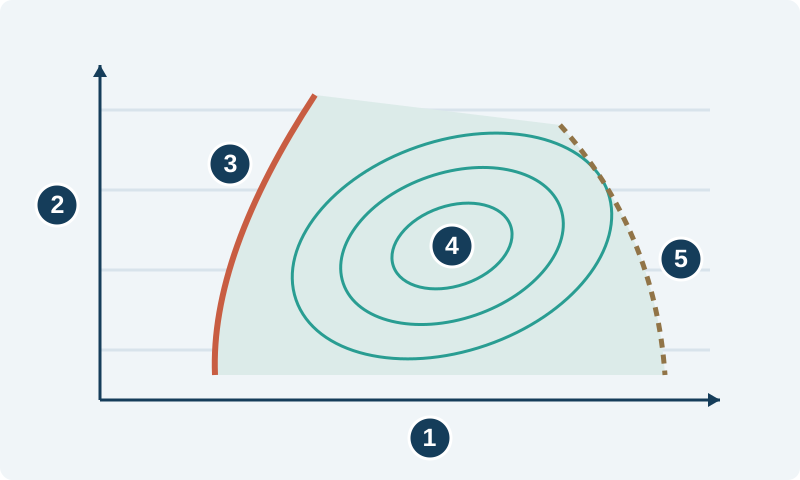
Horizontal axis: corrected air mass flow.
Vertical axis: absolute pressure ratio.
Low-flow boundary: surge limit.
Contours: efficiency islands inside the operating map.
High-flow boundary: choke region.
Qualitative schematic, not measured test data or operating limits.
Atmospheric vs recirculating blow off valves
A vent-to-atmosphere valve discharges charge air outside the intake plumbing. A recirculating arrangement, often called a compressor bypass valve, returns it to a suitable point ahead of the compressor. Product names overlap, so judge the plumbing and control method rather than the label.
| Layout | What you notice | Diesel installation concern |
|---|---|---|
| Atmospheric | Usually a clearly audible discharge | Expels compressed air and adds an outlet that must seal under load |
| Recirculating | Usually less discharge noise | Requires a properly designed return path and still loses boost if open at the wrong time |
Recirculating air does not preserve manifold pressure when the valve opens. Either design can unload the compressor; neither is automatically useful on a diesel.
Control is just as important as plumbing. Many gasoline valves use the pressure difference across a closed throttle as their opening signal. A typical diesel does not supply that signal on pedal release. Diesel-specific kits may use electronic or pneumatic controls, but an accelerator-based trigger does not establish that relief is needed.
An engine vacuum pump is not a substitute for a correctly designed valve-control strategy.
What an added valve can cost you
A diesel turbocharger blow off valve installation adds a branch to the charge-air system, creating another sealing surface, another moving valve, and another possible control fault. On a work truck, those tradeoffs matter more than a brief discharge sound.
- Boost leaks: A valve that opens too early, fails to close, or has leaking fittings can reduce delivered air. The engine may respond with reduced power, slower boost recovery, or an underboost fault.
- Higher exhaust gas temperature (EGT): If air delivery falls while fueling remains high enough, combustion can become smokier and EGT can rise. This is conditional, not an automatic result of every valve opening; electronic controls may instead limit fuel and torque.
- Extra turbocharger demand: A leak can make the control system command more turbo output while trying to reach requested manifold pressure. Depending on the system, that can increase turbo speed and thermal stress.
- Air-management faults: Diesels do not normally regulate fuel to maintain the gasoline engine's near-stoichiometric mixture. The familiar gasoline concern about venting already measured air is therefore not directly transferable. Modern diesel airflow measurements still support EGR control, smoke limiting, and diagnostics.
- Noise and warranty concerns: Repeated venting may be undesirable in a working truck. An aftermarket modification can also complicate a warranty assessment if the fault involves the modified intake or related components. Review the applicable terms before making changes.
Calling this an “unmetered air” problem misses the main issue: venting removes air the compressor has already supplied. For diesel service, lost charge air and the control system's response are the useful things to investigate.
Treat flutter as a symptom to diagnose
Treat diesel turbo flutter as a sound description, not a diagnosis. Compressor surge involves unstable compressor airflow. A lift-off chirp and a noise during VGT movement or exhaust braking can have different causes; sound alone does not establish which component needs attention.
Pay particular attention to a repeated bark or pulsing boost under load. A valve installed mainly to make a release noise is not a reliable answer to an airflow restriction, unsuitable turbo match, or control problem. Persistent symptoms need diagnosis before further heavy operation.
Our guide on compressor surge and turbo flutter covers the mechanisms and detailed troubleshooting. Here, the key distinction is simple: establish what operating event causes the symptom before deciding whether pressure relief has any role.
A practical decision table
Before buying a diesel blow off valve, identify the engine's air-control hardware and the actual complaint. A vehicle-specific mounting kit proves physical compatibility, not a need for the valve.
| Situation | Recommended decision | Next step |
|---|---|---|
| Standard diesel, normal power, no abnormal symptoms | Usually skip the addition | Keep the original intake and turbo controls in good condition |
| Factory bypass or relief valve is faulty | Restore the specified system | Test the valve, actuator, wiring, and plumbing as applicable |
| Flutter or boost oscillation under load | Diagnose before selecting parts | Check restrictions, leaks, actuator behavior, and turbo suitability |
| Symptoms appear during braking or regeneration | Follow the engine's diagnostic procedure | Compare throttle, EGR, and turbo commands with actual operation |
| Custom engine with a deliberate rapid intake closure | A relief strategy may be justified | Have the system designer establish valve capacity, placement, and control |
| Installation sought only for sound | Treat it as a preference with tradeoffs | Confirm sealing, command logic, and warranty implications |
For a shop assessment, bring:
- Engine model, serial number, and relevant modifications.
- The turbocharger identification or replacement part number.
- A clear description of when the noise occurs: acceleration, shifting, braking, shutdown, or regeneration.
- Any fault codes and available boost or actuator data.
Establish whether the concern occurs with steady fueling or during a commanded transition. That distinction helps separate a continuous air-delivery fault from a brief control event, and gives the technician a useful starting point.
Common Questions
Will a blow-off valve add power to a diesel truck?
Normally, no. It does not increase compressor capacity. A sealed valve may do little during acceleration, while leakage or unnecessary opening can reduce the air reaching the engine.
Do modern diesels have throttle plates?
Some do, for EGR, regeneration temperature management, or smooth shutdown. Their operation varies by engine and is not necessarily tied to pedal release. Check the engine's service description.
Can a diesel turbocharger use gasoline BOVs?
Physical fit is not enough. A gasoline valve may lack an appropriate opening signal on a diesel. Pressure capability, sealing, actuation, and control logic must suit the application.
Is venting measured air a problem on a diesel?
Venting does not usually create the mixture problem seen in some gasoline systems. It can still reduce useful airflow, affect engine controls, and raise EGT if fueling remains high.
Does turbo flutter prove I need a valve?
No. Tie the noise to its operating condition and cause. Under-load surge, actuator faults, and intake restrictions require different responses; a release valve is not a universal remedy.
Will an aftermarket valve affect my warranty?
It can complicate a claim involving the modified intake, turbocharger, or associated controls. Check the applicable terms before installation and keep records of the diagnosis and changes.
Can blow off valves cause turbocharger underboost?
Yes. Early opening, failure to close, or leaking fittings can reduce delivered air, causing reduced power, slower boost recovery, or an underboost fault.
For a typical working truck, a diesel blow off valve adds no routine maintenance benefit. Prioritize a sealed intake and correctly functioning factory controls.
For help identifying a replacement turbocharger, CHRA, repair kit, or turbo part, contact LeadTurbo with your part number and engine details.