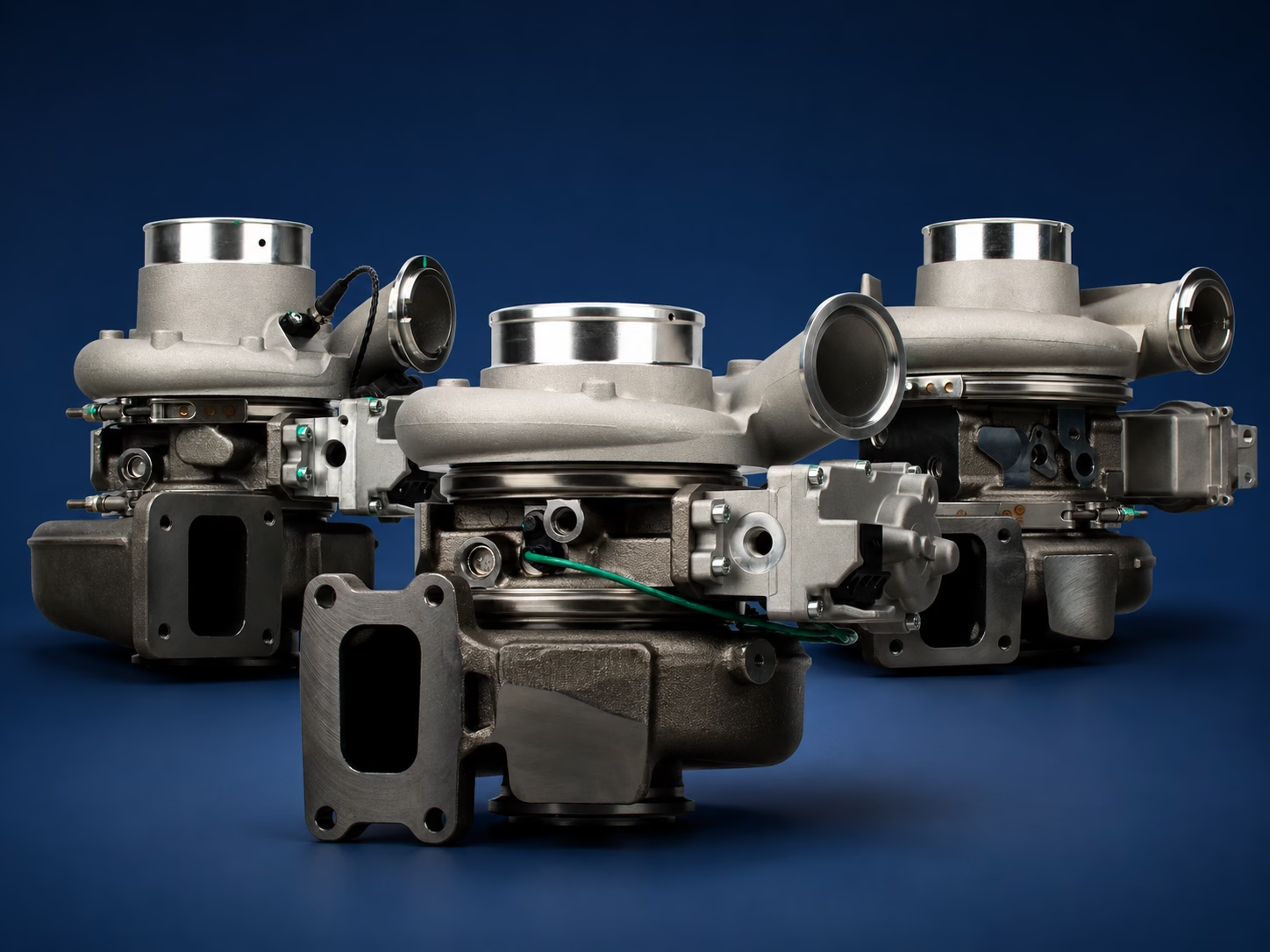
Start with the tag, not the application name
The safest identification point is the turbocharger nameplate or tag. A vehicle model or engine family can use more than one turbo option, especially across production years, emissions packages and equipment variants.
Record the complete turbo part number, OE number and any visible serial or model information before comparing alternatives. If the tag is missing, use compressor housing, turbine housing and actuator photos as secondary evidence.
Separate OE numbers from replacement references
OE references, turbo manufacturer numbers and aftermarket cross references are related but not always interchangeable. A number can point to a family of replacements while still requiring flange, actuator, sensor and housing checks.
For wholesale orders, treat every cross reference as a verification lead rather than a final fitment guarantee.
What to send before quote
Turbo part number or clear tag photo.
Engine model and machine or vehicle application.
Photos of both housings, actuator, oil ports and flange connections.
Target quantity and whether the request is for a complete turbo, CHRA or component.
A practical part-number reading workflow
Start by separating numbers by source. The turbo manufacturer number usually identifies the turbo family and configuration; the OE number ties the unit to the engine maker or vehicle maker; the casting number normally identifies a housing mold or component family rather than the full finished turbocharger. Treat the casting number as supporting evidence, not as the final ordering number.
When a buyer sends a photo, first check whether the tag is original, readable and attached to the center housing or actuator bracket. Then record every visible number exactly as shown, including spaces, hyphens and suffixes. Suffix letters can indicate actuator calibration, emissions package, compressor cover orientation, water-cooling provision or sensor configuration. Removing those suffixes too early is a common cause of wrong-fit quotes.
How to compare OE, turbo maker and aftermarket references
Build the comparison in three columns: the customer's visible number, the supplier reference being proposed and the physical evidence that supports the match. For Garrett-style GT or GTX families, the broad frame name is not enough because multiple compressor trims, turbine housings and actuator arrangements can share a familiar marketing family. For BorgWarner or KKK-style references, the K-number or service number should be checked against the actuator, turbine inlet, compressor outlet and bearing housing connections before committing stock.
If the OE number crosses to several possible replacements, use photos to narrow the branch. Compare oil feed thread, oil drain flange, compressor outlet direction, turbine inlet flange, wastegate or VNT actuator type, speed sensor provision and water ports. In B2B procurement, a cross reference should open the investigation; it should not close it.
Common wrong-order cases
The most common case is ordering by vehicle model alone. One engine may carry different turbochargers for manual versus automatic transmission, local emissions standard, power rating, chassis year or industrial calibration. Another frequent case is accepting a casting mark as the finished turbo part number. The casting can be correct while the machined interfaces, actuator and rotating group are different.
A third case is quoting a replacement from a partial tag photo. If the last two digits or suffix are missing, ask for another photo before confirming quantity. The cost of one extra message is lower than the cost of a returned carton, especially when the order is for multiple rebuild units.
Verification steps before quantity is locked
Capture the full tag, OE number, turbo maker number and any actuator label.
Compare compressor outlet, turbine inlet, oil drain, oil feed and water ports against the proposed unit.
Check whether the actuator is pneumatic, electronic, vacuum controlled or VNT calibrated.
Confirm whether the request is for a complete turbo, CHRA, turbine housing, compressor cover or small component.
Keep the customer's photos with the quote record so repeat orders can be checked against the same evidence.
Quote record discipline
Keep the final identification record with the quote: tag photo, OE number, proposed reference, exception notes and buyer approval. This helps the next order move faster and prevents a different sales person from restarting the same identification work. If a substitute reference is accepted, record exactly why it was accepted and which physical checks were used.
For distributors, this record is also useful when a carton is opened months later. A buyer can compare the received part against the original evidence instead of relying on memory or a short part number written in an email thread.
Common Questions
Is an OE number enough to order a turbocharger?
It is a good starting point, but housing orientation, actuator style and application details should still be checked before quantity is confirmed.
What if the turbo tag is missing?
Use casting marks, wheel and housing photos, engine model and application details so the replacement path can be narrowed.