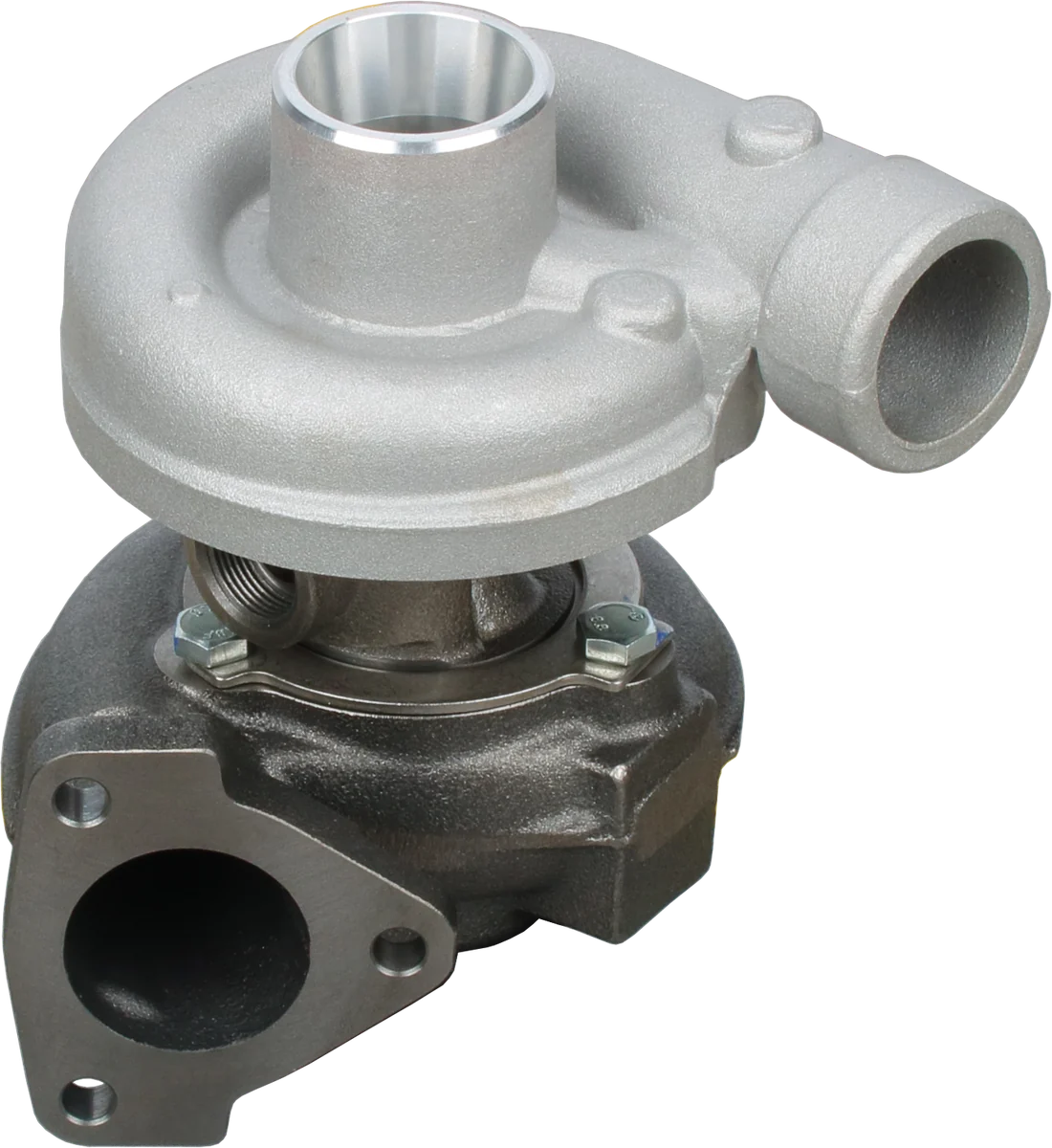
You press the accelerator, wait, and then feel the engine pull harder. Some delay is normal in a turbocharged engine, especially when accelerating from low engine speed. However, a truck that suddenly needs more revs to pull, or a car that feels slower after turbo replacement, deserves inspection.
Understanding what causes turbo lag helps separate normal behavior from lost performance. The key question is whether boost arrives as expected for the operating conditions—or something has changed.
What Is Turbo Lag?
Turbo lag is the transient delay between requesting more engine torque and the turbocharged system delivering the associated increase in boost and airflow.
The exhaust-driven turbine and intake compressor share a shaft. When you accelerate, additional exhaust energy must accelerate that rotating assembly. The compressor must then supply enough air to raise pressure while the engine continues consuming air.
The delay you feel can also include transmission downshifting, throttle operation, and engine torque limits. Accelerator response and turbo response time are related, but they are not identical.
Understanding turbocharger lag vs boost threshold
Boost threshold describes the operating conditions below which the engine and turbocharger cannot sustain a particular boost level. It is often discussed as an engine speed, but load, temperature, altitude, and the requested pressure also matter.
Turbo lag describes the time needed to reach boost when operating conditions can support it.
| What you notice | Likely explanation | Useful distinction |
|---|---|---|
| Little boost at very low rpm, followed by stronger pull as revs rise | Operating below the threshold for the requested boost | Waiting at the same low rpm may not produce that boost |
| A brief delay after accelerating at an engine speed that normally supports boost | Transient turbo lag | Pressure builds as the turbo accelerates |
| Weak boost even during sustained acceleration | Possible airflow, control, fueling, or mechanical fault | This is not simply normal spool-up delay |
| Hesitation followed by a downshift and stronger acceleration | Transmission and engine response may dominate | Pedal-to-acceleration delay does not isolate the turbo |
Free-revving in Park or Neutral is not a reliable boost test. Without road load, the engine generally needs much less fuel and produces less useful exhaust energy than it does under acceleration.
Understanding what causes turbo lag
Rotor inertia resists acceleration
Rotor inertia describes how strongly the turbine wheel, compressor wheel, and shaft resist changes in rotational speed. Both total mass and its distance from the shaft centerline matter.
Wheel diameter has a particularly strong effect. For geometrically similar wheels made from the same material, inertia increases approximately with the fifth power of diameter. Actual turbo wheels differ in blade shape, hub design, and material, so diameter alone cannot predict response.
This explains why a larger turbo can support more airflow at high engine output yet respond more slowly at low speed. Lightweight construction helps, but the entire rotating assembly and aerodynamic match matter.
Low engine speed provides limited exhaust energy
A turbocharger needs exhaust mass flow and usable energy from exhaust temperature and pressure. At low engine speed and light load, little energy may be available to accelerate it. This helps explain diesel turbocharger lag at low rpm.
Pressing the pedal does not instantly create full turbine power. Combustion, airflow, and boost build together, while the engine controller manages fueling and torque. On a diesel, smoke-control limits can restrict additional fuel until sufficient air is available.
Selecting an appropriate lower gear often improves response because it moves the engine into a more useful operating range.
Turbine and compressor efficiency affect the power balance
The turbine must provide power to drive the compressor, overcome mechanical losses, and accelerate the rotor.
A turbine operating inefficiently extracts less useful shaft power from the available exhaust. An inefficient compressor needs more power for a given airflow and pressure increase, while adding more heat.
A turbo selected mainly for peak horsepower may therefore feel disappointing during ordinary driving. Good matching considers the operating range, not just maximum airflow.
The charge-air system takes time to pressurize
The compressor feeds pipes, an intercooler, and the intake manifold. Pressure rises only when incoming airflow exceeds what the engine consumes and what escapes through leaks.
More volume downstream of the compressor generally requires more air to achieve the same pressure increase. Unnecessarily large pipes and intercoolers can therefore slow pressure buildup.
Volume is only part of the picture. Restrictive piping or an intercooler with excessive pressure drop can also hurt response. Effective charge-air design balances cooling, flow resistance, and volume.
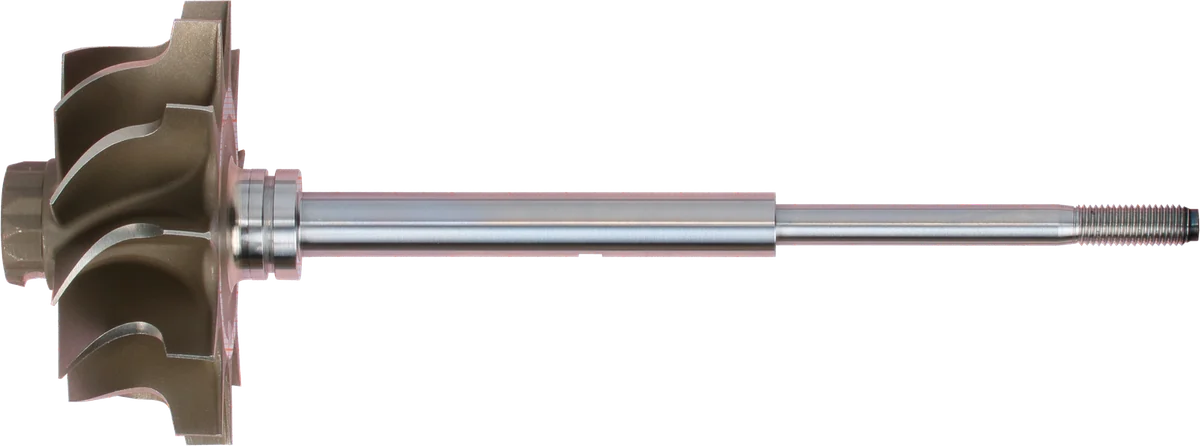
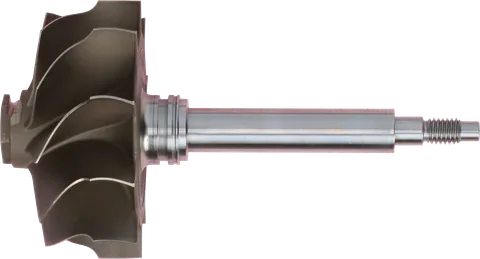
Turbine wheel: exhaust energy drives the shaft.
Shaft surface: inspect wear and scoring before reuse.
Shaft end: connects to the compressor-side rotating parts.
Product photograph from 2026. Numbers identify the features explained below.
How Manufacturers Reduce Turbo Lag
Manufacturers combine several approaches, each with practical tradeoffs:
- Smaller or lighter wheels: Lower inertia helps the rotor accelerate. Smaller components can limit high-output airflow, while lightweight materials must withstand their operating conditions.
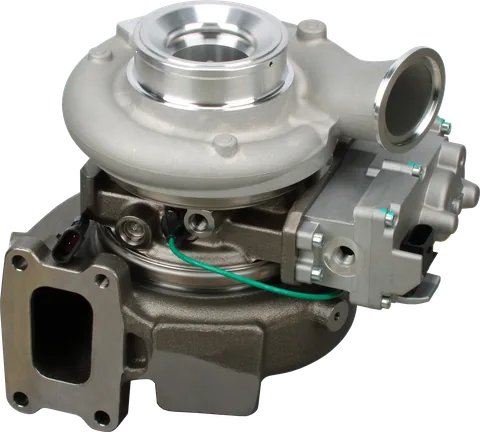
- Variable geometry turbines, or VGT: Adjustable vanes change the turbine’s effective flow area. At low flow, suitable vane positioning improves turbine driving conditions; at higher flow, the vanes open to accommodate more exhaust.
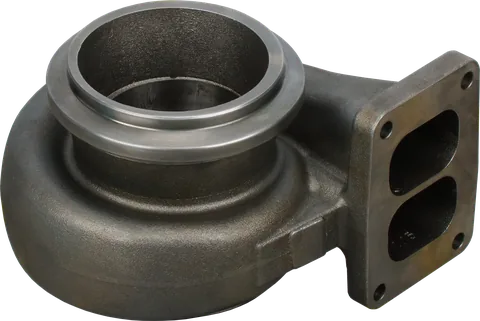
- Twin-scroll housings: Properly grouped cylinders feed separate turbine passages, preserving exhaust pulse energy and reducing pulse interference. The exhaust manifold must support the arrangement.
- Two-stage systems: A smaller stage can support low-speed response while a larger stage supplies higher-flow capability. Bypass valves and coordinated controls manage operation across the range.
- Ball bearings: Reduced bearing losses can improve acceleration, particularly when little turbine power is available. They do not remove the need for correct turbo sizing.
- Electrically assisted turbos: A motor on the turbo shaft can add accelerating power before exhaust energy catches up. This requires an integrated electrical and control system.
These are engineered systems, not interchangeable bolt-on fixes. Our guide to wastegate vs. VGT boost control explains the control differences.
Faults That Feel Like Increased Turbo Lag
A sudden change is more suspicious than a consistent characteristic the vehicle has always had.
| Possible fault | Why response suffers | Inspection clues |
|---|---|---|
| Boost leak | Compressed air escapes before reaching the engine | Split boots, loose clamps, intercooler damage, hissing under load |
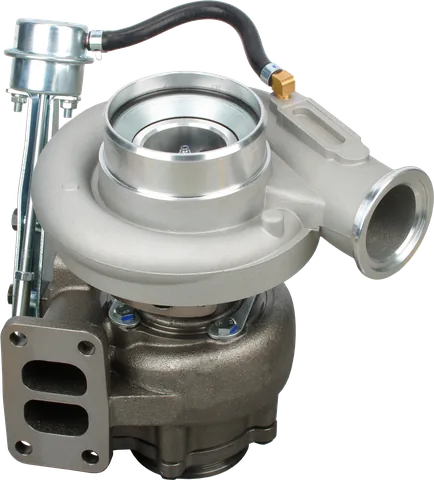
| Wastegate held open or opening too early | Exhaust bypasses the turbine when driving energy is needed | Linkage problems, control-line faults, incorrect actuator setup |
| Sticking VGT mechanism | Vanes cannot reach the required position | Erratic boost, actuator faults, commanded and actual position disagreement |
| Exhaust leak before the turbine | Exhaust energy escapes upstream | Soot tracks, damaged joints, ticking under load |
| Exhaust restriction after the turbine | Excessive outlet pressure reduces usable turbine expansion | Restricted catalyst or particulate filter, abnormal pressure readings |
| Bearing damage or wheel contact | Mechanical drag consumes available shaft power | Scraping, wheel damage, abnormal shaft movement |
| Incorrect turbo specification | Wheel, housing, or actuator characteristics do not match the engine | Poor response beginning immediately after replacement |
A restricted air filter, collapsing inlet hose, inaccurate sensor, fueling fault, or engine protection mode can also produce weak acceleration.
Bearing wear does not automatically mean increased drag. Severe damage, deposits, or wheel contact can create drag, but slow boost alone does not establish a bearing failure. Follow a broader turbo failure diagnosis before replacing parts.
How to Diagnose Slow Turbocharger Response
1. Establish when the behavior changed
To identify what causes turbo lag, record whether the problem appeared suddenly, developed gradually, or began after repairs.
Note the engine speed, gear, temperature, and load when it occurs. Compare similar conditions: a cold engine pulling uphill in a high gear is not a useful comparison with a warm engine accelerating in a lower gear.
If it started after replacement, review the pre-installation checks for a replacement turbocharger and confirm the original failure cause was corrected.
2. Scan before clearing anything
Read fault codes and freeze-frame data before disconnecting the battery or clearing codes.
Where supported, examine:
- Requested boost against actual boost.
- Engine speed, load, and accelerator request.
- Airflow and intake pressure readings.
- Commanded and actual actuator position.
- Exhaust pressure or particulate-filter differential pressure.
Compare pressures on the same basis. Absolute manifold pressure includes atmospheric pressure; gauge boost does not.
Low requested boost points toward a control decision or another engine condition. High requested boost with persistently low measured pressure suggests the system cannot deliver the request, although sensor accuracy still needs checking.
3. Inspect and test the air path
With the engine off and cool, inspect the filter, inlet hose, compressor connections, intercooler, and charge pipes.
Use a regulated pressure or smoke test following the vehicle’s service procedure. Stay within the specified test pressure and isolate components as instructed. Some leaks open only under pressure and escape a visual inspection.
An oily mark around a joint can help locate leakage, but an oil film by itself does not prove turbo failure.
4. Verify boost control and exhaust flow
Check vacuum hoses, pressure lines, wiring, connectors, and actuator linkage as applicable. Use the specified scan-tool routine to check actuator travel or calibration.
Do not shorten a wastegate rod or adjust a VGT stop to conceal slow response. Incorrect adjustment can cause uncontrolled boost or excessive turbo speed.
Inspect upstream exhaust joints and investigate restriction using the relevant pressure tests.
5. Confirm replacement specifications
Verify the turbo identification, approved part-number cross-reference, housing specification, and actuator compatibility. The same bolt pattern does not establish a correct match.
A replacement CHRA also needs to match the housings and application. Review CHRA vs. complete turbocharger replacement before treating a core swap as a solution to a housing or control problem.
How to Reduce Turbocharger Lag
Restore the intended performance first: repair leaks, correct restrictions, verify controls, and use the specified oil and maintenance schedule.
For everyday driving, select a gear that keeps the engine in its useful torque range rather than demanding heavy acceleration at very low rpm.
For a modified vehicle, choose the turbo around actual use. Towing, street driving, and sustained high-output operation place different demands on the system. Keep charge piping sensibly sized, and assess intercooler pressure drop alongside cooling capacity.
A larger compressor wheel, freer-flowing part, or tuning change does not guarantee quicker response. Changes to turbo sizing and calibration should be evaluated together. Healthy factory hardware often responds better than a collection of poorly matched upgrades.
Common Questions
How much turbo lag is normal?
There is no universal normal delay. Response depends on engine speed, load, gear, turbo sizing, and control strategy. Compare the vehicle under similar conditions with its previous behavior or a known-good example of the same configuration.
Why does my replacement turbo spool later?
Check the replacement part number, turbine housing specification, actuator setup, and any required calibration. Disturbed hoses, leaking connections, or an unresolved original fault can also delay boost. A turbo that bolts on is not necessarily the correct match.
Will a ball bearing turbo eliminate lag?
No. Lower bearing friction can improve response, but wheel inertia, exhaust energy, turbo sizing, and charge-air volume still matter. A larger ball bearing turbo can respond more slowly than a smaller, well-matched journal bearing unit.
Can a boost leak feel like turbo lag?
Yes. Escaping compressed air can delay pressure buildup or prevent the engine from reaching requested boost. The turbo may be working harder while manifold pressure stays low. Test the charge-air system before assuming the rotating assembly is slow.
Does a bigger intercooler increase turbo lag?
It can if it adds substantial internal volume, but size alone does not predict response. Pressure drop, piping layout, cooling performance, and the original system all matter. Choose an intercooler matched to airflow and cooling needs.
Does a throttle controller reduce turbo lag?
A throttle controller changes how pedal movement translates into an accelerator request. It may make the vehicle feel more eager, but it does not directly reduce rotor inertia, repair a boost leak, or increase the turbo’s underlying airflow capability.
Why is my turbocharger slow to respond?
Your turbo may respond slowly because exhaust energy is limited, the rotating assembly takes time to accelerate, or the charge-air system takes time to pressurize. Leaks, restrictions, and control faults can also delay boost. If the delay is new, compare similar driving conditions, inspect the air path, and check boost controls.
Will a replacement turbocharger reduce lag?
Not necessarily. Leaks, restrictions, or control faults can delay boost even after replacement, and a turbo that bolts on may still be the wrong match. Inspect those systems first, then confirm the replacement's approved part-number cross-reference, housing specification, actuator compatibility, and any required calibration. Make sure the original failure cause was corrected.
Need help checking a replacement and understanding what causes turbo lag? Contact LeadTurbo with your turbo part number, vehicle details, and symptoms, including when the slow response began.