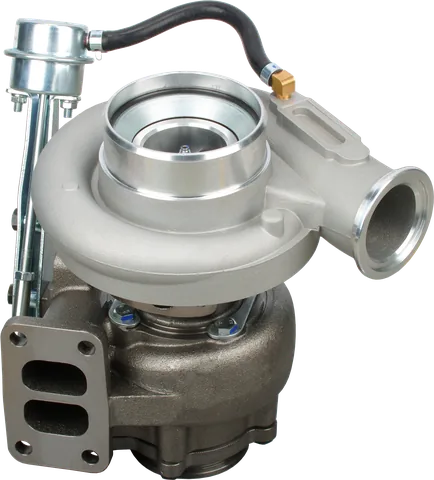
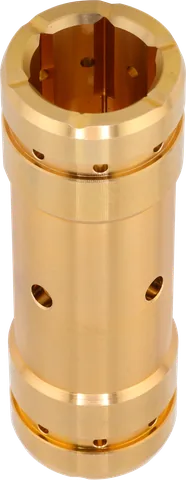
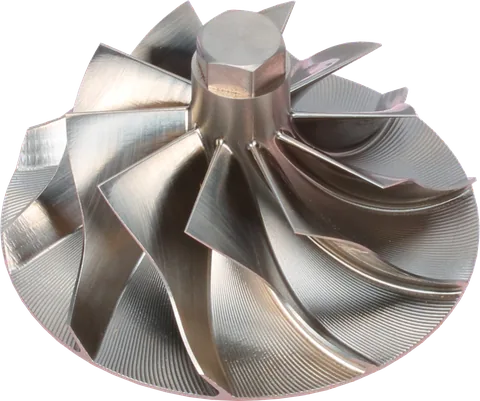
A pickup turbo and an industrial engine turbo may carry similar model lettering while using different connections, controls, and internal specifications. That resemblance can narrow a search, but it cannot confirm fitment. For a working diesel, the goal is to recover the original assembly identity, check the application, and order a supported replacement. Start with the nameplate rather than trying to decode every letter from memory.
How to read Garrett turbocharger tags
Begin at the compressor housing. Many Garrett diesel turbochargers have a small identification plate or an engraved identification area on that housing, although placement and layout vary. Inspect the outside with the engine stopped and cool. A mirror or phone camera can help when intake piping obscures the markings.
Clean gently enough to preserve faint characters. Take a sharp photo of the whole tag, then another with light coming from a different angle. Copy everything, including letters, leading zeros, and characters after a dash.
Labels differ, and some fields may be absent:
| Field | What it identifies | How to use it |
|---|---|---|
| Model or type | Design family and some general features | Use for an initial identification check |
| Garrett part number | A specified complete turbo assembly | Use the entire number for the main lookup |
| Customer or OEM number | The engine or equipment maker’s identifier | Cross-check against the engine’s parts records |
| Serial number | An individual unit’s production identity | Retain for traceability, warranty, and identification support |
| Additional production markings | Batch, date, or other manufacturing information where provided | Preserve in photos; do not substitute for the assembly number |
“OE part number” can be ambiguous in a listing. The Garrett number on an original equipment turbo and the customer number are separate identifiers, even when both describe the same assembly. Ask which number a listing uses. A raised housing casting number or an A/R marking serves a different purpose.
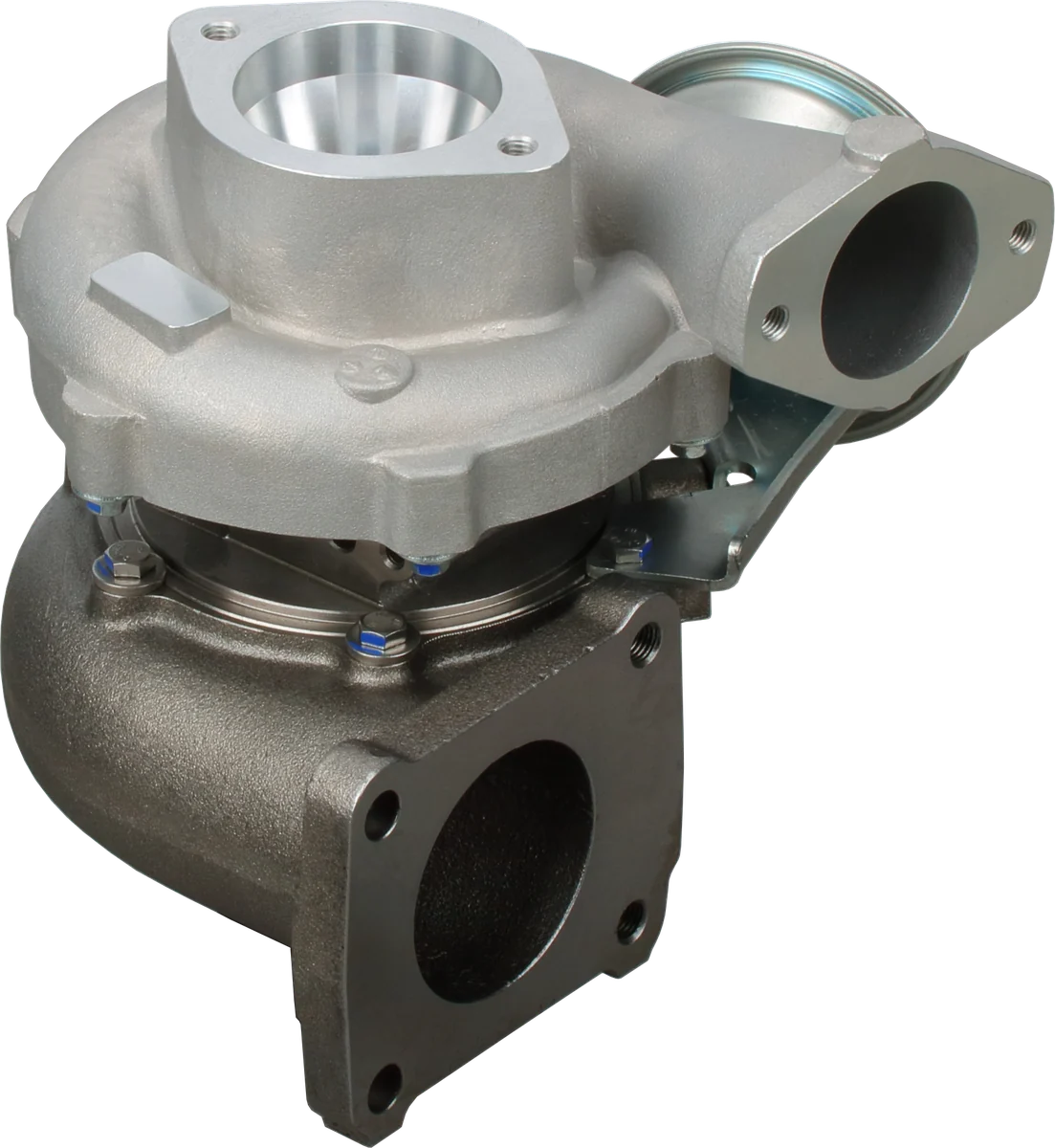
Compressor housing: guides the compressed air.
Turbine housing: guides exhaust gas to the turbine.
Actuator: check its type, linkage and calibration.
Product photograph from 2026. Numbers identify the features explained below.
What do Garrett turbo model numbers tell you?
Garrett turbo nomenclature is best treated as a set of family conventions. A familiar GT designation combines a series prefix, a frame code, a compressor size code, and sometimes feature letters. That pattern helps explain the hardware, but it is not a universal decoder for every Garrett product.
Series prefix. Letters at the beginning identify the design series or subfamily. Earlier designations and different GT families should not automatically be interpreted using identical rules. Additional letters near the prefix can belong to the subfamily designation rather than identify an optional feature.
Frame digits. In many familiar four-digit GT codes, the first pair identifies a frame class associated with the turbine. GT turbo frame size is a grouping, not a direct millimeter measurement. Within a comparable series, larger codes generally indicate larger frames. They do not establish flange dimensions or guarantee that internal parts interchange.
Wheel size digits. A following digit pair often relates to the nominal compressor exducer diameter in millimeters. The exducer is the wheel’s larger, outer discharge diameter. This does not reveal its inducer diameter, trim, or complete blade geometry. Some designations abbreviate dimensions or follow different rules, so confirm wheel specifications separately.
Suffix letters. Letters at the end may identify bearing type, geometry control, cooling provisions, or a variant. Their meaning depends on the family. Treat Garrett turbo model numbers as a first filter, then use the assembly identification to settle the purchase.
Common suffix conventions and their limits
These Garrett turbocharger model suffix meanings reflect widely known conventions, not definitions that apply to every designation. Confirm them against the exact model and assembly, particularly when letters appear in combinations. These meanings concern model letters, not suffixes in assembly part numbers.
| Letter | Common interpretation in applicable families | What still needs verification |
|---|---|---|
| R | Ball bearings in many GT designations | Exact bearing system and assembly compatibility |
| V | Variable turbine geometry on many diesel models | Actuator type, control system, and calibration |
| W | Water-cooled bearing housing in some naming conventions | Actual coolant connections and installation requirements |
| S | A variant marker in some families | Specific differences; do not assume one universal feature |
The absence of a letter does not reliably prove that a feature is absent. Likewise, a V designation does not specify whether actuation is pneumatic or electronic. Do not infer an actuator’s connector, software compatibility, or adjustment procedure from the model suffix.
Garrett turbocharger model number vs part number
Engine manufacturers can specify different turbocharger configurations within the same basic family. A pickup, a stationary engine, and a piece of construction equipment may need different housings and controls even when their engine displacement is similar. Two turbochargers can also look nearly identical while differing in details that matter during operation.
| Area | Possible difference within a family | Why it matters when ordering |
|---|---|---|
| Turbine housing | Different A/R or internal flow geometry | A matching mounting face does not establish equivalent operation |
| Actuator | Different control type, travel, bracket, or calibration | The engine must control the installed turbo correctly |
| Flanges | Different manifold, exhaust outlet, or intake connections | Similar size does not guarantee a direct fit |
| Oil and coolant ports | Different locations, threads, or connection styles | Existing lines must suit the specified assembly |
| Housing orientation | Different positions of covers and connections | Pipes, brackets, and oil drainage must work in the installation |
| Internal specification | Different wheels, bearings, or geometry control components | A family label cannot confirm CHRA or repair part compatibility |
Changing housings or transferring an actuator is not proof of interchangeability. Confirm that the resulting combination is supported for that exact assembly and engine application. Similar physical dimensions cannot establish the required airflow or control characteristics.
Which Garrett diesel turbocharger do I need?
Start a Garrett turbocharger assembly number lookup with the full part number exactly as marked. Garrett assembly numbers commonly contain a base number followed by additional digits, often separated by a dash. Capture the entire string. Do not discard trailing digits because another listing shares the same beginning.
Before requesting a replacement, gather:
- Clear photographs of every identification field and the complete turbo.
- The Garrett assembly number and customer or engine-maker number, copied separately.
- Engine model and serial number, plus vehicle VIN or equipment serial number where applicable.
- Application details: pickup, truck, bus, construction machine, agricultural equipment, marine engine, or generator.
- Actuator identification and photos of connectors, flanges, and oil or coolant connections.
- Any known engine replacement, previous turbo conversion, or change in the engine’s operating specification.
Use the assembly number to locate a matching replacement or a documented service supersession. Different printed numbers can represent an approved replacement, but that relationship must be established through a reliable parts cross-reference. A different suffix is neither automatic proof of incompatibility nor permission to substitute.
Next, check the identified assembly against the engine records. An old turbo may already be an incorrect replacement. If the tag and the engine-maker listing disagree, resolve the mismatch before ordering. Model year alone is especially weak evidence when equipment has been repowered.
Finally, confirm what the quoted item includes. A complete turbo, a unit supplied without an actuator, and a cartridge require different installation work. For electronically controlled units, establish whether actuator calibration or a setup procedure for that engine is required. Record the agreed part number and contents on the order.
Check the delivered unit against the order
When the replacement arrives, compare its identification with the number quoted and the accepted cross-reference. Lay out the paperwork and photos before removing plugs or transferring parts. A matching family name is only one check.
Check the manifold face, exhaust outlet, compressor connections, actuator mounting, and fluid ports against the original installation. Verify the supplied actuator number where available. If a port, connector, or bracket differs, ask whether that difference belongs to the documented replacement and whether additional specified parts are required.
Do not modify an actuator rod or rotate a housing simply to make an unexplained mismatch disappear. Those changes can affect control settings or connection geometry. Resolve the identity first, then follow the installation requirements for the confirmed assembly. Keep the old tag photo with the job record so the next technician has a clear starting point.
Ordering a CHRA or repair kit
A CHRA, often sold as a core or cartridge, is the center housing rotating assembly rather than the complete turbocharger. Its identification is separate from the complete assembly number. The turbo tag is the starting point for finding the correct cartridge, not a guarantee that every core in that model family fits.
A repair kit needs the same care. Bearing dimensions, thrust components, sealing arrangements, and internal revisions can differ. Confirm the kit’s stated applicability to the actual assembly and inspect the existing parts during rebuilding. A shared model name or a visually similar kit does not establish compatibility.
Also distinguish a replacement cartridge from an exchange core: a supplier may use “core” for the used turbo that must be returned. Clarify the item and any return requirement before approving the order.
Common Questions
Are Garrett turbo model numbers enough to order a replacement?
No. Use the full Garrett assembly number, then verify the engine-maker cross-reference and application. Matching model codes alone do not establish interchangeability.
Can a number cast into the housing identify the turbo?
Usually not. A casting number may identify a housing shared by several assemblies. Include it as supporting information, but prioritize the assembly identification.
Can a different part number be a valid replacement?
Yes, when a documented supersession or cross-reference covers your application. Similar digits, a higher number, or a seller's visual comparison are insufficient.
What if the identification plate is missing?
Start with engine and equipment identification, then check engine-maker parts records. Supply turbo photos and disclose previous engine swaps or turbo modifications.
Does the turbo assembly number identify the correct CHRA?
It helps locate the correct cartridge, but a separate CHRA cross-reference is necessary. Confirm the complete turbo assembly before selecting internal replacement parts.
Does a matching connector prove actuator compatibility?
No. Connector shape does not verify control behavior, actuator travel, or calibration. Confirm the actuator and turbo pairing and any required setup.
Why does my Garrett turbocharger look different?
Housings, connections, controls, and internal specifications can vary within a family. Verify differences against the documented replacement.
For help interpreting Garrett turbo model numbers or identifying a replacement, contact LeadTurbo with the full part number, tag photos, and engine details.