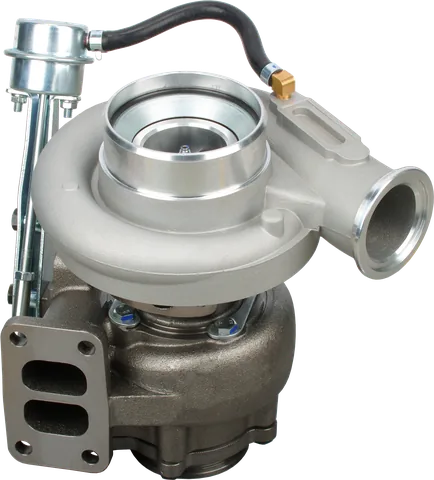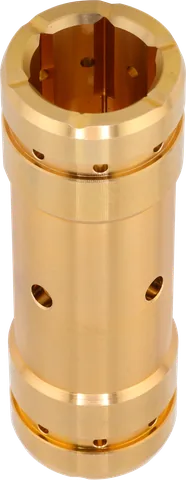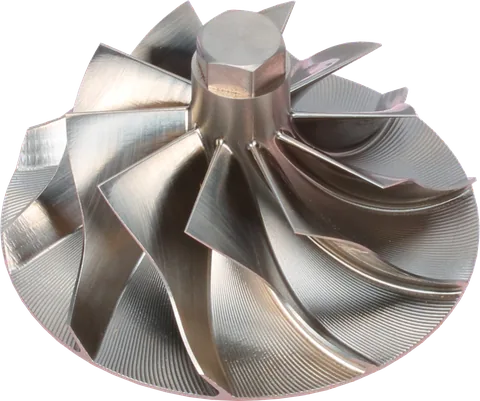
An HX35W label is a starting point, not a complete ordering specification. Two units carrying that model can have different housings, connections, or wastegate calibration. Before ordering a complete turbo, CHRA, or repair kit, record the full nameplate and identify the engine actually installed in the truck or machine. Those details help prevent a replacement that bolts on but does not match the application.
How do Holset turbo model numbers read?
A useful way to read HX35W is H / X / 35 / W: brand, family, approximate frame size, and configuration suffix. This pattern helps organize a parts search, but it is not a universal decoding formula. Holset naming conventions vary between product families, and the model does not describe every part inside the assembly.
| Model element | General meaning | What it does not establish |
|---|---|---|
| H | Holset brand identifier | Engine manufacturer or application |
| X, E, or Y | Family or development-series letter | A universal production year or generation sequence |
| Digits, such as 35 | Approximate size class within that naming system | Exact wheel diameter, airflow rating, or engine displacement |
| W | Wastegated version in familiar designations such as HX35W | Wastegate operating specification or actuator interchangeability |
| V or VE | Variable-geometry identification in applicable model names, such as HE351VE | Complete actuator or electronic compatibility |
| Other letters | Additional design distinctions within particular model ranges | A dependable universal meaning without application information |
Treat the digits as a frame-size clue, not a measurement in millimeters. A two-digit HX number and a three-digit HE number cannot be compared as if they were one continuous size scale. Also, the E in the HE family name does not, by itself, prove that a turbocharger has electronic control.
Holset HX vs HE turbochargers: where does HY fit?
These names describe different design families with overlapping applications. They are more useful for recognizing the general type of turbo than for selecting an interchangeable replacement.
| Family | General service context | Typical identification clues |
|---|---|---|
| HX | Long-established designs found throughout diesel truck and equipment service | Many familiar models use fixed turbine geometry; W versions add a wastegate |
| HY | Seen in certain older diesel applications, including some early-2000s pickups | Often encountered as compact wastegated units such as HY35W; do not infer HX interchangeability |
| HE | Associated with later design generations, including emissions-era applications | Includes both wastegated and variable-geometry versions; the complete suffix matters |
The Holset HX series contains many assembly specifications, while the HE family includes both wastegated and variable-geometry turbocharger (VGT) designs. HE351CW and HE351VE, for example, identify different control arrangements despite sharing much of their model name.
Comparing Holset turbo model numbers across these families will not establish interchangeability. A HY35W should not be treated as a direct HX35W replacement simply because both names contain 35. Engine build date alone is also insufficient: applications and replacement histories overlap.
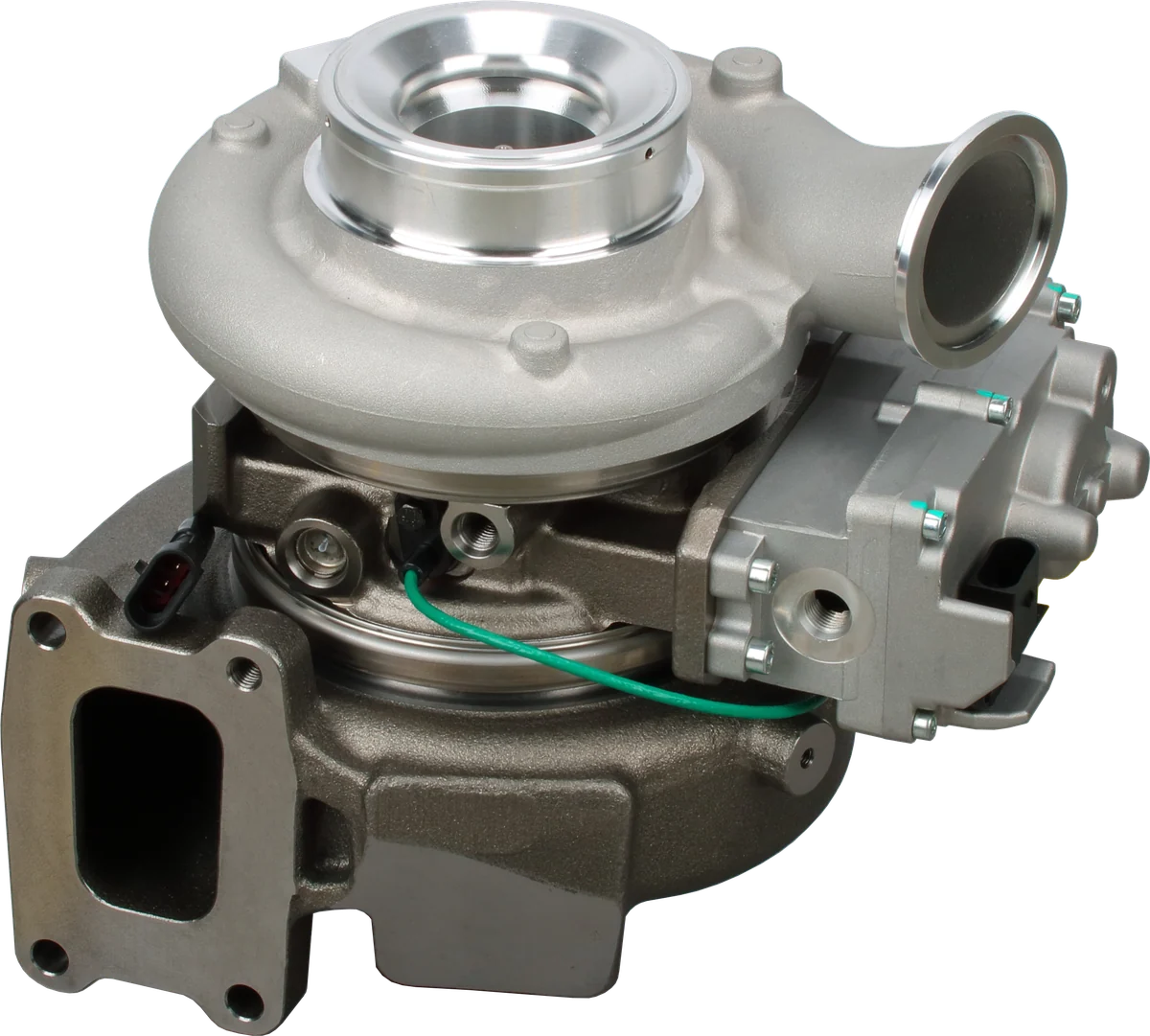
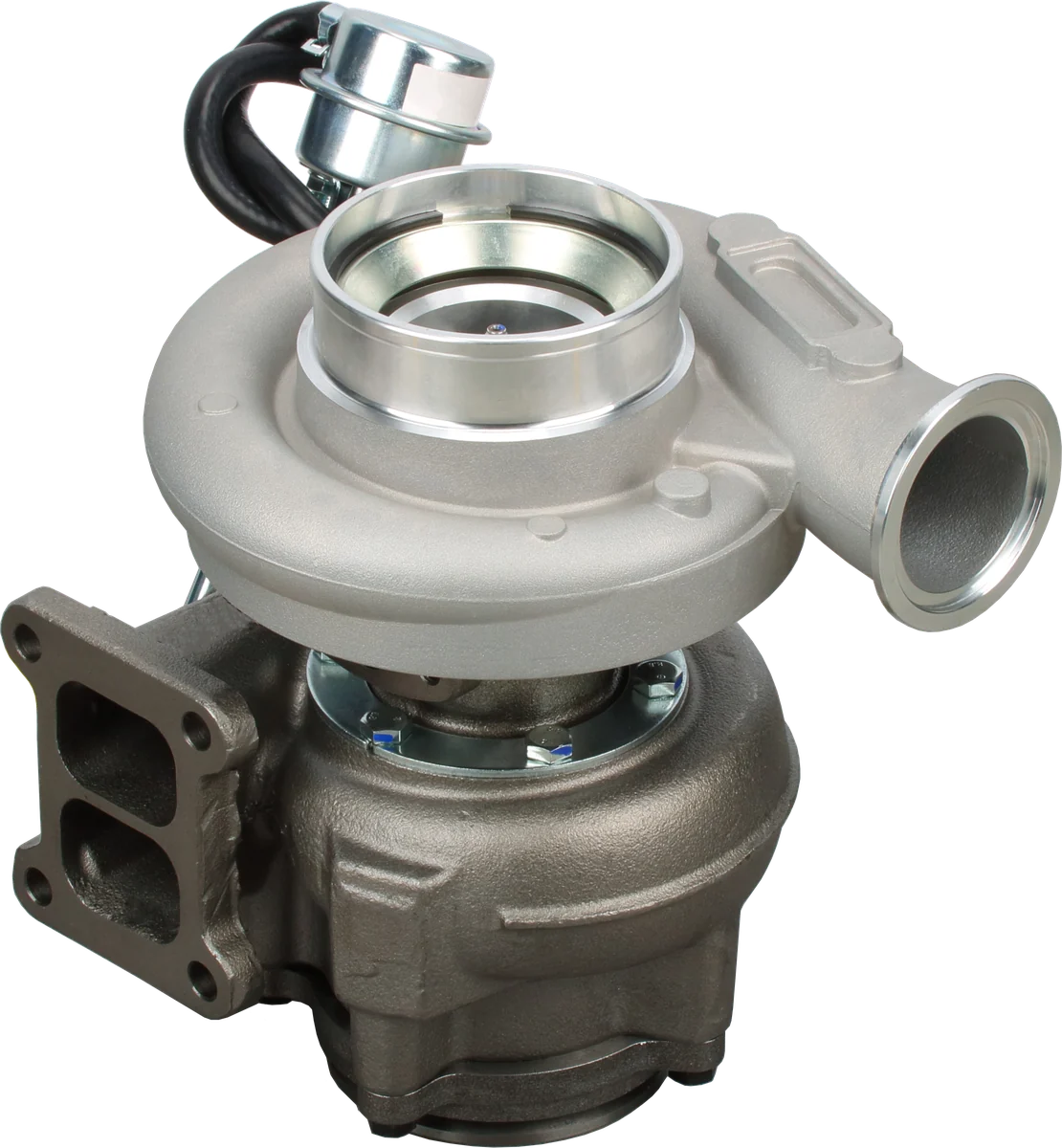
Compressor housing: guides the compressed air.
Turbine housing: guides exhaust gas to the turbine.
Actuator: check its type, linkage and calibration.
Product photograph from 2026. Numbers identify the features explained below.
How to read a Holset turbocharger nameplate
A Cummins Turbo Technologies nameplate or Holset identification plate normally separates the model from several identification numbers. Label wording and layout can vary, so photograph the whole plate instead of sending one isolated line.
| Nameplate field | What it identifies | How to use it when ordering |
|---|---|---|
| Assembly number, sometimes marked Assy. or Part No. | The specified turbocharger assembly | Quote the full number first, including any suffix or added identifier |
| Customer or OEM number | The engine or equipment manufacturer's reference | Provide it alongside the assembly number for an application cross-check |
| Serial number | The individual turbo's production identity | Useful for traceability and technical support; it does not replace the assembly number |
| Model | The product family and general configuration | Use it to narrow the search, then confirm the assembly |
When a supplier asks for a Holset part number, the assembly number is usually the best starting point. An engine manufacturer's parts system may instead order against its OEM service number. Send both numbers when available and let the catalog establish the valid cross-reference.
Clean the plate gently and preserve every character. Check questionable digits against a photograph rather than guessing. Raised numbers cast into a housing generally identify that component or casting; they should not be assumed to identify the complete turbo. A Holset turbocharger serial number and an engine serial number also refer to different items.
Record the numbers before removing the old unit, and keep its identification intact if it is being returned as a core. This preserves the information needed if the supplied replacement raises an application question.
Are all HX35W turbocharger replacements interchangeable?
HX35W tells you the family and wastegated configuration. It does not guarantee that two assemblies fit the same engine installation or respond correctly to the same control requirements. Compare these points against the specified replacement:
- Housings and mounting: Check the manifold flange, turbine outlet, compressor connections, housing orientation, and clearance around nearby components. Similar external shapes do not confirm matching internal flow paths.
- Wastegate specification: Actuator operation, rod arrangement, and the specified setting must suit the engine application. An adjustable rod is not evidence that an otherwise incorrect unit can be made equivalent.
- Oil and coolant connections: Verify feed fittings, drain attachment, and any coolant provisions listed for the assembly. Do not assume that a model name establishes the cooling arrangement or port layout.
- Actuator hardware: Brackets, canisters, rod ends, and their position can affect installation and operation even when both units use a wastegate.
- Internal matching: Wheel and housing specifications matter when retaining old housings and fitting a replacement CHRA. A shared model designation does not establish cartridge compatibility.
A flange that lines up is only one part of the match. Housing geometry and wastegate calibration affect how the turbocharger responds under load, while connection and bracket differences can complicate installation. These discrepancies matter on a working diesel even when the engine starts and develops boost.
Use the assembly specification to settle these comparisons; photographs alone cannot confirm internal dimensions or wastegate calibration.
Cross-check the turbo against the engine serial number
The installed turbo is useful evidence, but a previous repair may have left the wrong assembly on the engine. Confirm the nameplate information against the engine manufacturer's parts record before treating it as the replacement standard.
- Identify the engine itself. Record its manufacturer, model, and engine serial number from the engine identification plate or verified service record. A vehicle identification number can help, but it does not prove which engine is currently installed.
- Retrieve the applicable parts listing. To identify a Holset turbocharger for Cummins diesel applications, search using the engine serial number and include the CPL, or Control Parts List, number when available. Use the corresponding engine manufacturer's catalog for other applications.
- Compare the original and service numbers. Check whether the turbo assembly shown for that engine matches the installed unit or has a documented replacement number.
- Resolve configuration differences. Confirm the engine rating, installation, and control system where the catalog requires them. A generator, bus, and truck application should not be assumed equivalent merely because the engine family matches.
- Confirm the supplied package. Establish whether the replacement includes the actuator and any application-specific fittings, and whether installation requires a prescribed actuator setup or calibration.
If the engine was repowered, rerated, or modified, tell the supplier. The original engine record may no longer describe its current configuration. Keep the existing turbo's numbers and the engine record together until any disagreement is explained.
Ordering a CHRA or repair kit needs another check
A CHRA is the center housing rotating assembly. Replacing it retains other parts of the turbocharger, so identification must cover the cartridge and the housings it will work with. A listing that says only “fits HX35W” needs a more specific application check.
Give the supplier the original Holset turbocharger assembly number, not just a model or a housing casting number. Ask for confirmation that the proposed core matches the wheel specifications, bearing housing, lubrication connections, and housing interfaces required by that assembly.
For variable-geometry units, establish what the replacement actually includes. The actuator and geometry mechanism may have separate service requirements, and replacing the center section does not establish that either component is serviceable or correctly set up.
A repair kit is a different purchase again. Its bearings, seals, and other pieces must match the intended build. Model-family coverage in a listing is not a substitute for a verified kit cross-reference.
What to send with your parts inquiry
A complete identification package speeds up verification and helps expose conflicting information before anything ships. Gather:
- A legible photograph of the entire nameplate and a typed transcription of its numbers.
- Engine manufacturer, model, serial number, and any relevant build or rating information.
- Vehicle or equipment type and confirmation of any known engine or turbo changes.
- Photos showing the manifold connection, exhaust outlet, compressor connections, and actuator.
- Whether you need a complete turbocharger, CHRA, repair kit, or individual component.
If the plate is missing, say so. Supply remaining markings and application details instead of choosing a nearby number from an online listing. A supplier may need more inspection before identifying a replacement confidently.
Common Questions
Are Holset turbo model numbers enough to order a CHRA?
No. A CHRA must match the assembly specification and the housings being retained. Provide the assembly number and engine details; previously rebuilt or modified units may need additional identification.
Which number should I send when ordering a replacement?
Send the complete Holset assembly number, the customer or OEM number, and the engine serial number. Include a clear photograph of the entire nameplate to preserve all supporting information.
Does HE always mean the turbo has electronic VGT?
No. The HE family includes wastegated and variable-geometry models. The complete designation and assembly number determine the control arrangement and compatible actuator.
Can a casting number replace a missing nameplate number?
Usually not. A casting number can identify a housing shared by multiple assemblies. Photograph all markings and connections, then check the application using the engine serial number.
What if the catalog shows a different replacement number?
Request a documented cross-reference or supersession for the original assembly and engine application. Confirm the replacement's configuration, included actuator, installation requirements, and any required setup.
Why does my HX35W turbocharger boost differently?
HX35W assemblies can have different housing geometry and wastegate calibration, which affect response under load. Check the assembly specification against the engine application; a shared model name does not guarantee equivalent operation.
Contact LeadTurbo with your turbo assembly number, nameplate photos, and engine details for help checking a replacement turbocharger, CHRA, or repair kit.