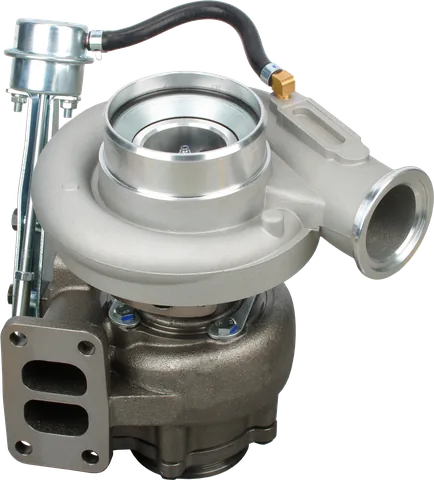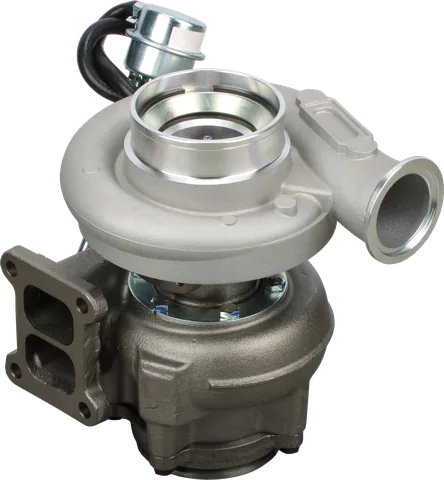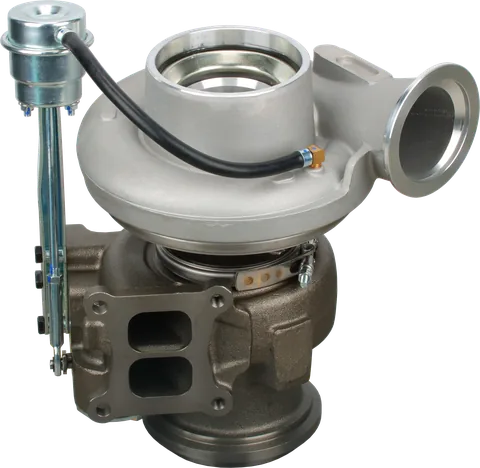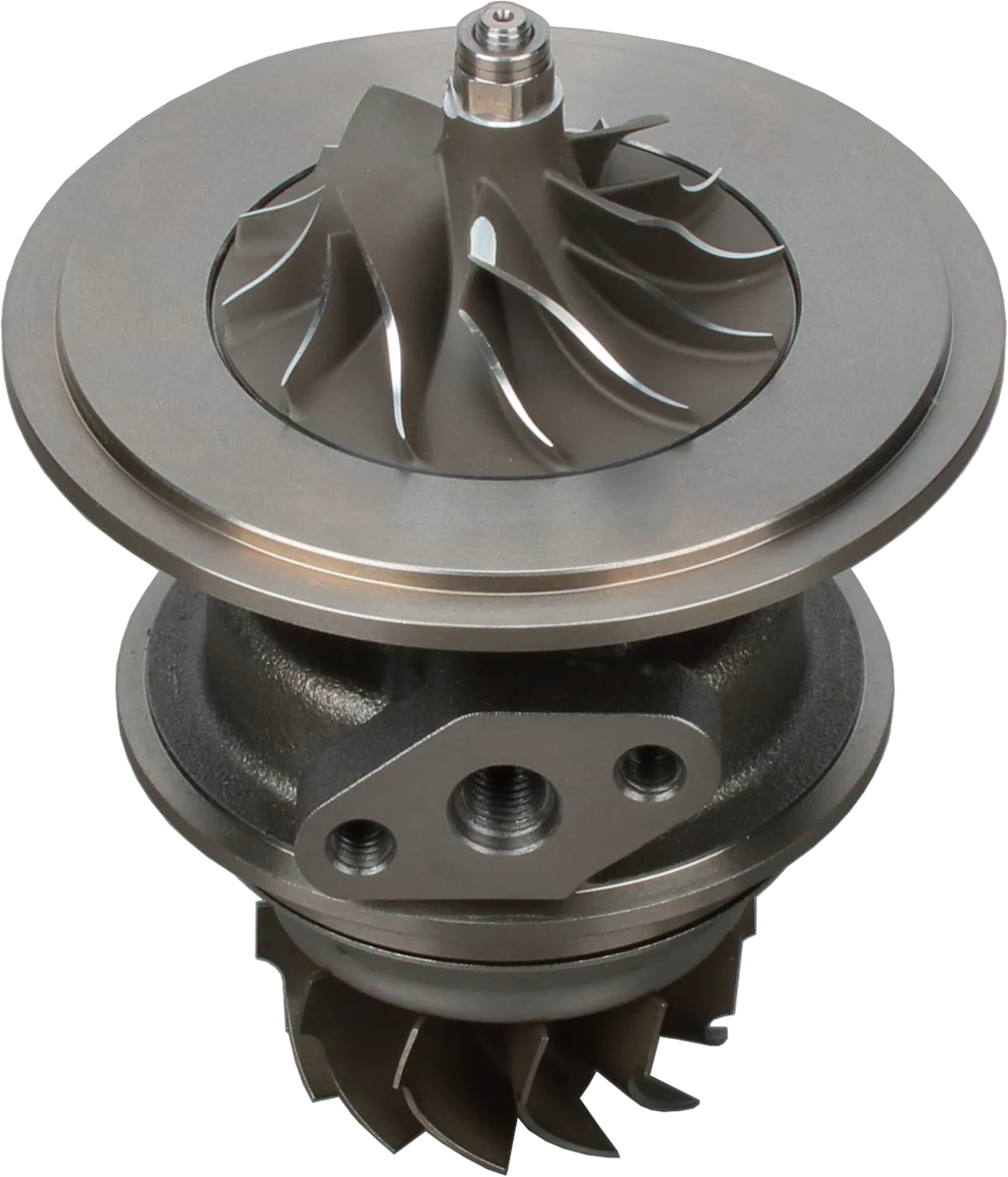
A replacement 4D56 turbo needs to match more than the engine name. LeadTurbo’s catalog includes TD04, TF035, TF035HM, and other turbocharger families across Mitsubishi diesel applications. Even units sharing a model designation can have different housings, wheels, connections, and controls.
For owners maintaining working diesels or JDM imports, identification and diagnosis should come before ordering. Confirm the turbocharger data-plate number and applicable OE part number, then determine why the existing unit needs attention.
Understanding the engines and their turbochargers
The Mitsubishi 4D56 is a 2.5-liter inline-four diesel; the 4M40 is a 2.8-liter inline-four diesel. Turbocharged versions depend on adequate airflow, reliable lubrication, and effective cooling under sustained load.
The turbine extracts energy from exhaust gas to drive the compressor, which supplies pressurized intake air. When that airflow falls short of the engine’s fueling demand, performance can suffer and smoke can increase. Control faults can also expose the turbo or engine to excessive operating stress.
Towing, climbing, and prolonged commercial work make unresolved restrictions, leaks, and lubrication problems particularly consequential. A new turbo cannot compensate for a blocked oil supply, excessive crankcase pressure, or debris left in the intake.
Which 4D56 turbo models appear in the catalog?
The catalog lists Mitsubishi TD04 turbo applications across several 4D56 variants. It also includes TF035 and TF035HM complete turbochargers for the 4D56, plus multiple TF035HM listings for 4M40 turbocharger replacement.
Other listed choices include RHV4 and GT1749 complete units, GT1749S and TF035HL2 cartridges, and TD05 components for specified applications. These names describe different turbo families; they are not universal replacement categories.
A 4M40 turbo listed as TF035HM still requires its full identifying number. Likewise, searching for a turbocharger for a Pajero, L200, or Delica only begins the identification process. Delica and Canter owners should obtain individual fitment confirmation because our catalog entries do not establish applications for those vehicle names.
How to identify a 4D56 turbocharger
Look for a metal data plate, engraved identification pad, or stamped markings, commonly on the compressor housing. Placement varies, and dirt or surrounding equipment can obscure it. Clean gently and photograph every character.
Distinguish between:
- Turbo model: A family designation such as TD04 or TF035HM.
- Turbo assembly number: The fuller identifier distinguishing a particular turbo configuration.
- OE part number: The vehicle or engine manufacturer’s reference for the original specified assembly.
A casting number alone may identify only a housing. Catalog identifiers can also combine a number with model information, so preserve the complete marking when requesting a match. An OE reference helps identify an aftermarket replacement; it does not establish OEM affiliation.
If identification is missing, supply clear photographs of both housings, mounting faces, ports, and actuator hardware. On an imported or previously modified vehicle, the installed equipment deserves particular attention.
Why similar turbos may differ
Housing A/R describes a relationship between passage area and radius that influences flow behavior. Compressor and turbine wheel dimensions, including trim, also affect capacity and response. In a TD04 vs TF035 turbocharger comparison, similar external size does not establish an equivalent match.
Boost-control architecture matters too. A wastegate bypasses exhaust around the turbine; a free-floating configuration has no wastegate; variable geometry changes the turbine’s effective flow passage. These are general distinctions to check, not confirmed configurations for every catalog entry.
Verify oil-feed threads, drain orientation, any coolant connections, compressor outlet direction, exhaust flanges, and actuator arrangement. Do not infer those details from “4D56” or “TF035HM” alone.
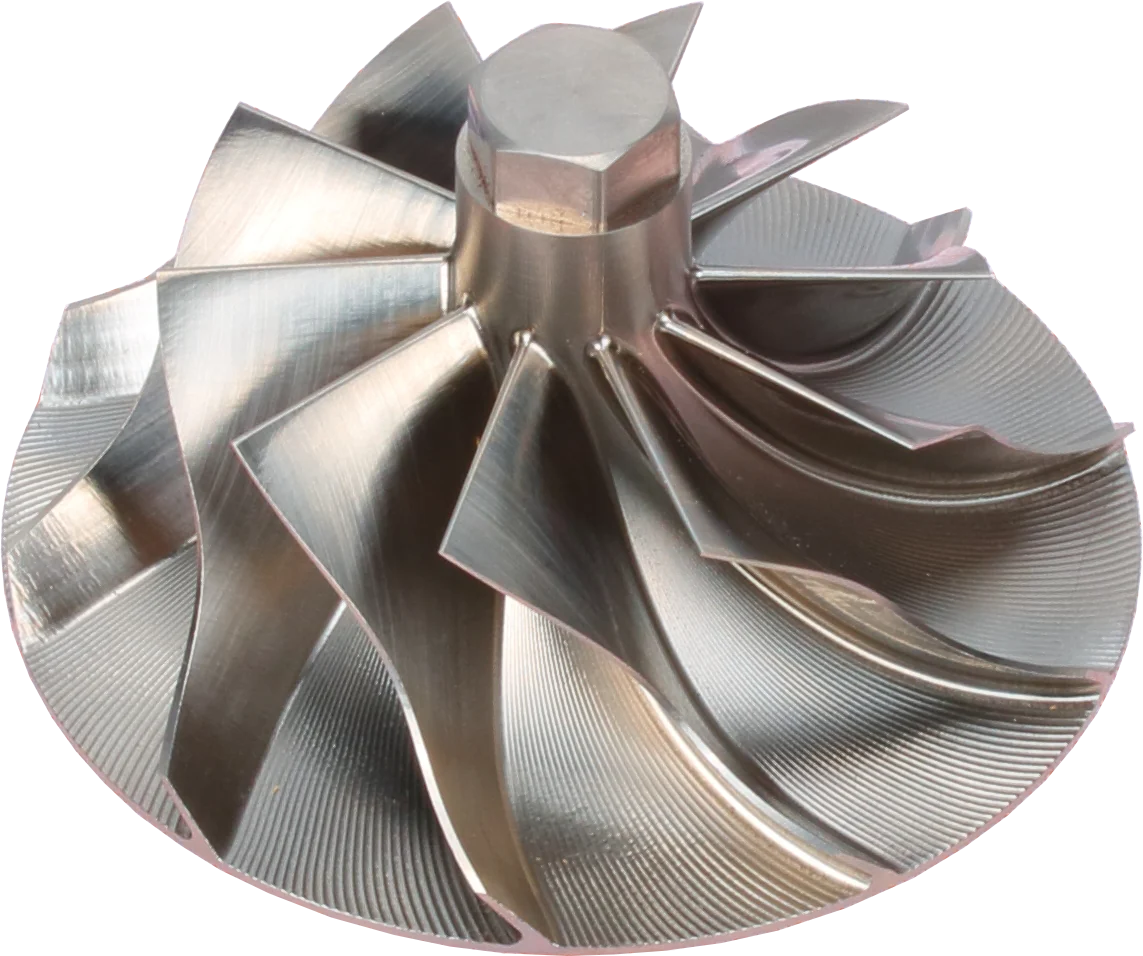
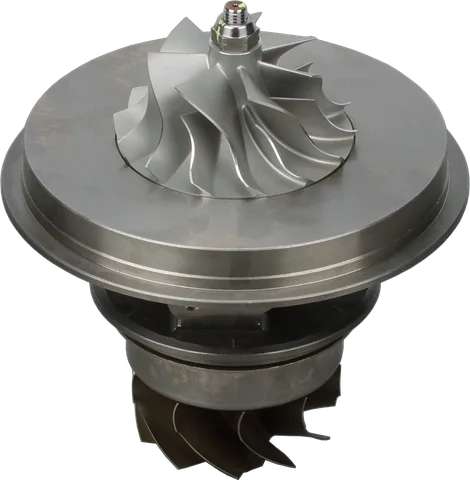
Blades: inspect for chips, bends and contact marks.
Hub: part of the balanced rotating assembly.
Outer blade tips: check for housing rub.
Product photograph from 2026. Numbers identify the features explained below.
Representative catalog examples: verify against the data plate
These are examples from LeadTurbo’s catalog, not an interchangeability chart. Applications are reproduced as listed. Confirm the complete data-plate number, applicable OE reference, and product type before ordering.
| Part number | Turbo model | Product type | Application |
|---|---|---|---|
| 49177 01500 TD04 09B | TD04 | Complete turbocharger | Mitsubishi 4D56 |
| 49177 01505 TD04 10T 4 | TD04 | Complete turbocharger | Mitsubishi Pajero II L200 4D56 |
| 49135 02600 | TF035 | Complete turbocharger | Mitsubishi 4D56 |
| 49135 02230 TF035HM 10T 4 | TF035HM | Complete turbocharger | Mitsubishi 4D56 2.5 TD |
| 49135 02100 TF035HM 12T 4 | TF035HM | Complete turbocharger | Mitsubishi 4M40 |
| 49135 02110 TF035HM 12T 4 | TF035HM | Complete turbocharger | Mitsubishi 4M40 |
| 49135 03110 TF035HM 12T | TF035HM | Complete turbocharger | Mitsubishi 4M40 |
| 1515A222 | RHV4 | Complete turbocharger | Mitsubishi L200 4D56 (VT17) |
| 433352 0061 | GT1749S | CHRA/cartridge | Mitsubishi 4D56TCI |
| 1515A170 | RHV4 | CHRA/cartridge | Mitsubishi L200 4D56T |
| 1515A029 RK | — | Repair kit | Mitsubishi L200 4D5CDI (VT10) |
| 49135 03110 | — | Turbine housing | Mitsubishi 4M40 |
| 435791 0054 | GT1749 | Compressor housing | Mitsubishi 4D56T Hyundai H100 |
Symptoms, causes, and checks before replacement
Boost loss and black smoke
Reduced power can result from a split charge hose, leaking intercooler, restricted air filter, exhaust leak before the turbine, or faulty boost control. Black smoke can accompany insufficient air for the injected fuel, but fueling and engine faults can produce similar symptoms.
Inspect the entire intake path and test charge-air plumbing for leaks using the appropriate procedure. Check exhaust restrictions and control hoses or wiring before condemning the rotating assembly.
Blue smoke and oil leakage
Oil entering the intake or exhaust can originate from turbo damage, but poor drainage and excessive crankcase pressure can also force oil past the turbo’s sealing arrangements. These depend partly on operating pressure relationships and free oil return.
Check oil level, drain restrictions, breather condition, and engine blow-by. Trace external oil leakage separately. A light intake oil film is different from substantial pooling; heavy oil accumulation must be resolved before restarting because a diesel can ingest that oil as fuel.
White smoke also needs broader diagnosis, including combustion and coolant-related causes. Smoke color alone cannot identify a failed turbo.
New whine, whistle, or scraping
Some airflow noise is normal. A new whistle may come from a leaking hose or exhaust joint. A rising siren-like sound can accompany bearing damage, wheel damage, or rotor imbalance, while scraping suggests possible contact.
Turbo noise can originate from airflow, rotating components, or bearing behavior. Sound alone cannot reliably separate these causes. Inspect for leaks, damaged blades, and contact marks; stop operation if mechanical damage is suspected.
Shaft play and damaged wheels
Journal-bearing turbos may show some radial movement without operating oil pressure. A finger check cannot establish acceptable clearance, and axial movement requires particular attention against the relevant specification.
Wheel contact, binding, or chipped blades warrants professional assessment. Oil starvation can break down the supporting oil film; contaminated oil can abrade bearings and journals. Foreign objects can damage blades and upset rotor balance. Identify the source before fitting replacement parts.
Cracked turbine housing
Repeated heating and cooling can contribute to thermal fatigue. Cracks may cause external exhaust leakage, impair wastegate sealing where fitted, or compromise the housing.
Serviceability depends on crack location, extent, and the applicable criteria. Soot marks and ticking can also come from a manifold or gasket leak, so locate the actual defect. A new cartridge does not repair a damaged turbine housing.
Actuator and control problems
Where fitted, a sticking wastegate, leaking actuator diaphragm, damaged control hose, or faulty control valve can produce underboost or overboost. Variable-geometry mechanisms and electronic actuators introduce additional checks when present.
Test the actual control system against its service procedure. Do not adjust a rod or stop screw simply to recover power; incorrect adjustment can conceal another fault and create unsafe operating conditions.
4D56 turbocharger replacement options
Complete turbocharger: Consider a complete assembly when several components are damaged, housings are unserviceable, or a rebuild would require extensive work. Confirm exactly what comes with the listing, including any actuator or installation hardware.
CHRA/cartridge: A cartridge replaces the central rotating assembly while retaining suitable outer housings. It makes sense when those housings and any retained controls pass inspection. Exact wheel-to-housing compatibility, clearances, and assembly orientation remain essential.
Repair kit: A kit suits a professionally assessed rebuild with reusable major components. Bearings and sealing parts cannot restore a worn shaft or damaged bearing bore. Proper inspection, measurement, assembly, and rotor balancing are necessary; check each kit’s contents.
Individual housings and wheels: The catalog summary includes compressor housings, turbine housings, turbine wheel/shaft assemblies, and compressor wheels. These support targeted repairs when matching components are confirmed. Replacing rotating parts requires specialist balancing and clearance checks, even if a wheel appears dimensionally similar.
In every case, correct the underlying engine or lubrication fault first. Otherwise, the replacement can suffer the same damage.
Diesel turbocharger installation checks for hard-working engines
- Remove contamination. Inspect and clean intake pipes and the intercooler after an oil leak or wheel failure. Account for fragments throughout the air path. Replace components that cannot be reliably cleaned, and investigate possible engine ingestion.
- Inspect oil supply and return. Check the feed for internal deposits, damage, and restrictions. Confirm the drain is clear and correctly routed. Replace questionable lines and verify engine oil pressure against the applicable specification.
- Check crankcase pressure. Inspect the breather and investigate excessive blow-by. A clear drain cannot work properly against abnormal crankcase pressure.
- Use correct gaskets and fluids. Fit new specified gaskets and sealing washers. Keep sealant out of oil passages. Use the required oil and filter, and service coolant connections where fitted.
- Prime before startup. Follow the turbo supplier’s instructions to lubricate the assembly and establish oil supply. Where specified, disable fueling and crank using the engine’s approved procedure. Do not start the engine with a dry replacement turbo.
- Verify mounting and control setup. Ensure pipes and brackets fit without strain. Confirm actuator settings; perform the required calibration or relearn if an electronic actuator is fitted. Do not assume factory settings apply after mixing components.
- Check operation progressively. At initial idle, inspect for oil, coolant, exhaust, and intake leaks. Confirm normal lubrication, then assess operation under controlled load. Follow the engine’s guidance for warm-up and cooling after sustained heavy work.
Common Questions
Does every 4D56 engine use the same turbo?
No. The catalog includes several turbo families and multiple variants for 4D56 applications. Match the installed turbo’s full data-plate number and the applicable OE part number, then verify housings, connections, flanges, and control hardware before ordering.
Can a TD04 replace a TF035HM turbo?
Do not assume interchangeability. Different turbo families can have different flow characteristics, mounting arrangements, and control requirements. A replacement must be confirmed for the exact application; matching the engine designation alone is insufficient.
How do I identify a Pajero, L200, or Delica turbo?
Start with the turbo data plate or identification pad, commonly on the compressor housing. Photograph the full number, both housings, connections, and actuator. Supply the engine designation and available OE part number. Vehicle names, badges, and import paperwork alone may not identify the installed turbo.
Does oil inside the intercooler mean the turbo has failed?
Not necessarily. Crankcase ventilation can introduce oil mist into the intake. Excessive oil accumulation requires investigation of the turbo, oil drain, breather system, and engine blow-by. Significant pooling or rapidly increasing oil consumption should be investigated before further operation.
Is some turbo shaft movement normal?
Some radial movement can be present in an unpressurized journal-bearing turbo. That does not establish whether it is serviceable. Measure radial and axial clearance against the correct specifications; wheel contact, damaged blades, or binding require further assessment.
When is a CHRA a suitable replacement?
A CHRA can be appropriate when the original housings and control hardware are serviceable and the cartridge is an exact match. Cracked housings, worn wastegate components, or uncertain compatibility may make a complete turbo the better choice. Always correct the original failure cause.
Why is my 4D56 turbocharger underboosting?
Where fitted, a sticking wastegate, leaking actuator diaphragm, damaged control hose, or faulty control valve can produce underboost. Test the actual control system against its service procedure.
For a 4D56 turbo or 4M40 replacement, send the turbo data-plate number, OE part number, engine designation, and clear photos to LeadTurbo to confirm fitment.