Single turbocharger vs twin turbochargers: identify the system
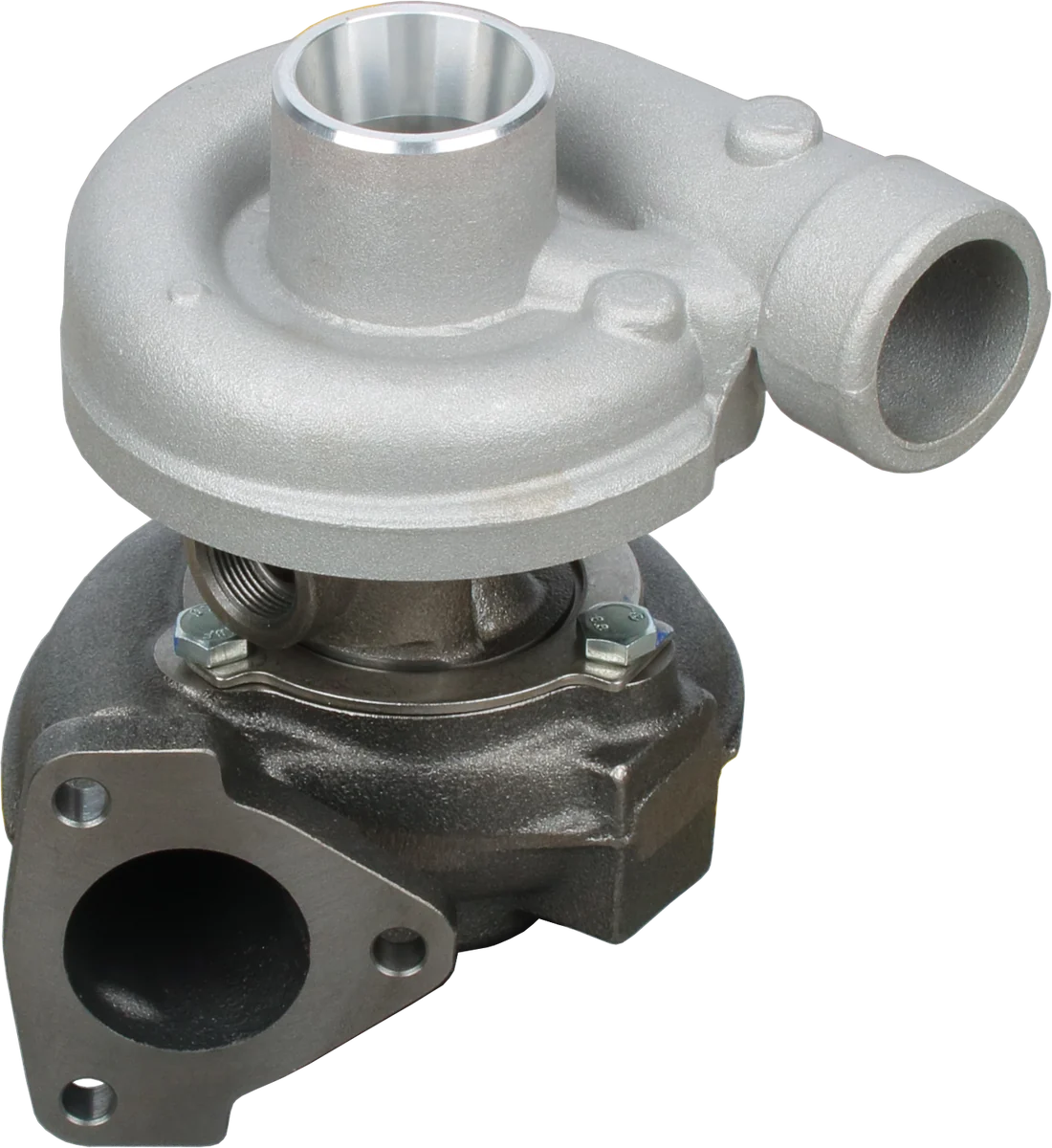
A single turbo setup uses one exhaust-driven turbine to power one compressor supplying the intake. A parallel twin turbo arrangement divides that work between two turbochargers. Both operate together, with neither compressor feeding the other.
The turbines may receive exhaust from separate cylinder groups, such as one bank apiece on a V-engine, or from a common manifold that divides flow between them. Their compressor outlets can join before a shared charge-air cooler or remain separate until farther downstream.
With an even split, each compressor handles roughly half the engine's required airflow at the target pressure ratio. The two pressure outputs are not added together.
Series or two-stage systems pass compressed air through successive compressors. They solve a different matching problem and are outside this comparison.
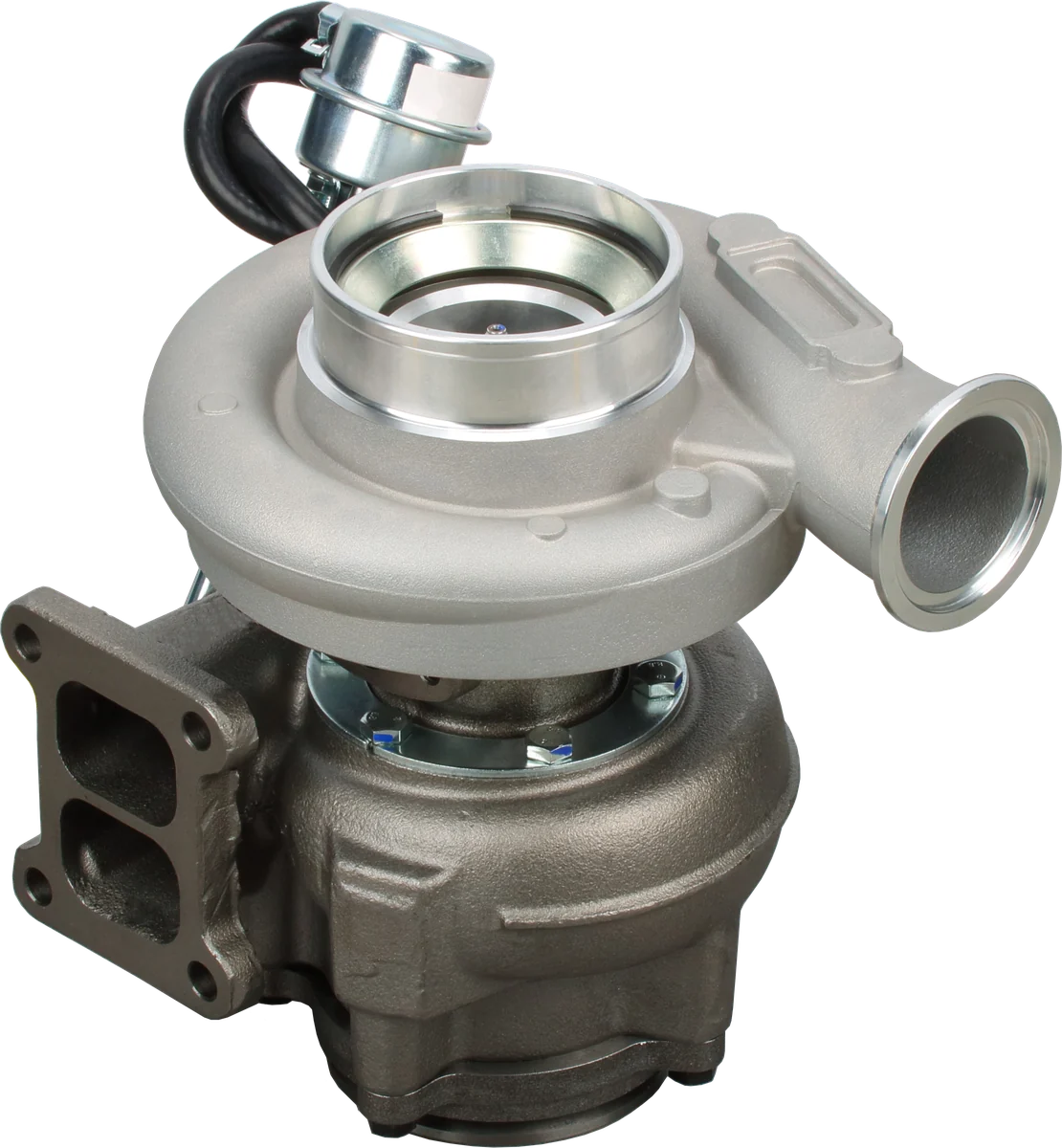
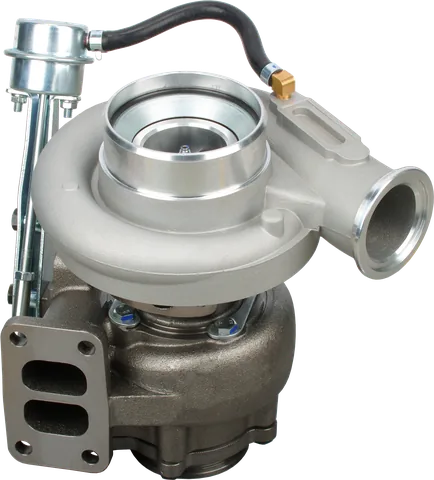
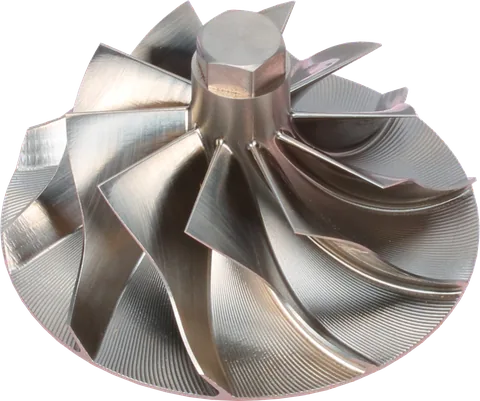
Compressor housing: guides the compressed air.
Turbine housing: guides exhaust gas to the turbine.
Actuator: check its type, linkage and calibration.
Product photograph from 2026. Numbers identify the features explained below.
What changes in a single vs twin turbo installation?
Compare properly matched systems at the same engine output and duty cycle. Comparing an oversized single with a well-selected pair tells you more about sizing than turbo count.
| Factor | Single turbocharger | Parallel twins |
|---|---|---|
| Response | Can respond well when sized for working speed | Smaller rotors may help, but each receives less exhaust flow |
| Efficiency | One larger unit can offer favorable turbine efficiency | Two units can work efficiently if both remain properly matched |
| Packaging | One mounting location; larger local space requirement | Smaller individual housings; two service locations to accommodate |
| Plumbing | Usually fewer pipes, joints, and oil connections | Extra branches, drains, supports, and control connections |
| Heat management | One concentrated hot assembly | Two hot assemblies, with shielding needs determined by routing |
| Control | One wastegate or variable-geometry mechanism, if fitted | Both units must follow the intended control strategy |
| Ownership cost | Usually simpler to source, inspect, and replace | More components and labor; possible parts specific to each bank |
Actual service access can outweigh the difference in component count.
Judge response and efficiency at the working load
Smaller rotating assemblies can accelerate more readily, but that advantage does not guarantee faster boost recovery. Each twin receives only its share of the exhaust energy. Turbine sizing, manifold volume, exhaust pulse routing, and control calibration all affect the result.
For a loaded truck, ask what happens after an upshift or when a grade steepens. For a loader, consider repeated torque demands as the hydraulics load the engine. A generator may run at steady speed yet still need strong response when electrical load steps upward.
Efficiency also has several meanings. Compressor efficiency affects charge temperature; turbine efficiency affects how effectively exhaust energy drives the shaft. Neither alone establishes fuel consumption. Intake restriction, exhaust pressure, charge cooling, and engine calibration influence the complete installation.
A larger turbine can have smaller clearance losses relative to its flow capacity than smaller machines of comparable design. That can favor a single, but compressor and turbine operating points still matter more than counting housings.
Request measurements at the intended load points: boost, exhaust pressure, intake temperature, and exhaust temperature. Compare response under load, not free-revving in the yard.
Let engine layout guide the installation
Many large inline diesels in trucks, buses, and equipment use one turbo because their exhaust ports sit along the same side of the engine. A suitable manifold can collect that flow into one mounting location without crossing between cylinder banks.
A correctly selected single turbocharger for inline diesels can often meet their airflow demand across the working speed range. Fewer connections and one control assembly also suit fleet maintenance. Displacement alone does not require twins; the relevant limits are airflow, pressure ratio, response, and installation space.
This is a practical tendency for vehicle and equipment engines. Very large stationary or marine diesels may use multiple turbochargers to meet airflow requirements or suit their cylinder arrangement and operating range.
| Layout | Starting point | What can change the decision |
|---|---|---|
| Inline engine | One turbo beside the exhaust manifold | Limited side clearance, unusual airflow demand, or special manifold constraints |
| V-engine | Assess one turbo per bank | Available central mounting space or an existing exhaust collector serving one turbo |
| Tight repower bay | Check actual component envelopes first | Steering, chassis rails, cab access, and oil drain paths |
| Enclosed marine or generator installation | Prioritize access and thermal protection | Ventilation, shielding, and maintenance clearance around either arrangement |
On a V-engine, parallel twins can shorten the exhaust route from each bank. However, a suitable central turbo location can make a single practical. Trace the complete turbo packaging: air cleaners, compressor outlets, downpipes, oil plumbing, heat shields, and tool access.
Heat problems depend on exposed surfaces and proximity to sensitive parts, not turbo count alone. Long crossover pipes need support and accommodation for thermal movement. Two units near wiring or hoses may require more shielding even if their manifolds are shorter.
What causes twin turbocharger boost imbalance?
Matching twins involves more than installing similar housings. Confirm the intended compressor and turbine specifications, housing sizes, actuator characteristics, and control hardware. Different air filters, crushed inlet hoses, exhaust leaks, or unequal cylinder output can upset the distribution of work.
Be precise about “unequal boost.” Separate intake circuits can show different pressures. When both compressors feed a common plenum, the shared pressure can look normal while airflow and shaft speeds differ. One dashboard boost reading cannot prove that both units are healthy.
| Observed problem | Useful checks | Why it matters |
|---|---|---|
| Slow boost rise despite both rotors turning | Test intake branches and exhaust joints upstream of the turbines | Rotation does not establish useful compressor output |
| One wastegate opens earlier | Verify specified actuator travel, reference plumbing, and calibration | Early bypass changes that turbine's available drive |
| Higher exhaust temperature on one bank | Check fueling, exhaust restriction, and sensor comparability | A fault affecting one cylinder bank can resemble a turbo mismatch |
| Recurring trouble on one side | Inspect its oil drain, inlet restriction, and mounting | Replacing the turbo leaves local installation faults unresolved |
For twin turbocharger wastegate adjustment, synchronization means achieving the specified opening and travel behavior, not simply setting both rods to the same length. Check each actuator with the prescribed procedure and confirm operation under load. Use the engine's required electronic calibration where applicable; avoid adjusting hardware to conceal an airflow problem.
The shafts do not need mechanically synchronized speeds. The goal is the intended sharing of airflow and turbine work throughout the operating range.
Price the installed system and the next repair
A single generally wins on component count: one center housing, one oil feed and drain, and one actuator if the design uses one. Twins duplicate much of that hardware and may add coolant plumbing, intake branches, and additional exhaust connections.
Purchase price is only part of the bill. Include fabricated brackets, flexible connections, shielding, calibration, pressure testing, and labor to reach both units. A repower that needs cab removal for routine turbo work can overwhelm any initial savings.
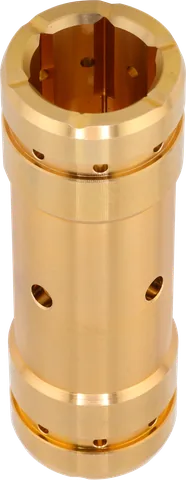
For parts ordering, record the engine identification and the complete turbo part number for each position. Two units with similar external dimensions may need different housings or actuators. Confirm CHRA compatibility against the complete assembly specification; a repair kit does not correct the wrong turbo match.
After one failure, inspect its partner and investigate shared oil, air, and exhaust conditions. Replacement of both is not automatic. Follow the engine manufacturer's requirements and the findings from inspection, including any contamination carried into shared intake plumbing.
For a fleet, count stocked spares by exact part number, including any differences between the two mounting positions.
Check the proposal before buying hardware
A useful single vs twin turbo comparison should end with an installation plan and evidence that it meets the duty cycle. Before approving the job, check:
- Rated output and working speeds are defined, including sustained load and transient demands.
- Both turbine and compressor selections suit the required operating points.
- Every oil drain has a workable route within the manufacturer's installation limits.
- Filters, actuators, clamps, and housings remain accessible with normal shop tools.
- The control plan retains required engine functions and integrates with the existing aftertreatment strategy.
- The estimate includes commissioning, troubleshooting access, and replacement parts availability.
Common Questions
Do parallel twins double the boost?
No. Parallel compressors contribute airflow at approximately the same delivery pressure when feeding a shared intake. Their pressures do not add together, and useful output still depends on the engine's air demand and calibration.
Will parallel twins always respond faster?
No. Smaller rotors can help, but each turbine receives a smaller exhaust supply. Compare systems at the same output, with suitable sizing and controls, using loaded response tests relevant to the job.
Can an inline-six use parallel twins?
Yes, if its exhaust routing, airflow requirements, controls, and installation space justify them. For many working inline engines, one properly matched unit provides the required performance with fewer service points.
Do both turbos need replacing after one fails?
Not necessarily. Inspect the remaining unit, identify the failure cause, and check shared systems for contamination or restriction. Replace both when inspection findings or the manufacturer's service instructions call for it.
Can twins share an intercooler?
Yes. A common cooler must accommodate total airflow with acceptable pressure loss. The combining pipes, connections, and distribution downstream also need suitable sizing; two compressors do not automatically require two coolers.
What should decide a single vs twin turbo repower?
Start with the duty cycle and engine layout, then compare documented performance, installation space, control compatibility, total installed cost, and service access. Keep the original arrangement when a change offers no demonstrated operational benefit.
How does a parallel turbocharger system work?
Two turbochargers operate together, dividing the engine's airflow demand. Neither compressor feeds the other, and their pressure outputs do not add together.
For help identifying replacement parts, contact LeadTurbo with the turbo part number, engine model, serial number, and details of the installation.