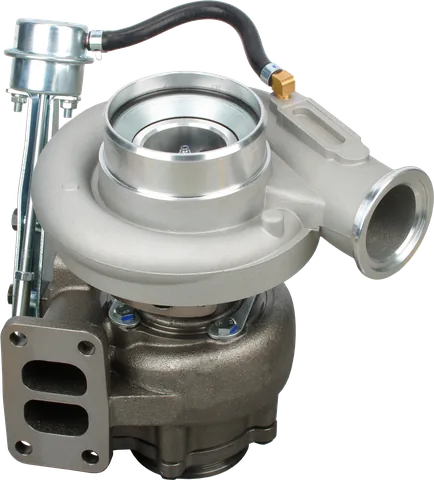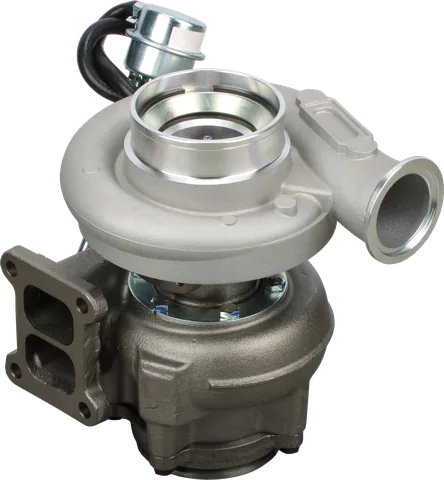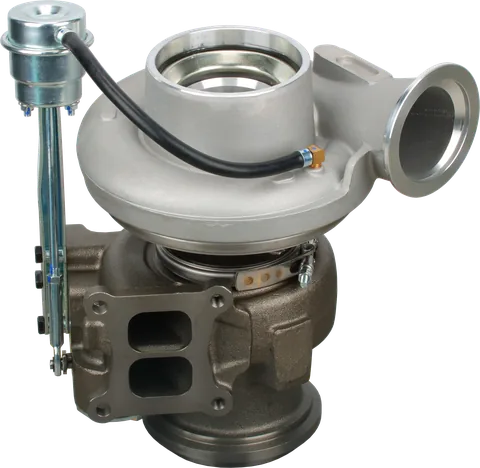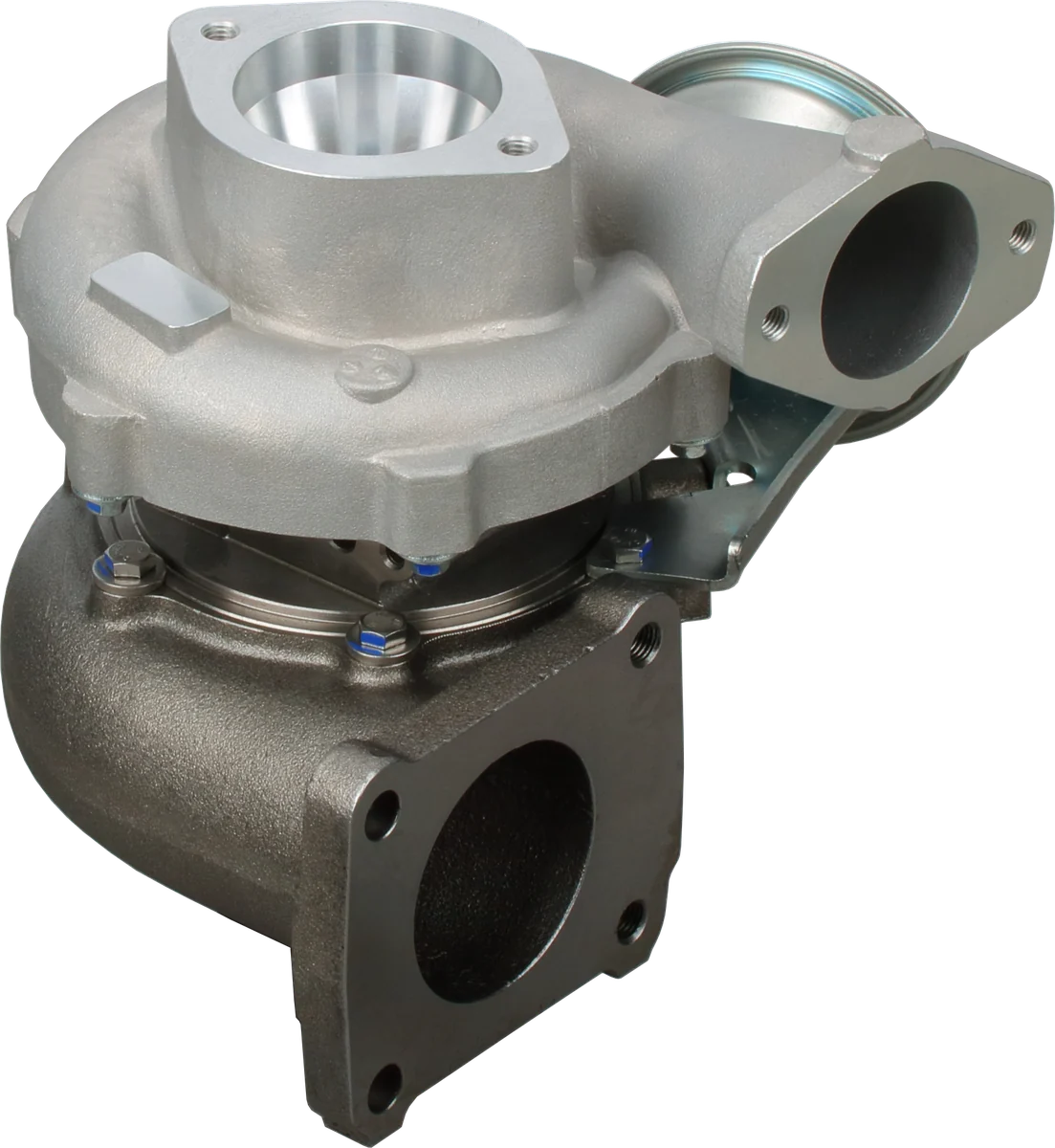
A replacement 1KD-FTV turbo needs to match more than the engine name. Housing geometry, oil connections, mounting flanges, and boost-control equipment can differ between units associated with the same Toyota diesel family.
For owners and mechanics maintaining a Hilux, Hiace, or Prado—including imported vehicles in North America—the reliable starting point is the installed turbocharger’s identification. Match its data-plate number and OE part number before ordering, then confirm the physical configuration.
LeadTurbo’s catalog contains aftermarket replacement turbochargers and service components. Catalog titles help narrow the search, but they do not establish interchangeability.
Understanding the KD engine family
The 1KD-FTV is a 3.0-liter inline-four diesel; the 2KD-FTV is a 2.5-liter inline-four diesel. Both use common-rail direct injection and turbocharging.
The turbocharger uses exhaust energy to drive a compressor that supplies denser intake air. When airflow falls short of the engine’s requirements, performance suffers, and combustion can produce additional smoke. A control fault can also cause unstable or excessive boost.
Working diesels face sustained exhaust heat, repeated load changes, and sometimes dusty operating conditions. Their turbo bearings depend on clean oil and an adequate supply. Replacing a damaged turbo without correcting restricted lubrication, intake contamination, or another underlying fault can quickly damage the replacement.
How to identify a 1KD-FTV turbo before choosing parts
Start with a cold engine. Look for an identification plate, attached tag, or engraved identification area on the turbo, often on the compressor housing. Placement varies, and heat shields or nearby components may obscure it. Clean gently and use a mirror or phone camera where access is limited.
Record every readable identifier. A turbo model identifies a design family; an OE part number identifies a particular service application or assembly. Neither a general model name nor an isolated casting number necessarily identifies the complete unit.
Photograph the compressor inlet and outlet, turbine connections, mounting flange, actuator, and oil and coolant connections where present. On an imported vehicle or an engine conversion, registration details may not describe the turbo currently installed.
What the catalog establishes
LeadTurbo's KD-engine listings include CT9C, CT12CV, and RHV4 models. Do not infer a model from a part-number suffix or assume that every Toyota D-4D turbo uses the same arrangement.
Several design differences can prevent interchangeability:
- Housing A/R: The housing passage area relative to its radius influences flow capacity and response. Similar external dimensions do not establish identical internal geometry.
- Boost control: A wastegate bypasses exhaust around the turbine. Variable geometry changes the turbine’s effective flow passage. A free-floating turbo has neither an integrated wastegate nor variable turbine geometry. Confirm the actual configuration; the catalog does not establish these details for every entry.
- Wheel dimensions and trim: Compressor and turbine profiles affect airflow and must match their housings. A shared model name does not guarantee compatible wheels.
- Connections and orientation: Oil feed, gravity drain, coolant connections where fitted, housing orientation, and mounting flanges must suit the installation.
- Actuation: Linkage, vacuum or pressure control, electrical connectors, and calibration requirements can differ.
Representative catalog examples—verify against the data plate
These are catalog examples, not an interchange chart.
| Part number | Turbo model | Product type | Application |
|---|---|---|---|
| 17201 0L030 CT | — | Complete turbocharger | Toyota 2KD FTV |
| 17201 0L040 CT | — | Complete turbocharger | Toyota 1KD FTV |
| 17201 0L040 HS | — | Complete turbocharger | Toyota Hilux 1KD FTV |
| 17201 30150 | CT12CV | Complete turbocharger | Toyota 1KD |
| 17201 30200 | RHV4 | Complete turbocharger | Toyota Hiace 1KD FTV |
| 17201 30080 | CT9C | Complete turbocharger | Toyota 2KD FTV 2.5L |
| 17201 30080 | CT9C | CHRA/cartridge | Toyota Hiace 2KD FTV |
| 17201 30080 RK | CT9C | Repair kit | Toyota Hiace 2KD FTV |
| 17201 30080 | CT9C | Turbine housing | Toyota Hiace 2KD FTV |
| 17201 30080 | CT9C | Turbine wheel/shaft | Toyota 2KD FTV |
| 17201 30080 | CT9C | Bearing housing | Toyota Hiace 2KD FTV |
| 17201 17010 | CT26 | Complete turbocharger | Toyota 1HD T—separate engine family |
Repeated numbers can appear against different product types. Specify whether you need a complete assembly, cartridge, housing, or another component.
For Land Cruiser owners researching a 1HD turbo CT26, keep that search separate from KD fitment. The catalog also lists a CT26 cartridge, 17202 58020, for Toyota Landcruiser 1HD T. These entries do not establish compatibility with a 1KD-FTV or 2KD-FTV installation.
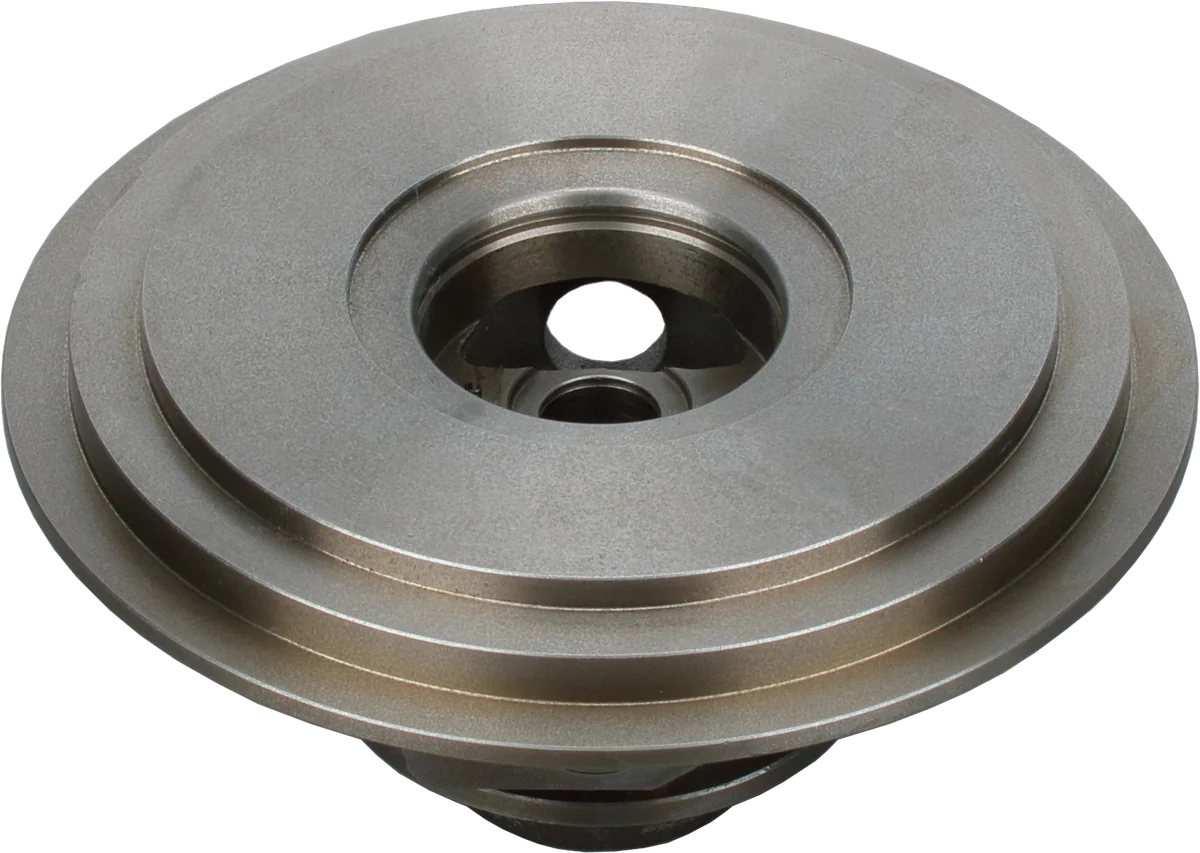
Central bore: houses the shaft and bearing system.
Mating surface: check cleanliness and damage.
Product photograph from 2026. Numbers identify the features explained below.
Diagnose symptoms before replacing a 1KD-FTV turbo
Boost loss and black smoke
Poor acceleration and black smoke can indicate insufficient air for the fuel being injected. Possible causes include a blocked air filter, split charge hose, leaking intercooler, exhaust leak before the turbine, or malfunctioning boost control.
For low boost on a 1KD-FTV turbocharger, check the entire airflow path before condemning the turbo. Inspect hose undersides, clamps, and intercooler seams. Pressure-test the charge-air system using an appropriate procedure and safe test pressure. Where supported, compare commanded and measured boost and inspect relevant sensor readings.
Fuel-system faults and engine problems can also produce smoke. Black exhaust alone is not proof of turbo failure.
Oil leaks and blue smoke
Oil outside the turbo may come from a feed connection, drain joint, or nearby engine leak. Oil inside the intake or exhaust requires a different investigation.
Turbo sealing depends partly on pressure relationships and effective oil drainage. A restricted drain or excessive crankcase pressure can impede return flow, allowing oil to escape into the compressor or turbine housing without a simple “failed seal” explanation.
Inspect the crankcase ventilation system, oil level, drain routing, and engine condition. Significant pooled intake oil requires attention before restarting because an engine can ingest it.
Whine, whistle, and scraping
A new whistle may come from escaping charge air or an exhaust gasket leak. A rising siren-like whine can accompany wheel damage, imbalance, or bearing deterioration. Scraping suggests possible rotating-to-stationary contact and warrants stopping operation.
Rotating blades naturally generate sound, so noise alone cannot identify the fault. Inspect for leaks, damaged blades, rubbing marks, and loose connections. Do not spin a removed turbo with compressed air.
Shaft play and bearing damage
Journal bearings support the shaft on an operating oil film. With the engine stopped, some radial movement may be perceptible; a finger check cannot replace clearance measurements.
Assess radial and axial movement against the correct specifications. Wheel contact, rough rotation, binding, or damaged blades needs further investigation.
Oil starvation weakens the separating film between moving surfaces. Contaminated oil introduces abrasive particles that score bearings and journals. Check oil supply, filter condition, feed-line restrictions, and potential contamination sources before installing another rotating assembly.
Cracked turbine housing
Heat cycles and thermal stress can crack the hot-side housing. Cracks may cause external exhaust leakage, disturb flow, or affect a wastegate seat where fitted.
Severity depends on location, depth, and the turbo’s service criteria. A specialist should evaluate the housing; appearance alone is insufficient. Also investigate abnormal exhaust temperature, fueling problems, or exhaust restrictions that may have contributed.
Actuator and variable-geometry problems
Where fitted, an actuator, control hose, linkage, wiring fault, or sticking vane mechanism can cause low boost, overboost, or erratic response.
Check the control supply and commanded movement before replacing mechanical parts. Do not adjust rods or stop screws to conceal a fault. Electronic actuator replacement may require matching, calibration, or a prescribed learning procedure.
Choose the appropriate replacement level
Complete turbocharger: Usually the practical choice when housings, wheels, bearings, and control components have multiple faults. Confirm exactly what the assembly includes and whether installation requires additional actuator setup.
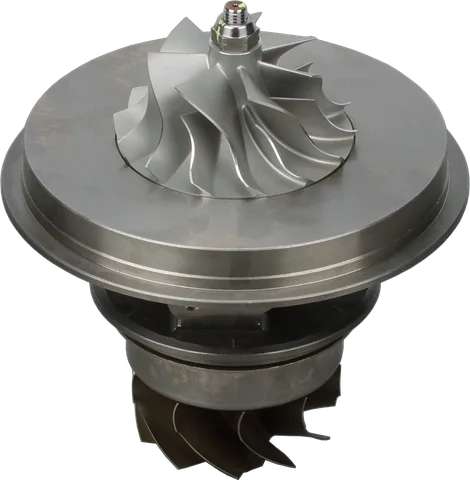
CHRA/cartridge: Replaces the central rotating assembly while retaining compatible outer housings. It makes sense when those housings are undamaged and reusable control components pass inspection. A new cartridge cannot correct a cracked housing or sticking geometry mechanism.
Repair kit: Suitable for a measured, professionally assessed rebuild when major components remain serviceable. Bearings and sealing components cannot restore a scored shaft or damaged housing bore. Check kit contents and allow for proper assembly, clearance checks, and balancing.
Individual components: The catalog summary includes turbine and compressor housings, bearing housings, compressor wheels, turbine wheel/shaft assemblies, actuators, journal bearings, piston/seal rings, and thrust bearings/collars. Selection requires exact compatibility. Replacing rotating components requires appropriate balancing; paint marks do not establish acceptable balance.
When ordering Toyota Hiace 2KD-FTV turbocharger parts, specify both the identification number and the required product type, as the repeated CT9C entries illustrate.
Installation checks for hard-working diesels
Correct the original failure mechanism before fitting the replacement.
- Clean the intake and intercooler. Remove accumulated oil and debris. After wheel damage, inspect the full air path and assess possible engine contamination. Replace components that cannot be reliably cleaned.
- Inspect the oil feed and drain. Check for carbon deposits, restrictions, kinks, and damaged fittings. Follow replacement requirements for the feed line, and ensure the drain maintains its intended unobstructed route.
- Check crankcase pressure. Inspect ventilation and investigate excessive blow-by. A replacement turbo will not correct an engine breathing problem.
- Use the specified oil and fresh filtration. Address contamination before startup. Keep open connections clean throughout the work.
- Fit new specified gaskets and seals. Clean mating faces and follow torque procedures. Avoid excess sealant that could obstruct an oil passage.
- Prime before starting. Follow the turbo supplier’s procedure using clean engine oil. Where instructed, establish oil circulation with fueling disabled using the vehicle’s approved cranking procedure. Never start a dry turbo.
- Verify controls and connections. Check coolant plumbing where fitted, housing orientation, actuator compatibility, and required electronic calibration.
- Check operation progressively. Inspect for oil, coolant, intake, and exhaust leaks before a controlled load test. Review boost behavior and fault codes. Follow the vehicle’s guidance for cooling down after sustained heavy work.
Common Questions
1KD-FTV vs 2KD-FTV turbochargers: are they interchangeable?
Do not assume they are. Match the turbo data-plate number and OE part number, then verify housings, connections, mounting flanges, and boost-control equipment. An engine-family name alone cannot establish fitment.
Can I identify a Hilux turbo by the vehicle name alone?
No. Hilux turbo listings can cover different configurations. Record the engine identification, photograph the installed turbo, and supply its data-plate number and OE part number before ordering.
Does oil in the intercooler mean the turbo has failed?
Not necessarily. Crankcase ventilation can introduce an oil film. Pooling oil, rising oil consumption, or blue smoke needs investigation of the turbo, oil drain, crankcase pressure, and engine condition before further operation.
Is some turbo shaft play normal?
A journal-bearing turbo can have perceptible radial movement when stopped because its operating oil film is absent. Assess radial and axial clearances against the correct specifications; wheel contact, binding, or damaged blades requires further inspection.
When should I choose a CHRA instead of a complete turbo?
Choose a correctly matched CHRA when the reusable housings and control components pass inspection. A complete turbo is generally more appropriate when damage extends beyond the rotating assembly or the existing configuration cannot be confirmed.
Can a repair kit fix a whistling 1KD-FTV turbo?
Only if diagnosis identifies repairable internal wear and the remaining components meet specifications. Whistling can also come from intake leaks, exhaust leaks, or wheel damage. Rebuilding requires appropriate measurement and balancing.
Why is my 1KD-FTV turbocharger overboosting?
Overboost can result from actuator, control hose, linkage, or wiring faults, or sticking vanes, where fitted. Check the control supply and commanded movement before replacing mechanical parts. Do not adjust rods or stop screws to hide the fault.
Which turbocharger fits a Toyota Hilux?
Choose a turbo that matches the installed unit's data-plate number and OE part number, then verify the housings, connections, mounting flanges, and boost-control equipment. Hilux listings can cover different configurations, so the vehicle name alone is not enough. Record the engine identification and photograph the installed turbo before ordering.
Send the turbo data-plate number, OE part number, engine identification, and photos to LeadTurbo to confirm fitment before ordering.