For fleet managers, shop buyers, and owner-operators, buying a replacement turbocharger is primarily a specification and logistics job. A turbo that bolts on can still have the wrong flow characteristics, controls, or orientation. Start with the approved assembly for the engine, then verify the package and delivery terms.
This approach applies to buying a replacement turbocharger for diesel trucks, buses, construction and farm equipment, marine engines, generator sets, and diesel pickups where downtime makes ordering errors expensive.
Use this turbo replacement guide to restore an existing diesel application. Changes to power, fueling, or duty require a separate matching exercise, covered in the site's diesel turbo-matching guide.
1. How to choose a replacement turbo: confirm the failure
Before ordering, confirm that the turbocharger has failed and establish why; low boost, smoke, and oil in intake piping can have other causes. The separate pre-replacement diagnosis guide explains the checks needed to distinguish turbo damage from intake leaks, lubrication faults, and engine problems.
2. Identify the turbo and the engine
Start with the complete turbo assembly number, preserving every suffix and revision. Record the customer or OE number and turbo model as supporting identifiers, then cross-check the application against engine records.
Confirm that the installed unit belongs on the engine, especially if its repair history is uncertain. A housing casting number identifies a component and usually cannot establish the complete assembly specification.
| Identification data | Where to find it | Buying purpose |
|---|---|---|
| Full assembly/part number | Turbo nameplate or etched identification | Primary reference, including suffix or revision |
| Customer/OE number | Turbo tag or engine OEM parts record | Connects the turbo to the engine application |
| Turbo model | Nameplate or manufacturer identification | Identifies the family; insufficient by itself |
| Engine model and serial number | Engine data plate or designated stamping | Supports a serial-specific parts lookup |
| Rated power, speed, and duty | Rating plate or OEM build record | Distinguishes application and rating variants |
| Emissions level or certification | Engine emissions label and build record | Confirms the required configuration |
| Engine year and equipment identity | OEM build record; vehicle/equipment plate, VIN, or serial | Checks production dates and installation |
When the tag is missing or unreadable, gently clean the identification area and photograph it under different lighting. Check previous invoices and request an engine OEM parts lookup using the engine serial number. Send the supplier clear photos of the complete turbo, ports, and actuator, and request a documented cross-reference.
If the engine has been repowered or converted, record both the engine identification and the equipment identification. A chassis year or equipment model alone may lead to the original engine's parts listing. Ask the supplier to resolve conflicting numbers before accepting a substitute, and record the approved replacement number on the purchase order.
A truck and a generator can share an engine family while requiring different turbochargers. The separate part-number identification guide covers tag formats and lookup details.
3. Verify physical fitment and control compatibility
Have the supplier confirm the approved replacement against these interfaces. Photos help, but measure connections where identification remains uncertain.
- Mounting and exhaust connections: Match manifold and exhaust outlet flanges, bolt patterns, sealing faces, and divided or open turbine inlet configuration.
- Oil and coolant ports: Verify feed and drain connections, threads, sealing methods, and line routing. Water-cooled turbochargers also need the correct coolant connections.
- Clocking and clearance: Compare compressor, turbine, and center housing orientation. Confirm oil drain alignment and clearance around nearby components. Housing rotation can affect drainage and actuator alignment, so confirm permitted adjustments with the supplier.
- Compressor connections: Check inlet and outlet diameters, connection styles, and positions. A hose connection and a machined elbow connection are different purchasing specifications.
- Controls and actuator: Match wastegate or VGT configuration, pneumatic or electronic control, and connector details. Confirm whether an electronic actuator is included, calibrated to the turbo, and compatible with the engine control system. Ask whether installation requires a service-tool setup or relearn.
- Housing specification: Match the specified turbine housing A/R where applicable, along with the approved wheel and flow configuration. An A/R match alone cannot establish compatibility.
For an electronically controlled turbo, confirm that the installing shop has the required service tools. Identify who will perform any setup, and include that work in the downtime estimate.
Check the installation as it actually sits on the engine. Accessory brackets, intake plumbing, heat shields, and nearby chassis parts can limit clearance. If the replacement needs adapters or revised piping, obtain the part numbers and confirm availability before committing to the order.
Get written confirmation of any superseded number and associated hardware or software requirements. The separate fitment guide covers measurements, while the A/R and boost-control guides explain those specifications.
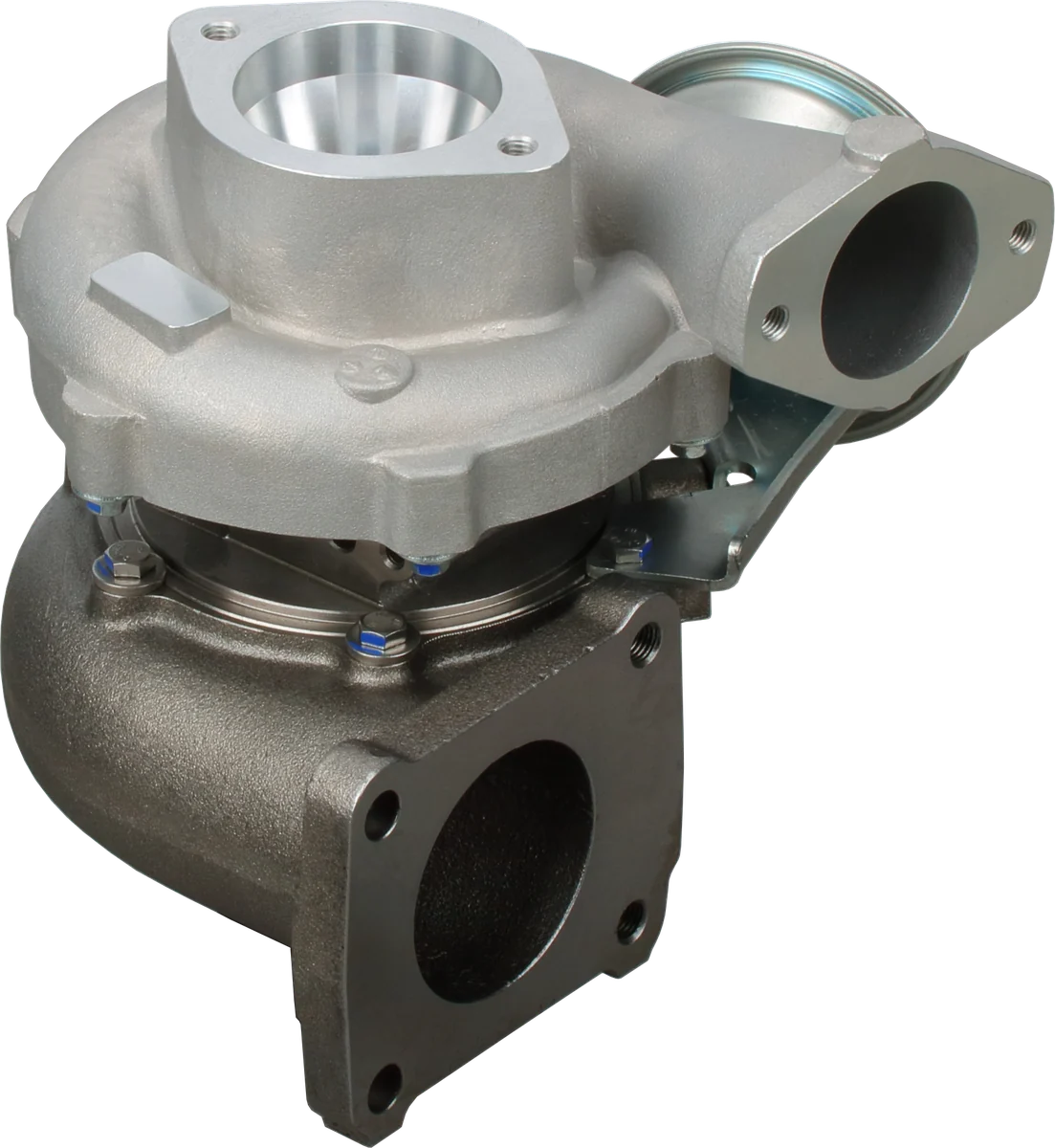
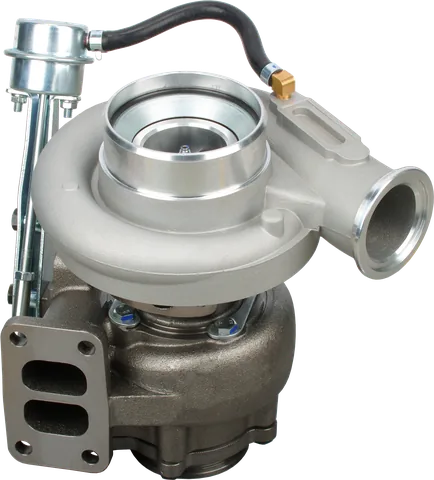
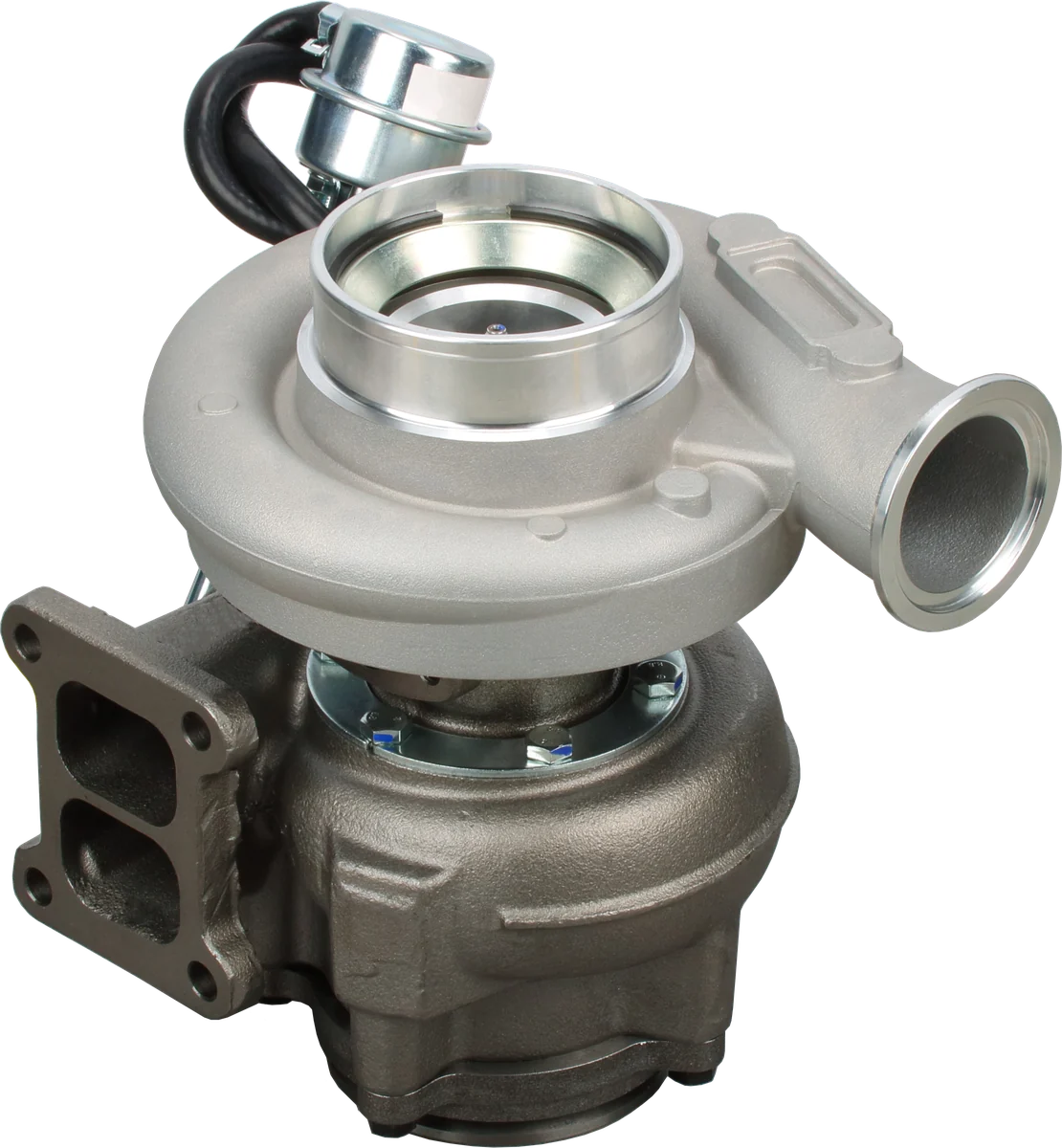
Compressor housing: guides the compressed air.
Turbine housing: guides exhaust gas to the turbine.
Actuator: check its type, linkage and calibration.
Product photograph from 2026. Numbers identify the features explained below.
4. Choose a complete turbo, CHRA, or repair kit
Knowing how to choose a replacement turbo also means deciding how much of the assembly needs replacement. Base that decision on inspection findings and the shop's equipment and capability.
| Purchase option | Suitable situation | Check before buying |
|---|---|---|
| Complete turbocharger | Extensive damage, questionable reusable parts, or a need to minimize assembly work | Verify exactly which housings, controls, and actuator are included |
| CHRA | Inspected, reusable outer housings and serviceable control hardware | Confirm the exact cartridge and required assembly checks |
| Repair kit | A qualified rebuilder has confirmed the hard parts are reusable | Requires inspection, measurement, and appropriate balancing; kit contents vary |
The separate CHRA-versus-complete-turbo and repair-kit selection guides cover the rebuild decisions. In an exchange quote, “core” may mean the old returnable turbo; ask the seller to define it.
5. Compare genuine, aftermarket, and remanufactured options
Compare offers for the same verified specification. Product labels alone do not establish compatibility or included work.
| Source | What to establish |
|---|---|
| OEM/genuine | Confirm the manufacturer, traceable part number, and approved application through the relevant service channel. |
| New aftermarket | Confirm the exact cross-reference, technical support, and evidence of the supplier's inspection and testing practices. |
| Remanufactured | Ask what was inspected, replaced, balanced, and calibrated, plus the warranty and exchange-core terms. |
These categories can overlap: an OEM service turbo may be remanufactured. The separate OEM, aftermarket, and remanufactured comparison guide covers quality evaluation in more detail.
6. Check the complete price, warranty, delivery, and core terms
Request an itemized quote showing what comes with a replacement turbocharger before comparing prices. A lower unit price can leave additional parts, setup work, or return costs outside the total.
- Included parts: List gaskets, seals, mounting hardware, and any oil line kit. Confirm whether the quote is for a turbocharger with or without an actuator, whether the actuator is calibrated, and whether required electronic setup is included or separately billed.
- Warranty coverage: Read the duration, any mileage or operating-hour limit, installation requirements, and claim procedure. Check whether labor, freight, diagnosis, or consequential damage is covered.
- Warranty exclusions: Ask whether failure to correct the original cause, prime the turbo, or install new oil supply lines would invalidate coverage. Requirements vary by product and supplier; keep the diagnosis, invoices, and installation records.
- Delivery: Ask whether the unit is physically available, when it will ship, and when it is expected to arrive. Include shipping, taxes, and applicable cross-border charges in the delivered total.
- Replacement turbocharger core return requirements: Confirm the deposit, return deadline, acceptable condition, packaging, return freight, and refund timing. Ask whether damaged housings, missing parts, or disassembly affect core credit before dismantling or shipping the old unit.
For a fleet, compare the total cost of getting the vehicle back to work, including shop time and waiting time. Ask who handles technical questions and warranty assessment after delivery. A clear support process can matter as much as a small difference in unit price.
The site's warranty-claim guide explains the records that support a failure review. Photograph the old turbo and its identification before dispatch, and retain tracking for an exchange return.
7. How to choose a replacement turbocharger: prepare a complete pre-order information package
Send the following information together so the seller can check the order without repeated requests. Copy the table into an inquiry and fill in every applicable field.
| Pre-order item | Information to send |
|---|---|
| Turbo identity | Complete assembly number, suffix, OE number, model, and tag photo |
| Engine details | Make, model, serial number, rated power/speed, emissions level, and year |
| Application | Truck/equipment make and model, VIN or equipment serial, and actual duty |
| Fitment evidence | Photos of mounting flanges, ports, inlet/outlet connections, housing orientation, and actuator identification |
| Requested package | Complete turbo, CHRA, or kit; actuator and installation parts required |
| Delivery and core | Destination postal/ZIP code, required arrival date, and availability/condition of the exchange core |
Add this request: “Please confirm the correct assembly or approved supersession, included hardware, actuator setup, warranty requirements, delivery date, delivered total, and core-return terms before shipment.”
If you are ordering several units, list each engine serial number separately. Similar vehicles in the same fleet may have different approved turbo assemblies, so confirm interchangeability before stocking one replacement for all of them.
The identification and fitment guides provide detailed help gathering these fields. Keep the supplier's written confirmation with the work order and compare the delivered unit against it before installation.
8. Protect the new turbo during installation
Correct the documented failure cause, clear debris from affected intake and exhaust paths, and verify clean, unrestricted oil supply and drainage. Install the specified lines and seals, service the engine oil and filter as required, and prime the turbo using OEM service data. Complete required actuator setup before returning the equipment to service.
Follow the specified startup checks and inspect for leaks and abnormal operation. The site's installation checklist and oil-line installation guide cover the full procedure.
Common Questions
Which turbo do I need if the tag is missing?
Use the engine serial number and OEM parts lookup, then verify the proposed assembly against photos, connections, ratings, and emissions configuration. Engine displacement or a model-family name alone cannot confirm fitment.
Can I buy a turbo listed for the same engine model?
Only after confirming the assembly number or documented replacement. Engines within one family can use different turbochargers for different ratings, emissions packages, equipment installations, and production changes.
Does a replacement VGT actuator need calibration?
Follow the engine and turbo supplier's procedure. A supplied actuator may be calibrated to the turbo, while installation can still require an electronic setup or relearn. Confirm both before ordering.
Will a CHRA fix every turbocharger failure?
No. A CHRA does not replace damaged outer housings or correct worn VGT hardware, faulty controls, blocked oil lines, or an engine problem. Have the reusable parts inspected first.
What matters most when learning how to choose a replacement turbo?
Match the verified turbo assembly and engine specification first. Then confirm installation requirements, included parts, warranty conditions, and delivery terms before comparing the final cost.
Will replacing my truck turbocharger restore boost?
Not necessarily. Low boost can have other causes. Confirm turbocharger failure before ordering.
LeadTurbo supplies complete turbochargers, CHRAs/cores and repair kits. Send LeadTurbo the turbo part number, engine details and photos for help confirming the right part.